|
Nominal Size
ID (mm)
|
Lay flat
(mm)
|
W.T.
(mm)
|
Horizontal
shrinkage ratio(%)
|
Vertical
Shrinkage ratio(%)
|
|
3.0
|
5.6±0.2
|
0.08±0.015
|
48±4
|
8±3
|
|
4.0
|
7.1±0.2
|
0.08±0.015
|
48±4
|
8±3
|
|
5.0
|
9.0±0.2
|
0.08±0.015
|
48±4
|
8±3
|
|
6.0
|
10.6±0.2
|
0.08±0.015
|
48±4
|
8±3
|
|
8.0
|
13.9±0.2
|
0.10±0.02
|
48±4
|
8±3
|
|
10.0
|
16.9±0.3
|
0.10±0.02
|
48±4
|
8±3
|
|
12.0
|
20.2±0.3
|
0.10±0.02
|
45±4
|
8±3
|
|
12.5
|
21.1±0.3
|
0.10±0.02
|
45±4
|
8±3
|
|
13.0
|
21.7±0.3
|
0.10±0.02
|
45±4
|
8±3
|
|
14.5
|
24.1±0.3
|
0.10±0.02
|
45±4
|
8±3
|
|
16.0
|
26.7±0.3
|
0.11±0.02
|
45±4
|
8±3
|
|
18.0
|
29.8±0.3
|
0.11±0.02
|
45±4
|
8±3
|
|
20.0
|
32.9±0.3
|
0.11±0.02
|
45±4
|
8±3
|
|
22.0
|
36.2±0.3
|
0.11±0.02
|
45±4
|
8±3
|
|
25.0
|
41.1±0.5
|
0.11±0.02
|
45±4
|
8±3
|
|
30.0
|
49.1±0.5
|
0.11±0.02
|
45±4
|
8±3
|
|
Property
|
Test Method
|
Typical Data
|
|
Tensile strength
|
ASTM D2671
|
≥10 Mpa
|
|
Break elongation
|
ASTM D2671
|
≥62%
|
|
Water absorption
|
ASTM D570
|
≤2.0%
|
|
Dielectric strength
|
ASTM D2671
|
≥15 KV/mm
|
|
Volume resistivity
|
ASTM D2671
|
≥1014Ω·cm
|
Q1. What is the difference between flat-type and round-type PET heat shrink tubing for medical applications?
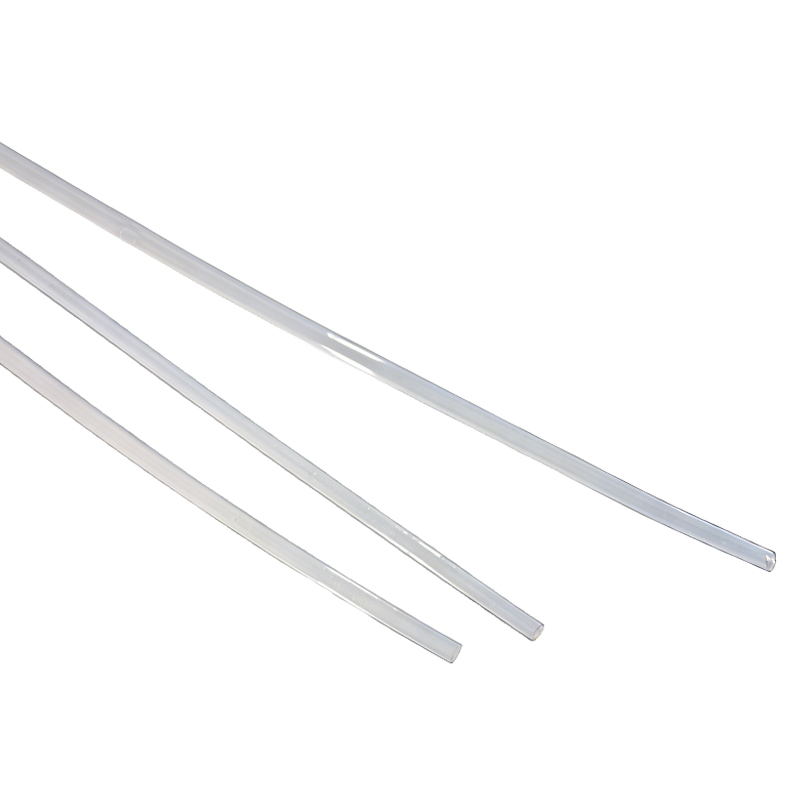
A1. Flat-type PET heat shrink tubing is supplied in a flattened, lay-flat configuration rather than as a pre-formed round tube. This format offers several practical advantages in catheter manufacturing: (1) easier handling and cutting to length on the production line; (2) reduced storage volume; (3) simplified threading over flat or oval sub-assemblies; (4) lower minimum order quantities for prototyping. The BH-MT-PET flat-type tubing delivers the same performance properties as round PET shrink tubing — ultra-thin wall, high tensile strength, and excellent biocompatibility — while the lay-flat format streamlines handling in high-mix, low-volume production environments common in catheter R&D.
Q2. What material is BH-MT-PET made from, and what are its key properties?
A2. BH-MT-PET is manufactured from polyethylene terephthalate (PET), a polyester known for its excellent mechanical strength, chemical resistance, and dimensional stability. Key properties per the specification: tensile strength ≥10 MPa (ASTM D2671), break elongation ≥62% (ASTM D2671), water absorption ≤2.0% (ASTM D570), dielectric strength ≥15 kV/mm (ASTM D2671), and volume resistivity ≥10¹⁴ Ω·cm (ASTM D2671). The material withstands weathering, heating, and cracking across an operating temperature range of -40°C to 125°C, is resistant to most chemicals and oils, and meets RoHS environmental standards.
Q3. What are the shrink parameters of BH-MT-PET flat-type heat shrink tubing?
A3. BH-MT-PET has a shrink ratio of 2:1, meaning the tubing contracts to approximately half its original diameter upon heating. The minimum shrink temperature is 60°C, and the minimum fully recovery temperature is 125°C. These parameters are confirmed by ASTM D2671 testing. The low minimum shrink temperature of 60°C is particularly advantageous for heat-sensitive catheter assemblies, allowing shrink activation without exposing adjacent components — such as Pebax jackets, nylon braids, or adhesive bonds — to excessive thermal stress.
Q4. How much does BH-MT-PET shrink longitudinally, and how do I control it?
A4. Longitudinal (axial) shrinkage is a common concern raised by engineers in heat shrink discussions — all heat shrink tubing shrinks to some degree along its length as well as radially. BH-MT-PET is engineered for minimal longitudinal shrinkage: the specification lists a vertical (longitudinal) shrinkage ratio of 8±3% across all sizes, compared to a horizontal (radial) shrinkage ratio of 48±4% (45±4% for sizes 12.0 mm and above). This low, tightly controlled longitudinal shrinkage minimizes part movement during the shrinking process, reducing the risk of misalignment, stress concentration, or damage to sensitive distal assemblies. To further control longitudinal shrinkage in practice: apply heat gradually and uniformly, use a shrink fixture or mandrel to constrain axial movement, and allow the tubing to cool fully before removing the constraint.
Q5. Which catheter manufacturing processes is BH-MT-PET suitable for?
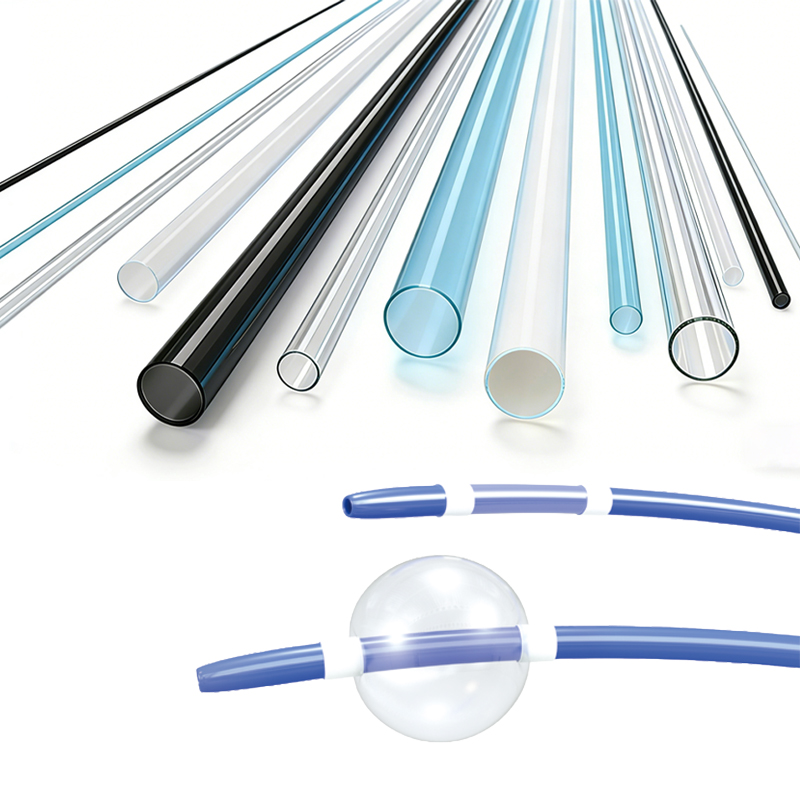
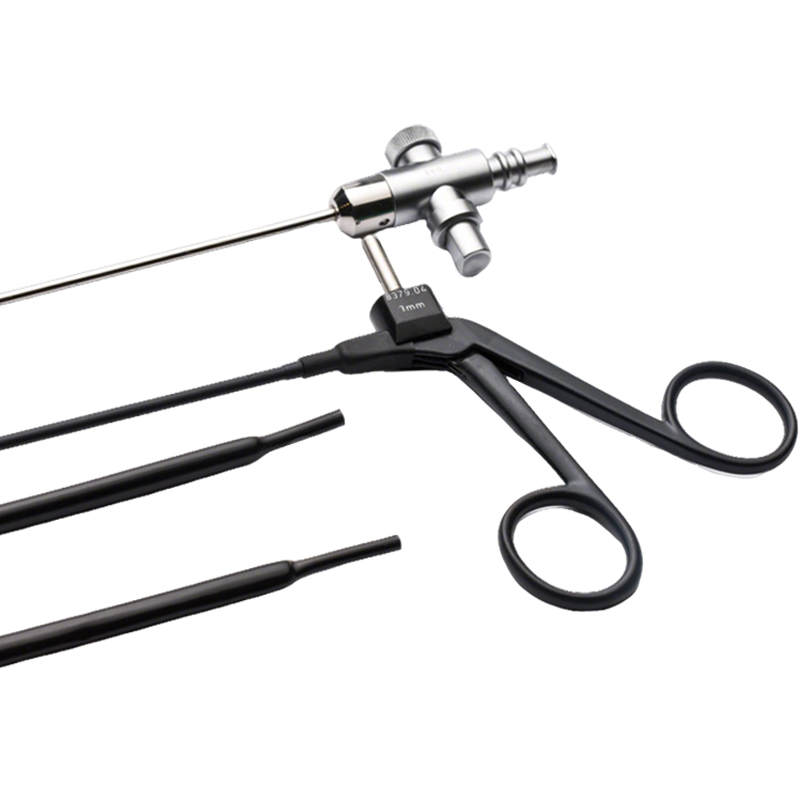
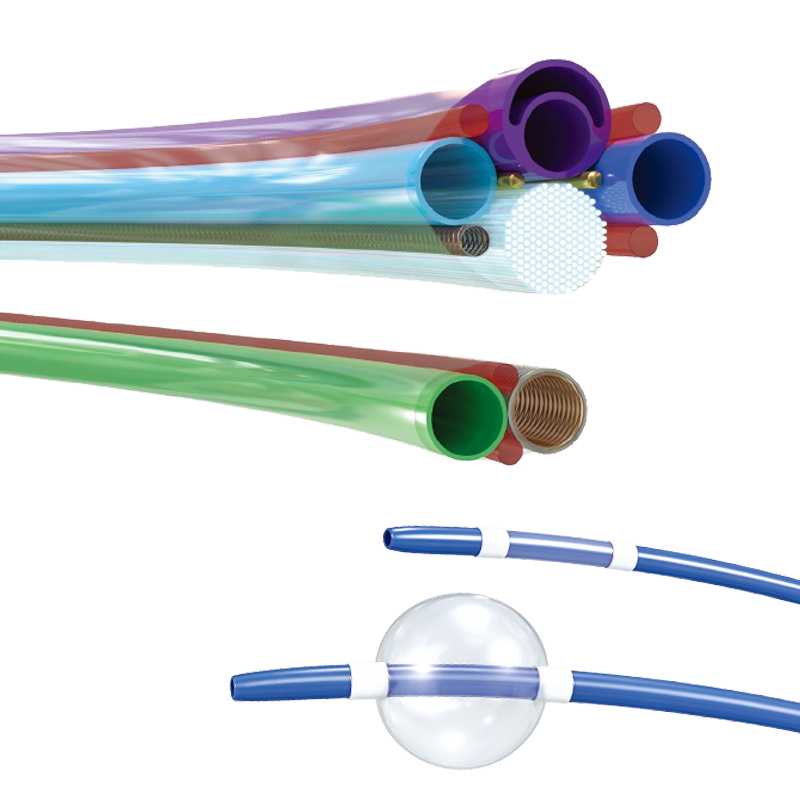
A5. Per the product specification, BH-MT-PET flat-type heat shrink tubing is used for insulation, protection, rigidity, sealing, fixation, and strain relief of medical devices without significantly adding to the device profile. Specific applications include: (1) Catheter tip forming — providing a smooth, tapered, or bonded tip transition during thermal reflow; (2) Balloon assembly — securing balloon-to-shaft bonds and providing a smooth transition; (3) Stress relief — reinforcing transitions between rigid and flexible shaft segments; (4) Insulation and protection — covering electrical components, sensor leads, or fiber optics in electrophysiology and ablation catheters; (5) Sealing and fixation — encapsulating joints, markers, or coil assemblies. The ultra-thin wall (0.08–0.11 mm depending on size) adds minimal profile to the finished device.
Q6. Is BH-MT-PET biocompatible for medical device use?
A6. Yes. BH-MT-PET is ISO 10993 compliant, supporting device-level biocompatibility validation for medical applications including blood-contacting devices. PET is a well-established biomaterial with a long clinical history in cardiovascular applications, including vascular grafts, sutures, and catheter components. As with all medical device components, device-level biocompatibility evaluation per ISO 10993-1 (cytotoxicity, sensitization, irritation, hemocompatibility as applicable) is required for the finished device — material-level compliance supports but does not replace device-level testing.
Q7. Which sterilization methods are compatible with BH-MT-PET?
A7. BH-MT-PET is compatible with ethylene oxide (EtO) sterilization per the product specification. The material’s operating temperature range of -40°C to 125°C means it should not be exposed to steam autoclave or dry-heat sterilization cycles that exceed this range. For devices requiring terminal sterilization, EtO is the validated and recommended method. Always verify the full assembled device through the chosen sterilization cycle during design validation.
Q8. What sizes are available, and what are the dimensional tolerances?
A8. BH-MT-PET flat-type heat shrink tubing is available in 16 nominal sizes from 3.0 mm to 30.0 mm ID (2:1 shrink ratio). Key dimensional data: lay-flat width ranges from 5.6±0.2 mm (3.0 mm size) to 49.1±0.5 mm (30.0 mm size); wall thickness is 0.08±0.015 mm for sizes 3.0–5.0 mm, 0.10±0.02 mm for sizes 6.0–14.5 mm, and 0.11±0.02 mm for sizes 16.0–30.0 mm; horizontal shrinkage ratio is 48±4% for sizes 3.0–10.0 mm and 45±4% for sizes 12.0–30.0 mm; vertical shrinkage ratio is consistently 8±3% across all sizes. The ultra-thin, tightly toleranced wall ensures minimal profile addition and consistent shrink behavior.
Q9. What colors are available for BH-MT-PET?
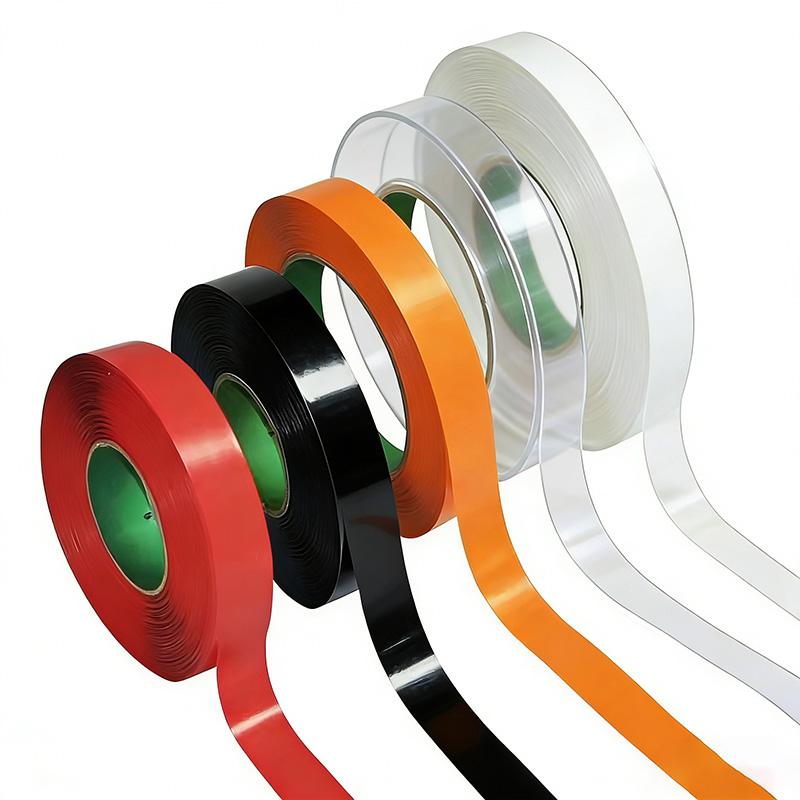
A10. BH-MT-PET is available in black, white, clear, blue, green, orange, grey, and yellow. Color coding supports device identification, size differentiation, and brand consistency across product lines. Clear tubing is preferred where visual inspection of the underlying assembly is required; opaque colors provide light-blocking protection for photosensitive components.
Q11. How do I select the correct BH-MT-PET size for my application?
A11. Follow this selection process: (1) Measure the maximum outer diameter of the assembly to be covered, including any connectors, balloons, or irregular features; (2) Select a nominal size whose pre-shrink ID comfortably clears this maximum diameter — the 2:1 ratio means the recovered ID will be approximately half the nominal size; (3) Verify that the recovered ID is smaller than the minimum substrate diameter to ensure a snug fit; (4) Confirm that the lay-flat width accommodates the assembly profile; (5) Select wall thickness based on the required level of rigidity, protection, or insulation — thinner walls (0.08 mm) for minimal profile impact, thicker walls (0.11 mm) for greater structural support; (6) Choose color based on identification or light-protection requirements. If your assembly has significant diameter variation along its length, consider whether multiple shrink operations or a stepped approach may be needed.