


What is the difference between free extruded etched PTFE liner and OTW etched PTFE liner with mandrel?
Q1. What is the fundamental difference between a free extruded etched PTFE liner and an OTW etched PTFE liner with mandrel?
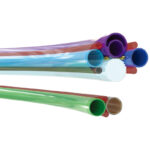
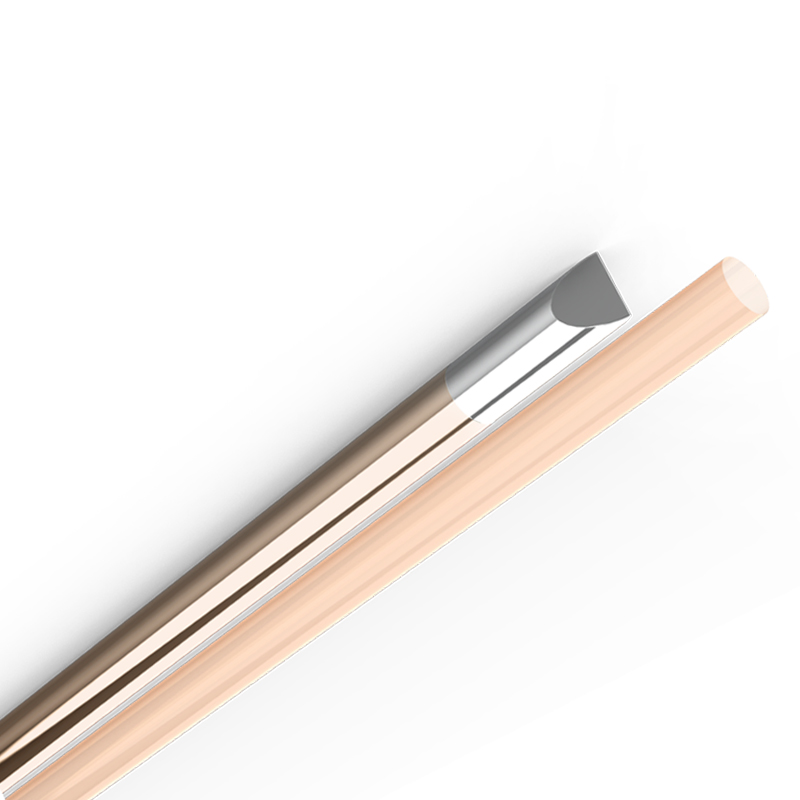
A1. Both products are medical-grade PTFE liners with a sodium-etched outer surface for bonding and a native low-friction inner surface. The difference lies in the extrusion method. The free extruded liner (BH-MT-PTFE-ETCH) is manufactured via the free-extrusion process — the PTFE paste is extruded without a supporting mandrel, producing a standalone tube. The OTW liner (BH-MT-PTFE-ETCH-OTW) is manufactured via the Over-The-Wire (OTW) process — the PTFE is extruded directly over a silver-plated copper wire mandrel, delivering a process-ready liner on a disposable mandrel that maximizes manufacturing efficiency and reduces downstream processing costs.
Q2. How does the OTW process with silver-plated copper wire mandrel benefit my production line?
A2. The OTW liner arrives in discrete lengths extruded over silver-plated copper wire, giving you a process-ready liner that maximizes efficiency and reduces costs. You do not need to source, clean, or manage your own forming mandrels. The silver-plated copper wire provides a precision, low-friction mandrel surface that supports tight ID control during extrusion and sintering, and can be removed after your reflow or jacketing operations. Engineers on r/MedicalDevices frequently note that sourcing precision liners with reliable lead times is a recurring supply-chain pain point; a process-ready OTW liner addresses this directly.
Q3. Is there a difference in PTFE molecular orientation (fibril structure) between free extrusion and OTW extrusion?
A3. Both products use PTFE paste extrusion followed by sintering, so both develop the characteristic fibrillated microstructure that gives PTFE its strength and flexibility. The practical difference is geometric rather than chemical:
|
Aspect |
Free Extruded (BH-MT-PTFE-ETCH) |
OTW with Mandrel (BH-MT-PTFE-ETCH-OTW) |
|
Support during sintering |
Unsupported |
Silver-plated copper wire mandrel |
|
Wall geometry control |
Final ID governed by assembled catheter construction |
Mandrel physically supports tube, minimizing wall sag and ovality |
|
Fibril orientation |
Controlled through free extrusion process |
Promotes uniform circumferential fibril orientation |
|
Best suited for |
Larger IDs and longer continuous lengths |
Small IDs requiring tight geometric control |
Q4. What are the ID ranges and tolerances for each product?
A4.
|
Parameter |
Free Extruded (BH-MT-PTFE-ETCH) |
OTW with Mandrel (BH-MT-PTFE-ETCH-OTW) |
|
ID Range |
0.01–0.40 in (0.30–10.0 mm) |
0.01–0.11 in (0.30–2.79 mm) |
|
ID Tolerance |
±0.001–0.003 in (±0.025–0.076 mm) |
±0.001–0.003 in (±0.025–0.076 mm) |
|
Typical applications |
Larger-bore delivery devices |
Microcatheters 0.014″/0.018″ guidewire platforms |
Q5. What wall thickness ranges are available, and how do they differ?
A5.
|
Parameter |
Free Extruded (BH-MT-PTFE-ETCH) |
OTW with Mandrel (BH-MT-PTFE-ETCH-OTW) |
|
Nominal Wall Thickness |
0.001–0.003 in (0.025–0.076 mm) |
0.0004–0.0008 in (0.01–0.02 mm) |
|
Wall Tolerance |
±0.0005 in (±0.0127 mm) |
±0.0002–0.00025 in (±0.005–0.00635 mm) |
|
Key advantage |
Greater inherent wall strength |
Among the thinnest PTFE liner walls available |
|
Recommended when |
Wall requirements ≥ 0.001 in |
Design requires walls below 0.001 in to maximize working lumen |
Q6. What cut lengths are available?
A6. Both products are supplied in cut lengths of 39–78 in (1,000–2,000 mm).
Q7. What are the mechanical performance differences between the two products?
A7. Both products are manufactured from medical-grade PTFE and share the same core mechanical property set: UL94 V0 flammability rating, excellent chemical resistance, no cracking after heat shock per ASTM D2671 (400 °C/4 hrs), no cracking after low-temperature flexibility testing per ASTM D2671 (-65 °C/4 hrs), and an operating temperature range of -65 °C to 260 °C. The mechanical difference is driven by geometry: the OTW ultra-thin-wall liner (down to 0.0004 in) delivers maximum flexibility and minimum wall contribution to shaft stiffness, while the free extruded liner (0.001–0.003 in wall) provides greater inherent wall strength and pushability contribution for larger-bore devices.
Q8. Are the etching and bonding properties the same for both products?
A8. Yes. Both products feature a sodium-etched outer surface with an etching angle below 70° (typical value 60°), confirming surface activation for adhesive lamination and thermal reflow bonding to Pebax, nylon, TPU, and braided jacket structures. The inner luminal surface remains un-etched, preserving native PTFE lubricity for guidewire passage. Both contain no heavy metals.
Q9. What are the challenges of mandrel removal, and does the OTW product eliminate them?
A9. In conventional mandrel extrusion, mandrel removal after sintering is a known processing challenge — removal force must be carefully controlled to avoid ovalizing the lumen or inducing micro-cracks in thin walls, and the mandrel surface must be polished or coated with release agent. The OTW product addresses this by supplying the liner pre-extruded over a silver-plated copper wire mandrel: the wire serves as the precision forming surface during your reflow/jacketing process and is removed afterward by simple mechanical pulling. The silver-plated surface provides low-friction release characteristics, eliminating the need for you to manage mandrel sourcing, cleaning, or release-agent application.
Q10. Which sterilization methods are compatible with each product?
A10. Both products are compatible with ethylene oxide (EtO), steam, and dry-heat sterilization. The free extruded liner is additionally rated for high-pressure sterilization. Both are manufactured from resin compliant with ISO 10993-1 and USP Class VI, supporting device-level biocompatibility validation for blood-contacting applications.
Q11. Which catheter applications are best suited for each product?
A11. Both products serve as the lubricious inner layer in reflow interventional and minimally invasive delivery devices, including stent delivery systems, steerable sheaths, microcatheters, ablation catheters, and aspiration catheters. The OTW ultra-thin-wall liner (ID 0.01–0.11 in, wall 0.0004–0.0008 in) is purpose-built for microcatheters and stent delivery systems where maximizing working lumen within a minimal profile is critical. The free extruded liner (ID up to 0.40 in, wall 0.001–0.003 in) suits larger-bore steerable sheaths, aspiration catheters, and ablation catheters where larger working channels are required. Engineers on r/MedicalDevices note that PTFE remains the gold standard for tortuous-path, demanding catheter applications, and that matching liner performance to device profile is a key design decision.
Q12. How do I select between the free extruded and OTW etched PTFE liner?
A12. Use this decision framework: (1) If your device ID is between 0.01–0.11 in and you require ultra-thin walls (0.0004–0.0008 in) to maximize lumen size — typical for microcatheters and coronary/neurovascular stent delivery systems — select the OTW product (BH-MT-PTFE-ETCH-OTW). (2) If your device ID is between 0.01–0.40 in with wall requirements of 0.001–0.003 in — typical for steerable sheaths, aspiration catheters, and larger-bore delivery devices — select the free extruded product (BH-MT-PTFE-ETCH). (3) If you want to eliminate mandrel sourcing and handling from your process, the OTW product arrives process-ready on silver-plated copper wire. (4) Both products share identical etching quality (angle <70°, typical 60°), sterilization compatibility, biocompatibility compliance (ISO 10993-1, USP Class VI), and temperature rating (-65 °C to 260 °C), so material-level performance is equivalent — the choice is driven by geometry and process preference.

Datasheet:
BH-MT-PTFE-ETCH-EN.pdf
BH-MT-PTFE-ETCH-OTW-EN.pdf