
Founded in 2010, FLYPOWER is a high-tech enterprise specializing in the research, development, production, and sales of polymer materials. Leveraging its core technological strengths and starting with heat-shrink materials, the company established its Medical Division in 2018, expanding its business and product portfolio into the fields of medical devices and catheters, with the mission of becoming a globally leading supplier of materials for interventional medical devices.
联系我们 No. 77, Bao Nan Road,Nan Lian Community,Long Gang Street,Long Gang District, Shenzhen, Guangdong,518116,China (+86)755 2917 9250 [email protected]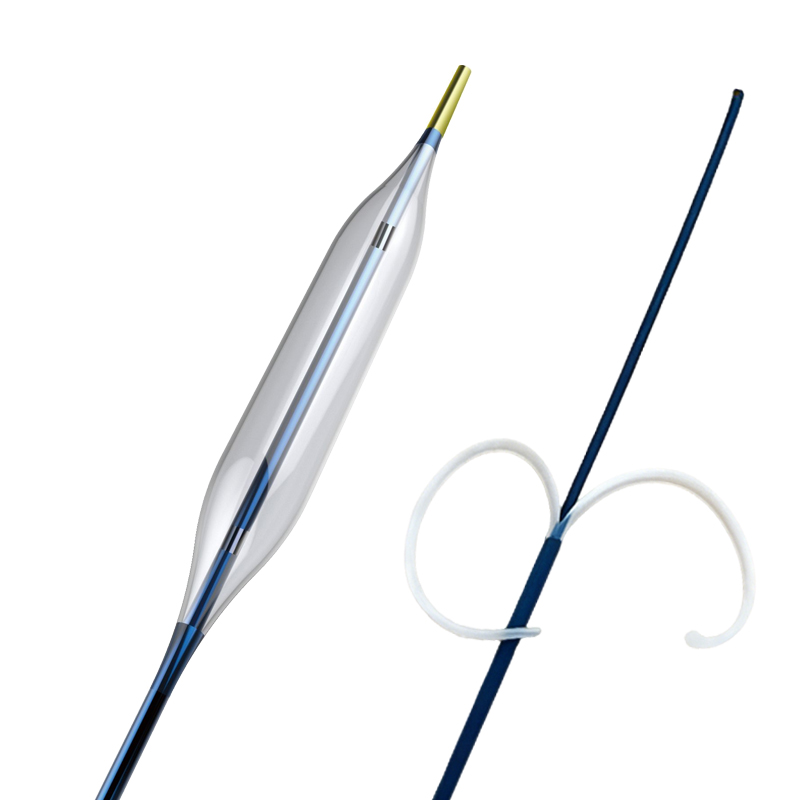
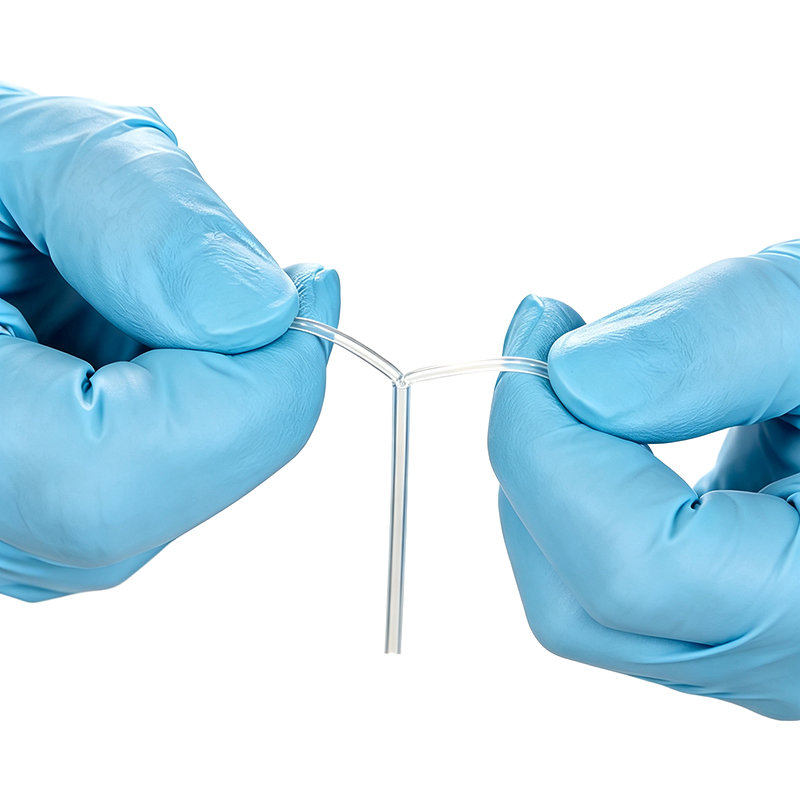
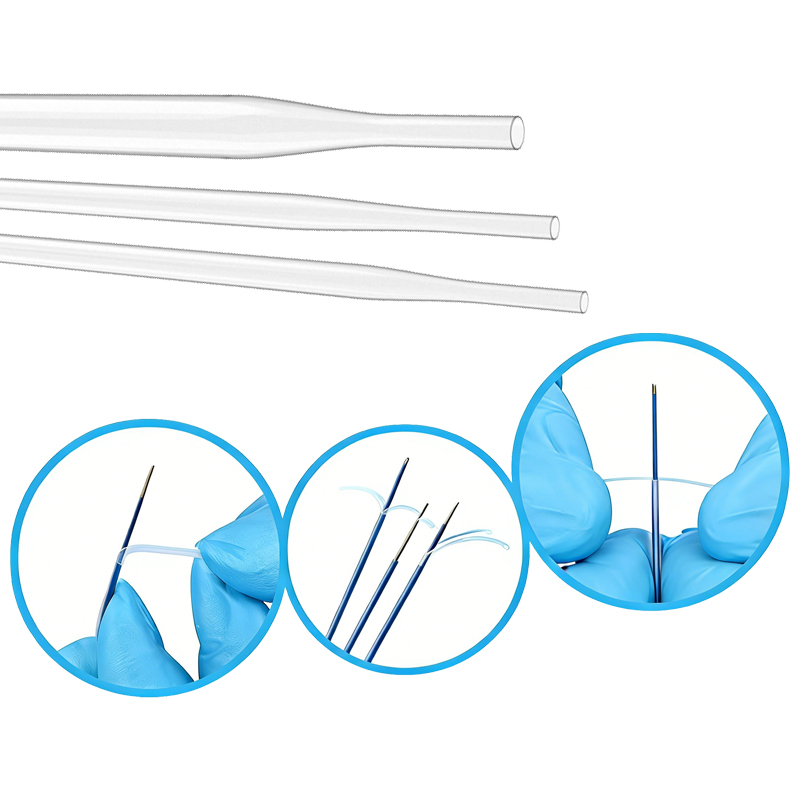
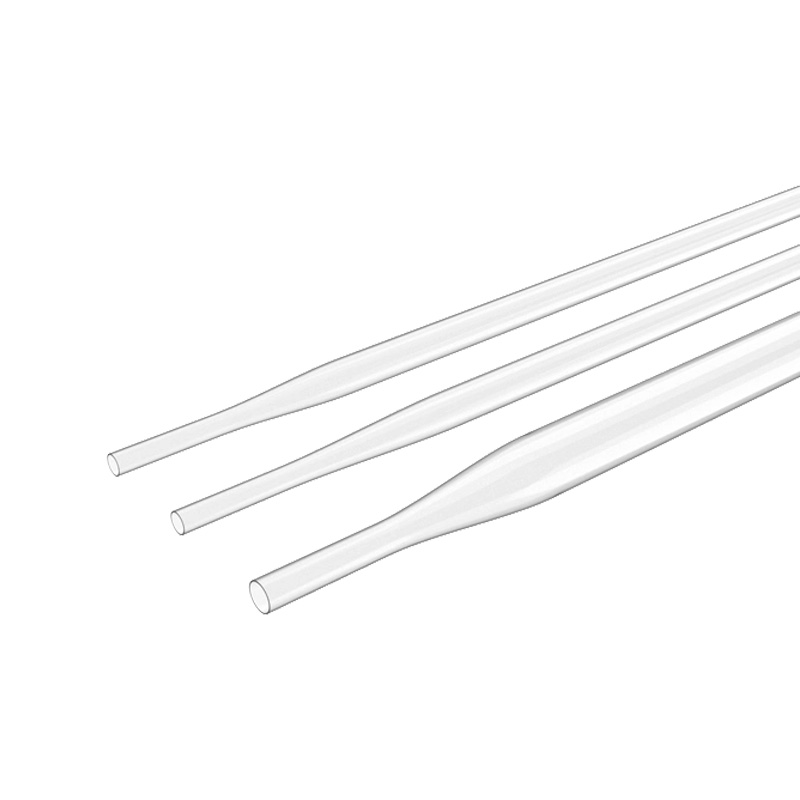
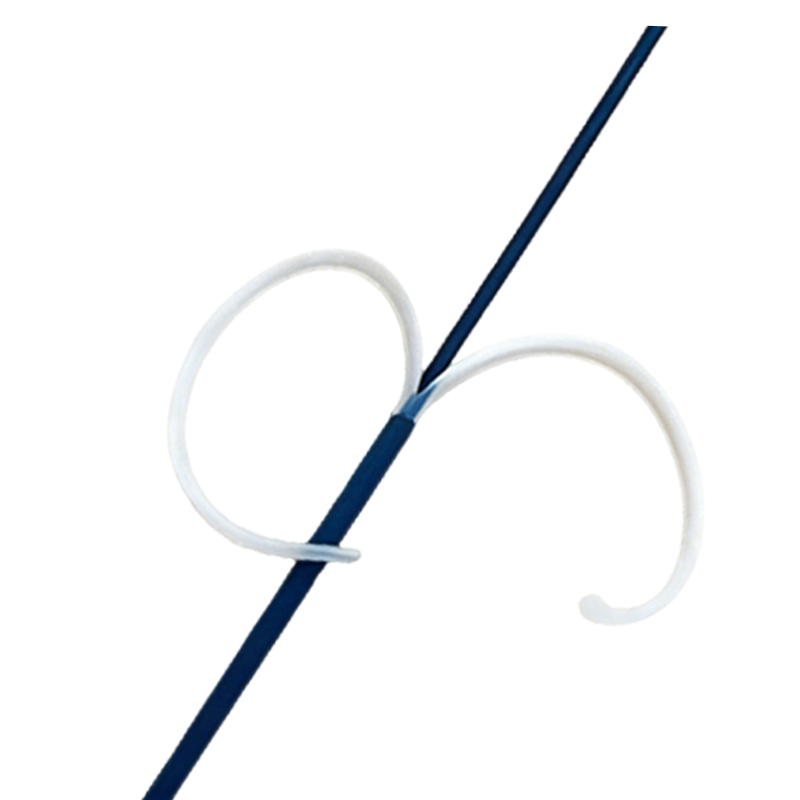
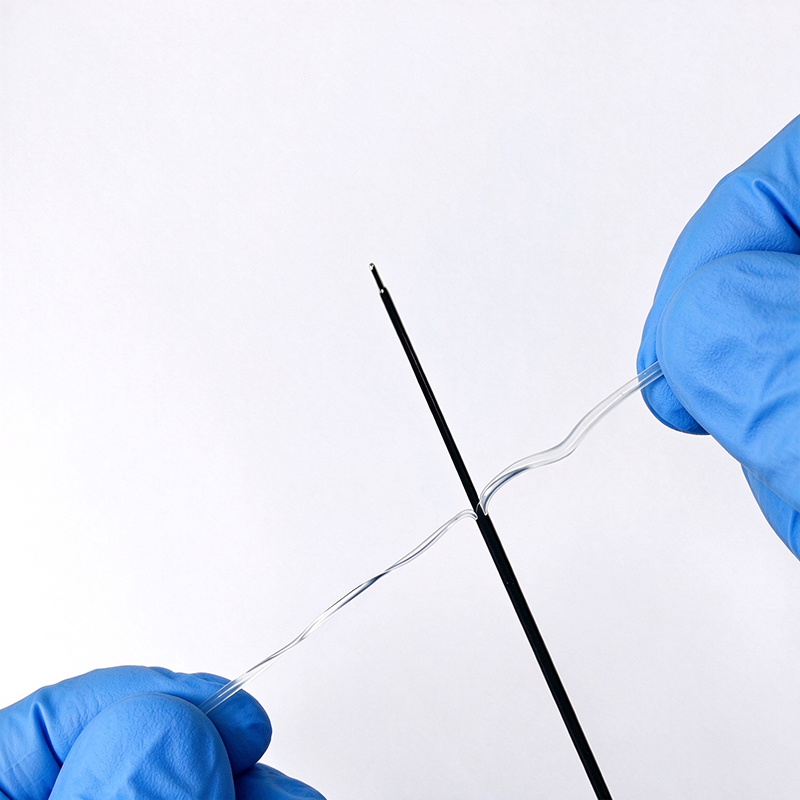
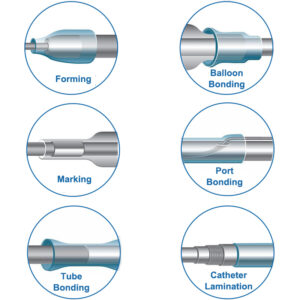
BH-2(PMT)-LS is made by medical grade modified polyolefin, it can be directly andeasily peeled the heat shrink tube away from the recovered shaft without additional heat. It is widely used as a process aid in medical products such as catheter construction/fusion welding sleeves, balloon positioning and welding, and tearable introducers.
Shrink Ratio: 2:1 or more
Compatibility with gamma rays and ETO sterilization
Packing by plastic spools double bag packaging
Special design it could withstand Max. 250℃ in the recovery process without bubbles
It could be peeled off directly and easily after heat shrink process, good axial tear propagation
Minimum shrink temperature: 70℃
Fully recovery temperature: +130℃~ +250℃
Operating temperature: -45℃~+105℃
Special design it could withstand Max. 250℃ in the recovery process without bubbles
ISO 10993 compliant, USP Class VI, no heavy metals
|
Model |
Size |
As Supplied ID |
Recovered ID (Max) |
Recovered WT |
Package (M/Spool) |
|||
|
Inch |
mm |
Inch |
mm |
Inch |
mm |
|||
|
BH-2(PMT)-LS-0.6 |
1/42 |
0.028 ± 0.005 |
0.71±0.10 |
0.011 |
0.28 |
0.010 ± 0.002 |
0.25±0.05 |
200 |
|
BH-2(PMT)-LS-0.8 |
1/32 |
0.040 ± 0.005 |
1.02±0.13 |
0.014 |
0.36 |
0.011 ± 0.002 |
0.28±0.05 |
200 |
|
BH-2(PMT)-LS-1.2 |
3/64 |
0.055 ± 0.005 |
1.40±0.13 |
0.020 |
0.51 |
0.016 ± 0.003 |
0.41±0.08 |
200 |
|
BH-2(PMT)-LS-1.6 |
1/16 |
0.072 ± 0.005 |
1.83±0.13 |
0.028 |
0.71 |
0.020 ± 0.003 |
0.51±0.08 |
200 |
|
BH-2(PMT)-LS-2.0 |
5/64 |
0.078 ± 0.005 |
2.21±0.13 |
0.033 |
0.85 |
0.020 ± 0.003 |
0.51±0.08 |
100 |
|
BH-2(PMT)-LS-2.4 |
3/32 |
0.107 ± 0.008 |
2.72±0.20 |
0.041 |
1.04 |
0.020 ± 0.003 |
0.51±0.08 |
100 |
|
BH-2(PMT)-LS-3.2 |
1/8 |
0.140 ± 0.010 |
3.56±0.25 |
0.057 |
1.45 |
0.020 ± 0.003 |
0.51±0.08 |
100 |
|
BH-2(PMT)-LS-4.8 |
3/16 |
0.205 ± 0.010 |
5.21±0.25 |
0.087 |
2.21 |
0.020 ± 0.003 |
0.51±0.08 |
50 |
|
BH-2(PMT)-LS-6.4 |
1/4 |
0.275 ± 0.015 |
6.99±0.38 |
0.118 |
3.00 |
0.025 ± 0.003 |
0.64±0.08 |
25 |
|
BH-2(PMT)-LS-9.5 |
3/8 |
0.415 ± 0.020 |
10.54±0.51 |
0.170 |
4.30 |
0.025 ± 0.003 |
0.64±0.08 |
Cut in length |
Customized dimensions and heat shrink ratio for your special applications on request.
Cross Reference :
Tyco Connectivity / Raychem MT-LWA, Junkosha FEP-PHST and Zeus FluoroPEELZ™
Applications:
|
Property |
Test Method |
Typical Data |
|
Longitudinal change |
ASTM D 2671 |
-10%~10% |
|
Concentricity as supplied |
ASTM D 2671 |
≥ 70% |
|
Tensile strength |
ASTM D 2671 |
≥ 10.3 Mpa |
|
Elongation at break |
ASTM D 2671,20″/minute |
≥ 200% |
|
Secant modulus (expanded) |
ASTM D 2671 |
≤ 2.5 x10⁴ Mpa |
|
Elongation at break after aging |
ASTM D 2671(175˚C/168 hrs) |
≥ 100% |
|
Electrical dielectric strength |
ASTM D 2671 |
≥19.7kV/mm |
|
Dielectric withstand |
ASTM D 2671(AC3000V/60Hz) |
60 Seconds no breakdown |
|
Heavy metals analysis |
USP XXII Physiochemical tests-plastic |
≤ 1 ppm(total of all metals) |
Written for catheter R&D and process engineers, OEM/ODM partners and sourcing teams. This FAQ focuses on replacement, peeling, thermal processing and compliance practice. All physical properties, dimensions and test values are published in the product datasheet and are intentionally not repeated here — refer to the BH-2(PMT)-LS product page for the full specification.
Q1. What should we verify before qualifying BH-2(PMT)-LS as a drop-in alternative for MT-LWA?
A1: Four checkpoints.
(1) Dimensional match: the as-supplied ID must slide over your catheter build, and the recovered ID and recovered wall must deliver the radial compression your lamination or bonding process needs — cross-check against our datasheet rather than assuming identical tolerance bands.
(2) Thermal window match: confirm that the recovery temperature window of the sleeve (see datasheet) matches the melt and reflow requirements of your substrate stack.
(3) Peel validation on your real build: run trial reflow cycles on actual shafts and verify clean, one-piece removal before locking the process.
(4) Complete your own process validation (IQ/OQ/PQ) before production release. Evaluation samples are available for exactly this purpose.
Q2. What practical differences should we expect versus MT-LWA?
A2: BH-2(PMT)-LS serves the same function class: a peelable, medical grade modified-polyolefin process-aid sleeve that is removed after reflow, lamination or bonding. Differences to plan for: dimensional tolerance bands follow our own datasheet; the standard color is clear; the tubing is supplied on plastic spools in double-bag packaging; and customized dimensions and shrink ratios are available on request for special applications. Qualifying this second source typically addresses the long distribution lead times, high small-quantity pricing and single-source risk frequently reported for branded peelable sleeves. Please note: MT-LWA is a trademark of TE Connectivity. We are an independent manufacturer and are not affiliated with, or endorsed by, TE Connectivity; no TE endorsement applies to our products.
Q3. How does the peeling process work in practice?
A3: After the reflow or bonding step, let the assembly cool down; the sleeve can then be peeled away directly from the recovered shaft without applying additional heat. The tubing is designed for good axial tear propagation: start the peel at a cut or nicked edge and pull along the axis so the sleeve tears open lengthwise in a controlled strip. Build a standardized peel step into your work instruction — defined start point, pull direction and pull angle — so that operators achieve consistent results.
Q4. What are the common peel failure modes, and how do we prevent them?
A4: The failure modes most frequently reported with peelable process-aid sleeves in catheter manufacturing:
(1) fragment residue — small pieces of sleeve left on the shaft, usually linked to over-processing or a poor peel start;
(2) mid-peel tearing — the strip breaks before full removal, often when the sleeve has been overheated and its tear behavior degraded;
(3) sleeve sticking to the jacket — excessive temperature or dwell time can cause the sleeve to anchor to the underlying polymer and pick up jacket material when peeled. Prevention: qualify a process window with the minimum heat and dwell that still achieves full reflow, increase traverse speed rather than temperature when possible, apply cooling promptly, and add a post-peel visual inspection step. If you observe these modes during trials, contact us — window tuning usually resolves them.
Q5. How do we suppress bubbles during reflow with this sleeve?
A5: Bubbles in catheter reflow usually come from four sources: moisture in hygroscopic substrates, air entrapment during shrinking, polymer degradation from excessive heat, and outgassing from the mandrel. Practical countermeasures: dry PEBAX, Nylon and PU components thoroughly before processing; manage the shrink direction and speed so air can escape instead of being sealed in at the ends; use the lowest temperature and dwell that achieve full reflow; and keep mandrels clean and free of drawing oil or solvent residue. The sleeve itself is specially designed to resist bubble formation at the upper end of its recovery window (see datasheet), which gives you more headroom when processing higher-melting substrates.
Q6. Is the sleeve compatible with reflow and welding of PEBAX, Nylon and PU substrates?
A6: These are the most common catheter jacket materials, and the sleeve is intended for exactly this type of reflow, fusion-welding and bonding work. Because substrate melt ranges vary widely with polymer family and durometer, always match the process window to your actual stack: confirm that full sleeve recovery is achieved at a temperature your substrates tolerate, and validate on the exact resin grade and hardness you run in production. Trial spools for window development are available on request.
Q7. Any precautions regarding contact with catheter substrates, cleaning agents or process aids?
A7: Keep contact surfaces clean: mandrel drawing oils, isopropyl alcohol that has not flashed off, and lubricant or adhesive residues on the build can all interfere with reflow quality and peeling. If your process uses cleaning agents, release aids or primers in contact with the sleeve, share the chemistry with us and we will run a compatibility assessment before your design freeze. The material contains no heavy metals (see datasheet), which simplifies your material declaration work.
Q8. Do gamma or EtO sterilization affect peel performance?
A8: The datasheet states compatibility with gamma irradiation and EtO sterilization. As a process aid, the sleeve is normally removed before the finished device is sterilized; if your workflow sterilizes components or subassemblies while the sleeve is still in place, validate peel behavior after sterilization on a lot basis, since radiation and EtO exposure can shift polymer properties. Repeated sterilization of the sleeve itself is not a standard use case — if you require it, treat it as a validation item and contact us for supporting samples.
Q9. Which process-aid applications is this sleeve suited for — and where is it NOT recommended?
A9: It is widely used as a process aid in medical product manufacturing: catheter construction and fusion-welding sleeves, balloon positioning and lamination, balloon tacking, tube bonding and tube forming. It is NOT recommended as a permanent component: do not use it as permanent insulation, strain relief or an implantable sleeve that stays on the device — for those needs choose a permanent medical grade tubing from our range. It is also not a substitute for adhesive-lined sealing, and it should not be used where the process temperature exceeds the window published in the datasheet.
Q10. Does ISO 10993 / USP Class VI material compliance mean our finished device is approved?
A10: No. We supply component tubing only. Material-level compliance with ISO 10993 / USP Class VI supports — but does not replace or constitute — regulatory approval or clearance of the finished medical device. Biological evaluation of the finished device (ISO 10993-1), sterilization validation, process validation and risk analysis (ISO 14971) are the responsibility of the device manufacturer. As a process aid the sleeve is normally removed before the finished device is completed, but any residual-contact evaluation remains part of your device-level assessment. We do not claim performance beyond the published datasheet.
Q11. How should the tubing be stored, and how do samples and the production ramp work?
A11: Keep the spools in their double-bag packaging, stored cool, dry and away from direct sunlight, UV and heat sources; use first-in-first-out rotation. Because peel performance is the critical functional property, we recommend a quick peel-behavior check on lots that have been stored for an extended period before releasing them to production. Evaluation samples of standard sizes are available on request for process-window development and peel validation; we then support pilot batches through to mass production, with lead times confirmed at quotation. Customized dimensions and shrink ratios can be developed for special applications.
Q12. What engineering information should an RFQ include?
A12: To receive a fast and accurate quotation, please provide: required size (as-supplied ID and/or recovered ID, plus any wall-thickness requirement); quantity and estimated annual volume; supply form (spool or cut length with tolerance); the process step the sleeve supports (e.g., catheter reflow, balloon lamination, tube bonding) and the substrate materials involved (e.g., PEBAX, Nylon, PU, with durometer if available); your reflow temperature range and equipment type; whether components will be sterilized with the sleeve in place, and by which method; any customization needs (special dimensions or shrink ratio); compliance documentation required (e.g., ISO 10993 / USP Class VI material test reports); and target price, delivery terms and destination.