|
Item
|
Specification/Description
|
|
OD Range
|
0.010” ~ 0.450” (0.25 ~ 11.40 mm)
|
|
Wall Thickness
|
0.003” ~ 0.024” (0.08 ~ 0.6 mm)
|
|
Compliant
|
ISO 10993-1 and USP Class VI
|
|
Three Layer
|
Inner liner, braid reinforcement layer & outer jacket
|
|
PPI (picks per inch)
|
Up to approximately 1 pick/inch (0.39 picks/cm).
|
|
Pattern
|
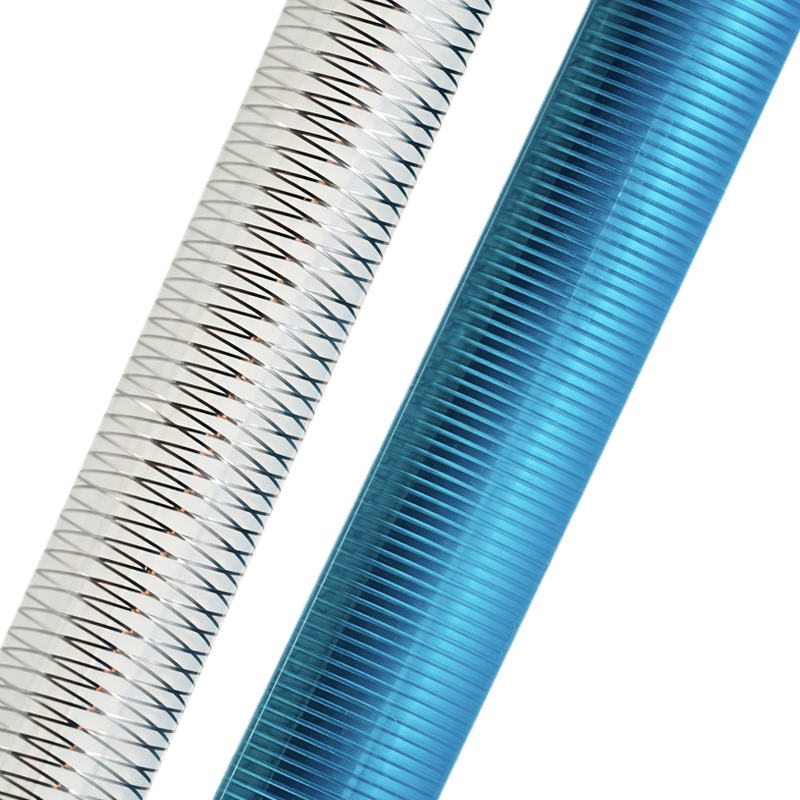
Diamond, Herringbone, Half diamond
|
|
Braided Materials
|
Nitinol, stainless steel, fabric, Kevlar, platinum, and a range of other materials.
|
|
Typical Flat Wire Size Range
|
0.0005″ x 0.0025″ ~ 0.001″ x 0.007″
(0.013 x 0.064mm ~ 0.025 x 0.178mm)
|
|
Typical Round Wire Size Range
|
0.001″ x 0.007″ (0.025 x 0.178mm)
|
|
Inner Liner & Outer Jacket Materials
|
Inner linings and outer jackets may use most thermoplastics or
fluoropolymers. PTFE, Nylon, FEP, ETFE, HDPE, Pebax and
other materials are also available.
|
|
Advantages
|
• Better torque transmission • Improved crush resistance
• Improved kink resistance • Resists collapse in vacuum
• Limiting stretch • Improved push ability
• Holding higher pressure • Compression resistance
• Strength
|
|
Applications
|
Heart valve systems as well as other cardiovascular applications,
Neurovascular applications, Endoscopic applications, Biopsy
devices, Ablation catheters, Electrophysiology catheters, High-
pressure tubing and more.
|
|
Other functions
|
Braid and coil combination are available on request.
|
Q1. What is braided reinforced tubing, and how is BH-MT-BRT constructed?
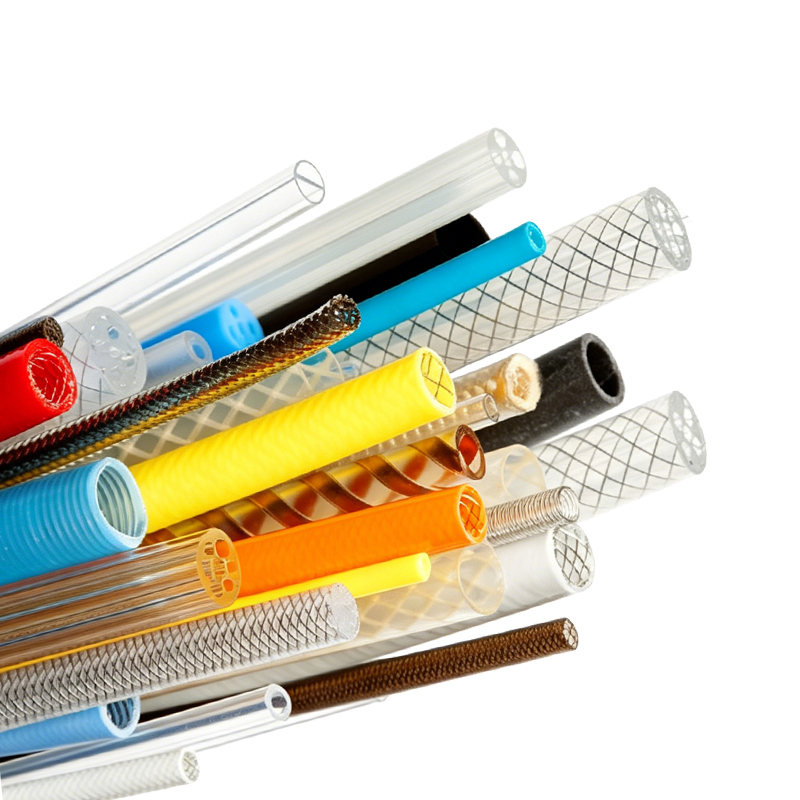
A1. BH-MT-BRT medical braided reinforced tubing is manufactured via an extrusion process in which a metal or fiber braided structure is fully encapsulated between two polymer layers, forming a three-layer construction: inner liner, braid reinforcement layer, and outer jacket. This integration of braided reinforcement into plastic tubing delivers dramatic improvements in burst pressure tolerance, axial compressive rigidity, and torque transfer performance compared to non-reinforced tubing.
Q2. What is the difference between a braided shaft and a coil-reinforced shaft?
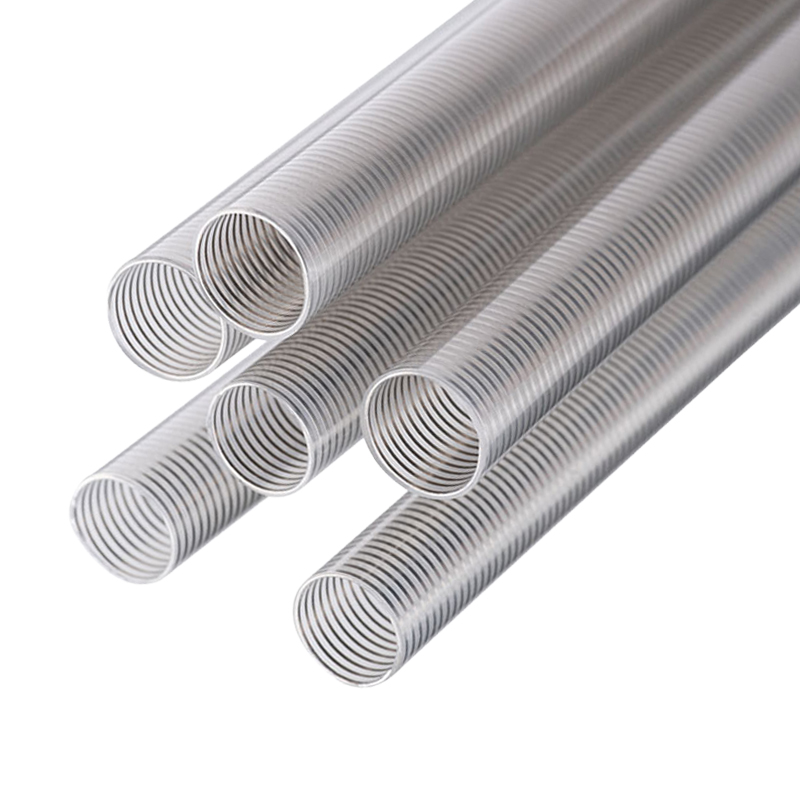
A2. This is one of the most frequently asked questions in catheter design forums. Braided reinforcement (as in BH-MT-BRT) uses interwoven metal or fiber wires in a diamond, herringbone, or half-diamond pattern, providing superior torque transmission, crush resistance, and kink resistance. Coil reinforcement uses a helical wire and offers better flexibility and bendability but lower torque response. BH-MT-BRT offers braid-and-coil combination constructions on request, allowing engineers to balance torque, flexibility, and kink resistance for specific applications.
Q3. What materials are used for the braid, and how do I select the right one?
A3. BH-MT-BRT supports a wide range of braided materials including nitinol, stainless steel, fabric, Kevlar, platinum, and other materials. Selection depends on the performance requirements of your application: nitinol offers superelasticity and kink resistance for tortuous vascular paths; stainless steel provides high strength and cost-effectiveness; Kevlar delivers high tensile strength with electrical insulation; platinum offers radiopacity for fluoroscopic visibility. The typical flat wire size range is 0.0005″ × 0.0025″ to 0.001″ × 0.007″ (0.013 × 0.064 mm to 0.025 × 0.178 mm).
Q4. What polymers can be used for the inner liner and outer jacket?
A4. BH-MT-BRT inner linings and outer jackets may use most thermoplastics or fluoropolymers. Available materials include PTFE, nylon, FEP, ETFE, HDPE, Pebax, and other materials. PTFE inner liners provide ultra-low friction for guidewire passage; Pebax outer jackets offer excellent flexibility and bonding characteristics; nylon provides high strength and puncture resistance. Material selection is driven by the target device profile, flexibility requirements, and bonding strategy.
Q5. What are the size ranges and key specifications of BH-MT-BRT?
A5. BH-MT-BRT covers an OD range of 0.010″ to 0.450″ (0.25 to 11.40 mm) with wall thickness from 0.003″ to 0.024″ (0.08 to 0.6 mm). Braid density (PPI, picks per inch) is available up to approximately 1 pick/inch (0.39 picks/cm). Braid patterns include diamond, herringbone, and half-diamond. The product is compliant with ISO 10993-1 and USP Class VI.
Q6. How does braided reinforcement improve catheter performance?
A6. Per the product specification, braided reinforcement provides: better torque transmission for steerable and deflectable catheters; improved crush resistance; improved kink resistance; resistance to collapse in vacuum; limiting stretch; improved pushability; holding higher pressure; compression resistance; and overall strength. These properties are critical for high-performance catheters that must navigate tortuous anatomy while maintaining precise control.
Q7. Which catheter applications are best suited for braided reinforced tubing?
A7. BH-MT-BRT finds widespread application in high-performance catheters, premium-grade medical tubing, high-pressure fluid transfer lines, anti-kink tubing, and deflectable-tip catheter systems. Specific applications include heart valve systems and other cardiovascular applications, neurovascular applications, endoscopic applications, biopsy devices, ablation catheters, electrophysiology catheters, and high-pressure tubing.
Q8. Is BH-MT-BRT biocompatible for blood-contacting applications?
A8. Yes. BH-MT-BRT is compliant with ISO 10993-1 and manufactured using USP Class VI materials, supporting device-level biocompatibility validation for blood-contacting applications. As with all medical device components, device-level biocompatibility evaluation per ISO 10993-1 (cytotoxicity, sensitization, irritation, hemocompatibility as applicable) is required for the finished device — material-level compliance supports but does not replace device-level testing.
Q9. Can I customize the braid pattern, density, or materials for my specific application?
A9. Yes. BH-MT-BRT offers multiple customization options: three braid patterns (diamond, herringbone, half-diamond); braid density up to approximately 1 pick/inch; a wide range of braid materials (nitinol, stainless steel, fabric, Kevlar, platinum, and others); and a broad selection of inner liner and outer jacket polymers (PTFE, nylon, FEP, ETFE, HDPE, Pebax, and others). Braid-and-coil combination constructions are also available on request. Engineers on Reddit frequently ask about sourcing custom braid configurations, and BH-MT-BRT is designed to address this need.
Q10. How do I select the right braided tubing configuration for my device?
A10. Consider these factors in sequence:
(1) Define the minimum ID required for your working channel or guidewire;
(2) Determine the maximum OD your delivery profile allows;
(3) Select inner liner material based on lubricity and bonding requirements (PTFE for lowest friction, Pebax for bonding ease);
(4) Select braid material based on whether you need radiopacity (platinum), superelasticity (nitinol), or cost-effectiveness (stainless steel);
(5) Select braid density (PPI) based on the torque vs. flexibility trade-off — higher PPI gives better torque and kink resistance but reduces flexibility;
(6) Select outer jacket material for the desired surface properties and bondability; (7) Verify burst pressure, torque response, and kink radius through prototype testing.