
Founded in 2010, FLYPOWER is a high-tech enterprise specializing in the research, development, production, and sales of polymer materials. Leveraging its core technological strengths and starting with heat-shrink materials, the company established its Medical Division in 2018, expanding its business and product portfolio into the fields of medical devices and catheters, with the mission of becoming a globally leading supplier of materials for interventional medical devices.
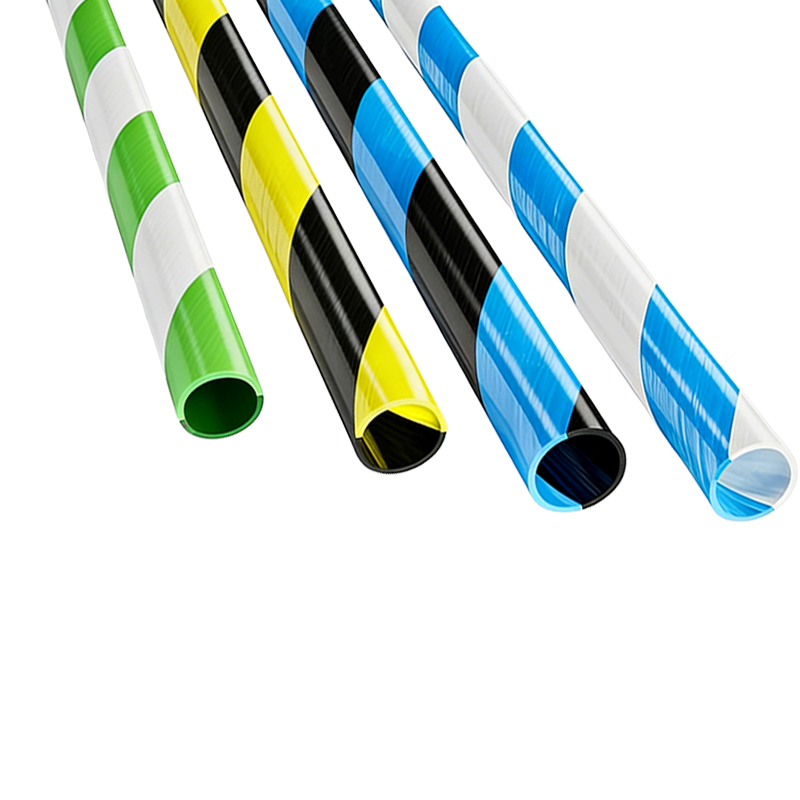
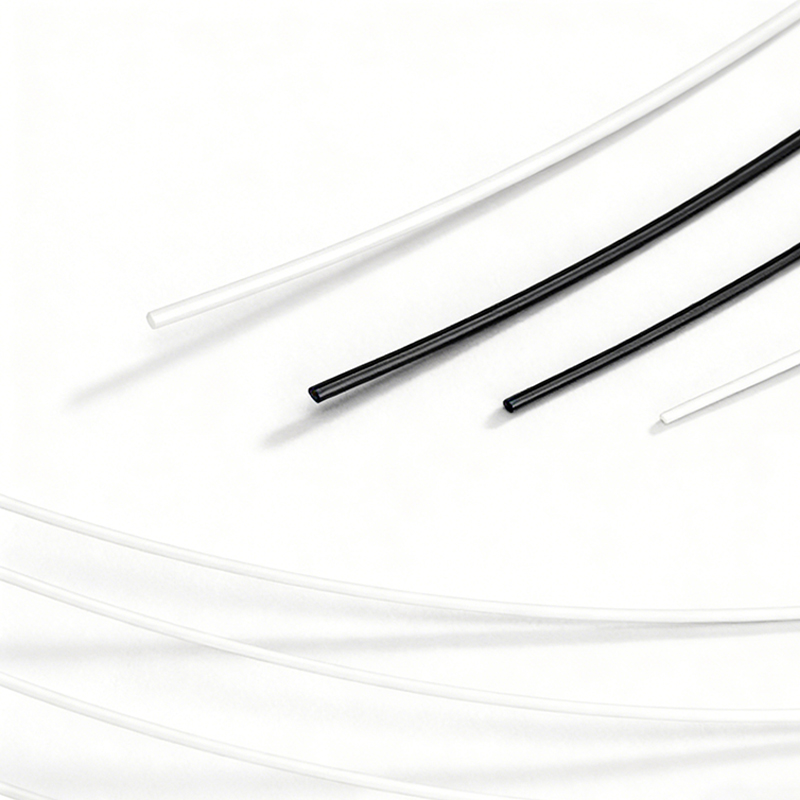
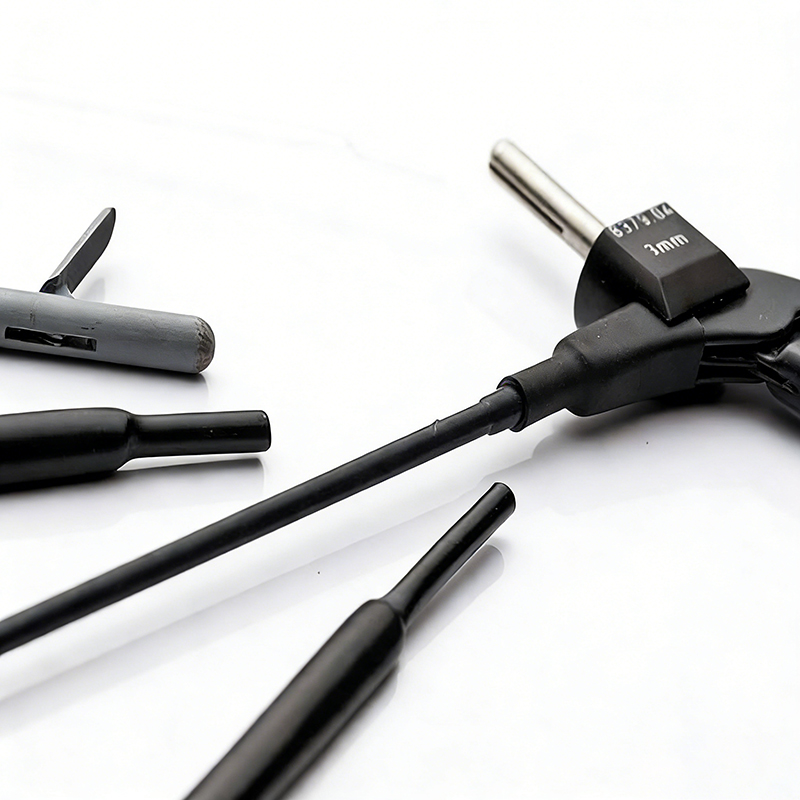
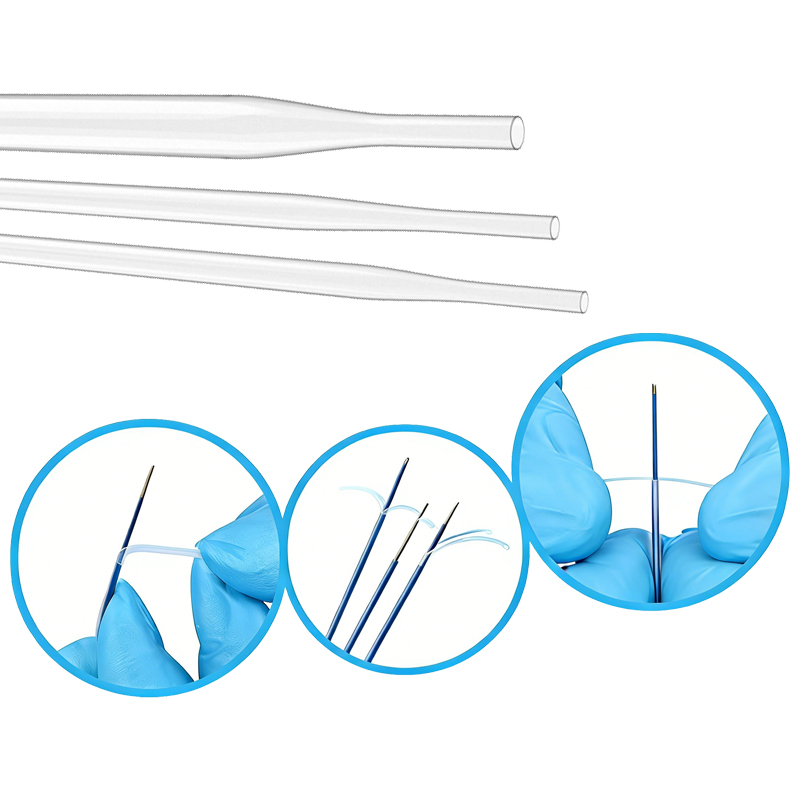
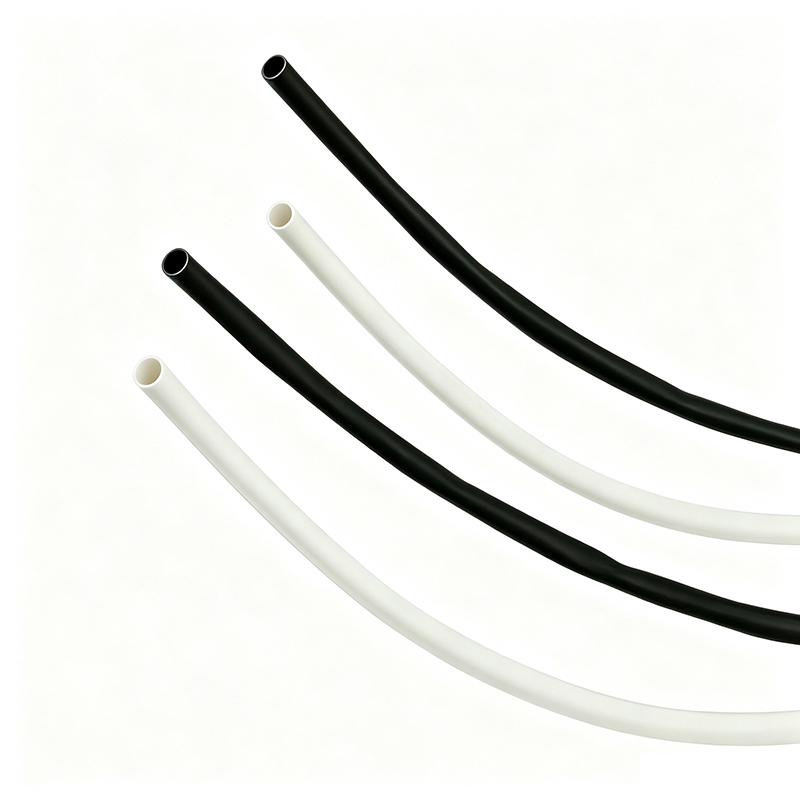
联系我们 No. 77, Bao Nan Road,Nan Lian Community,Long Gang Street,Long Gang District, Shenzhen, Guangdong,518116,China (+86)755 2917 9250 [email protected]BH-MT-PTFE-ZBA PTFE Zebra (Spiral) heat shrink tubing has unique color pattern greatly enhances visibility, helping doctors to more clearly judge the insertion rate into the body during surgery. It is used for flexible endoscopic and urology devices by being recovered on a guide wire. In addition, it is also widely used for coating surgical instruments, dielectric insulation, component covering, waterproofing, abrasion/corrosion protection, Reflow bonding, etc.
Shrink Ratio: 4:1
Pitch: 4-6 stripes per inch(it could be customized)
Spiral colored pattern enhances visibility
Compatibility with ETO and Autoclave Sterilization
Operating temperature: -65℃~260℃
Minimum fully recovery temperature: 350℃
ISO 10993, USP Class VI compliant
• Minimum expanded wall thickness: 0.002″ (0.051mm) (Smaller wall sizes need to be checked on case by case basis.)
• Minimum expanded ID: 0.018″ (0.46mm) larger than maximum core diameter.
• Minimum recovered ID: 0.005″ (0.127mm) smaller than minimum core diameter.
• Recovered wall thickness +/- .001″ (0.0025mm) when over the nominal core.
|
Property |
Specification Requirement |
|
Property |
Specification Requirement |
|
Water absorption |
<0.01% |
Tensile strength |
≥20MPa |
|
|
Oxygen index |
>95% |
Elongation at break |
≥200% |
|
|
Flammability |
V0 |
Compressive strength |
3500 psi |
|
|
Weather resistance |
Excellent |
Impact strength |
3.5 Ft-Lb/in |
|
|
Chemical resistance |
Excellent |
Flexural Modulus |
275-620 Mpa |
|
|
Melting point |
330℃ |
Tensile Modulus |
80000 psi |
|
|
Thermal conductivity |
BTU/h/ft/°F 1.7 |
Volume resistivity |
≥1018Ω‧cm |
Written for guidewire, endoscopy/urology-device and electrosurgical R&D and process engineers, OEM/ODM partners and sourcing teams. This FAQ focuses on selection, spiral-stripe processing practice, failure modes, sterilization, compliance boundaries and sourcing. All physical properties, dimensions, shrink ratio, pitch and test values are published in the product datasheet and are intentionally not repeated here — refer to the BH-MT-PTFE-ZBA product page for the full specification.
Q1. What should we verify before selecting BH-MT-PTFE-ZBA for a guidewire or device build?
A1. Five checkpoints.
(1) Fit rules: the datasheet defines how the expanded and recovered dimensions must relate to your core diameter — follow those rules exactly; on a high-ratio sleeve the clearance at the expanded state and the grip at the recovered state are both designed values, not assumptions.
(2) Profile budget: confirm the recovered wall within your OD envelope.
(3) Stripe function: decide what the spiral pattern must do — intra-procedural visibility of wire movement and rotation is the classic purpose (see datasheet applications) — and select the color combination and pitch accordingly; standard combinations and custom colors are listed in the datasheet, and pitch can be customized.
(4) Processing prerequisites: PTFE recovery requires substantially higher temperatures than polyolefin or PVDF sleeves (see datasheet), so confirm your heating equipment and the temperature tolerance of everything under the sleeve.
(5) Run your own IQ/OQ/PQ before release; evaluation samples are available for exactly this work.
Q2. Which heating equipment suits zebra PTFE recovery, and what failure modes should we watch for?
A2. Pattern fidelity demands uniform heat: use calibrated forced-air convection ovens, infrared tunnels or heated-mandrel stations that deliver 360° even heating with closed-loop control. Manual heat guns are the leading cause of stripe defects — a local hot spot recovers first and drags the still-expanded section, distorting the spiral. Failure modes frequently reported with striped PTFE sleeves:
(1) stripe distortion and pitch drift — the signature defect of zebra tubing, driven by thermal gradients, axial friction from over-tight fixturing, or pausing mid-recovery; prevent it with uniform heating, progressive center-to-end (or one-directional) recovery, and fixtures that let the sleeve move axially as it shrinks;
(2) bubbles or blisters — PTFE is not hygroscopic, so trace these to air sealed in at the ends, substrate or mandrel outgassing, or too-rapid heating;
(3) whitening or chalky marks — stress whitening from kinking or tight bending;
(4) crushing or imprinting of fragile cores — qualify the recovery force on fine wires and thin polymer tubes;
(5) longitudinal shrink shift — position with allowance and heat symmetrically to avoid end exposure or splitting.
Q3. What should we know about contact with PEBAX, PFA, FEP, metals and medical adhesives?
A3. Temperature first: PTFE recovery heat is above the melt range of PEBAX, Nylon and PU jackets, so do not recover the sleeve directly over these substrates unless the assembly is supported and the heat exposure is validated — for low-temperature jacket reflow, choose a lower-temperature process-aid sleeve from our range. Over metal cores — guidewires, hypotubes, instrument shafts — zebra PTFE is the classic fit, adding visibility marking, lubricity, insulation and corrosion protection in one layer (see datasheet applications). PFA/FEP components tolerate elevated temperatures, but validate the exact stack because the recovery step reaches deep into their service range. On adhesion: PTFE is chemically inert and non-stick; adhesives, primers and overmolding materials will not bond to it without surface treatment such as sodium etching or plasma treatment — plan that step explicitly if your design requires bonding to or over the sleeve.
Q4. Any precautions for chemicals and disinfectants, and what material declarations are available — including the colorants?
A4. PTFE is among the most chemically resistant polymers in use, essentially unaffected by common hospital disinfectants, alcohols and most solvents, with excellent chemical resistance per the datasheet. If your device will see repeated exposure to a specific agent, share the chemistry and exposure cycle and we will support a compatibility assessment. On documentation for a colored product, the colored stripes are integral to the tubing, not a surface ink: the material system is covered by the ISO 10993 / USP Class VI material compliance stated in the datasheet, and we support your material-declaration work with composition statements covering the colorant system. As fluoropolymers face increased regulatory attention in some regions, raise any substance-level declaration needs (for example EU MDR 10.4 screening or PFAS-related questionnaires) in the RFQ so the correct documentation is prepared from the start.
Q5. Which sterilization methods are supported, and what changes should we expect with repeated cycles?
A5. The datasheet states compatibility with EtO and autoclave (high-pressure steam) sterilization. Two practical notes.
(1) Gamma irradiation and dry heat are not listed among the qualified methods for this grade; if your device uses either, treat it as a validation item and request samples for post-exposure testing.
(2) Even with qualified methods, verify the recovered sleeve on your actual device across the full intended cycle count: on a striped product this means checking not only dimensional stability, surface condition and — where relevant — dielectric integrity, but also stripe legibility and color contrast, because repeated thermal cycling against a metal core can drive end shrink-back and creep at bend points over time, and any visible pattern degradation defeats the purpose of the marking.
Q6. Where is zebra PTFE heat shrink the right choice — and where is it NOT recommended?
A6. Well suited (see datasheet applications): visibility marking on guidewires for flexible endoscopic and urology devices, where the spiral pattern helps the physician judge insertion movement and rotation; coating of surgical instruments; dielectric insulation; component covering; waterproofing; abrasion and corrosion protection; and reflow bonding work. Use with caution or not recommended: joints under continuous dynamic flexing — PTFE is stiffer than FEP/PFA and more prone to fatigue and stress whitening at tight repeated bend radii; high-abrasion sliding contact, where FEP or PFA generally wear better; any use expecting the sleeve to carry structural or tensile load; and recovery directly over low-melting thermoplastic jackets (see the compatibility question). One honest boundary on the pattern itself: the spiral stripes are a visibility aid, not a calibrated measurement scale — if your device needs depth measurement, specify and validate that requirement separately rather than reading absolute positions off the stripes.
Q7. Does ISO 10993 / USP Class VI compliance — or the published dielectric rating — mean our finished device is approved?
A7. No — and this distinction matters in audits. We supply component tubing only. Material-level compliance with ISO 10993 / USP Class VI supports, but does not replace or constitute, regulatory approval of your finished medical device: biological evaluation of the finished device (ISO 10993-1), sterilization validation, process validation (IQ/OQ/PQ) and risk analysis (ISO 14971) remain the device manufacturer’s responsibility. The same logic applies electrically: the dielectric properties in our datasheet are material-level test values, not an electrical safety certification of your instrument. Dielectric withstand (hi-pot), leakage current, creepage and clearance verification on the finished device (for example under the IEC 60601 series where applicable) must be performed and documented by you on the final assembly, including after sterilization and aging. We do not claim performance beyond the published datasheet.
Q8. How should the tubing be stored, and does long-term storage change its properties?
A8. PTFE itself is exceptionally aging-resistant: no plasticizers to migrate, essentially no moisture uptake (see datasheet), stable against oxidation, and the datasheet assigns no fixed shelf life. Practical guidance: keep the spools in their packaging, stored clean, dry, away from heat sources and away from prolonged direct sunlight — the polymer shrugs off UV, but protecting stripe contrast is cheap insurance for a visibility product; avoid crushing, kinking or sharply bending the tubing in storage, since pre-recovery deformation leaves whitening marks and uneven recovery; apply first-in-first-out rotation. For lots stored long-term, run a quick recovery and visual check — including pattern fidelity — on a sample piece before releasing the lot to production, and include storage conditions in your incoming-inspection plan.
Q9. Do you support cutting, custom colors, custom pitch or special dimensions?
A9. Cut-to-length supply is supported; on a striped product, tell us if the cut position relative to the pattern matters for your assembly, so cutting is referenced to the stripe phase rather than only to length. Custom colors are available on request (standard combinations are listed in the datasheet), and the stripe pitch can be customized (see datasheet) — share the visibility requirement and wire diameter and we will propose a pitch. Customized dimensions can be evaluated for special applications. Hole punching or similar features are possible in principle but create split-initiation points in a recovering sleeve, so they are evaluated case by case with your process team before we commit.
Q10. How do samples and the ramp from trials to mass production work?
A10. Evaluation samples of standard sizes and standard color combinations are available so you can qualify the recovery window — and, critically for a zebra product, the pattern fidelity after recovery — on your real equipment and core. We recommend finalizing your heating recipe with sample material before design freeze, since stripe distortion is a process-driven defect, not a material lottery. We then support pilot batches through to mass production, with lead times confirmed at quotation. If you are dual-sourcing against an incumbent fluoropolymer supplier, share the reference specification — including color, pitch and dimensional class — and we will map the closest equivalent for side-by-side trials.
Q11. What engineering information should an RFQ include?
A11. For a fast and accurate quotation, please provide: required size (expanded and/or recovered ID, and recovered wall requirement); the core the sleeve will cover (guidewire/hypotube/shaft material and diameter range, including tolerances); color combination (standard or custom) and required stripe pitch or visibility objective; whether the stripes serve as a functional visibility aid only, or are expected to support any measurement function; quantity and estimated annual volume; supply form (spool or cut length, with tolerance, edge quality and any cut-position-relative-to-pattern requirement); your heating equipment type and available process temperature; sterilization method and the number of cycles the device must survive; electrical requirements if used as insulation (operating voltage, hi-pot level of the finished device); secondary operations (cutting, custom pitch, custom color); compliance documentation required (ISO 10993 / USP Class VI material reports, composition and colorant declarations); and target price, delivery terms and destination.
Q12. What should we know about material declarations, MDM documentation and FDA master files?
A12. Practical points.
(1) We provide material-level documentation — composition statements covering the base polymer and the colorant system, plus ISO 10993 / USP Class VI material test reports — for your technical file, EU MDR documentation or supplier-qualification records.
(2) Where a device master file (MAF) reference is the right mechanism, we can discuss authorization letters so your regulatory team can reference our material data in your submission; scope is agreed case by case.
(3) What we do not do: we make no claim or commitment on behalf of your finished device — our material documents imply no device-level FDA clearance, no CE conformity, and no device-level biological or electrical safety approval.
(4) Change control: if your regulatory filing requires notification agreements for material, colorant or process changes, raise this before design freeze so it is covered in the supply agreement — this matters especially on a colored product, where a colorant change is a reportable event in many device filings.