|
Size
|
As supplied(mm)
|
Fully Recovered(mm)
|
Standard Package
|
|
ID
|
Thin Type
|
Thick Type
|
ID
|
Thin Type
|
Thick Type
|
Meter/Spool
|
|
φ1.0
|
1.0
|
0.5±0.1
|
0.80±0.1
|
0.6
|
0.7±0.1
|
1.1±0.1
|
200
|
|
φ1.5
|
1.5
|
0.5±0.1
|
0.80±0.1
|
0.8
|
0.7±0.1
|
1.1±0.1
|
200
|
|
φ2.0
|
2.0
|
0.5±0.1
|
0.80±0.1
|
1.2
|
0.7±0.1
|
1.1±0.1
|
200
|
|
φ2.5
|
2.5
|
0.5±0.1
|
0.80±0.1
|
1.5
|
0.7±0.1
|
1.1±0.1
|
200
|
|
φ3.0
|
3.0
|
0.5±0.1
|
0.80±0.1
|
1.8
|
0.7±0.1
|
1.1±0.1
|
200
|
|
φ3.5
|
3.5
|
0.5±0.1
|
0.80±0.1
|
2.0
|
0.7±0.1
|
1.1±0.1
|
100
|
|
φ4.0
|
4.0
|
0.5±0.1
|
0.80±0.1
|
2.5
|
0.7±0.1
|
1.1±0.1
|
100
|
|
φ4.5
|
4.5
|
0.5±0.1
|
0.80±0.1
|
2.8
|
0.7±0.1
|
1.1±0.1
|
100
|
|
φ5.0
|
5.0
|
0.5±0.1
|
0.80±0.1
|
3.0
|
0.7±0.1
|
1.1±0.1
|
100
|
|
φ6.0
|
6.0
|
0.5±0.1
|
0.80±0.1
|
3.8
|
0.7±0.1
|
1.1±0.1
|
100
|
|
φ7.0
|
7.0
|
0.5±0.1
|
0.80±0.1
|
4.0
|
0.7±0.1
|
1.1±0.1
|
100
|
|
φ8.0
|
8.0
|
0.5±0.1
|
0.80±0.1
|
4.8
|
0.7±0.1
|
1.1±0.1
|
100
|
|
φ9.0
|
9.0
|
0.5±0.1
|
0.80±0.1
|
5.0
|
0.7±0.1
|
1.1±0.1
|
100
|
|
φ10.0
|
10.0
|
1.0±0.1
|
1.50±0.1
|
6.5
|
1.7±0.1
|
2.5±0.1
|
100
|
|
φ12
|
12.0
|
1.0±0.1
|
1.50±0.1
|
7.0
|
1.7±0.1
|
2.5±0.1
|
100
|
*Other sizes are available on request.
|
Property
|
Typical Data
|
|
Density 25℃
|
1.2
|
|
Rigidity JIS-A
|
70
|
|
Tensile strength
|
6.9Mpa(70Kgf/cm)
|
|
Elongation at break
|
400%
|
|
Tensile strength at break JIS-A
|
25Kgf/Cm
|
|
Volume resistance
|
2*1214 Ω.cm
|
|
Breakdown Voltage (1mm)
|
25KV
|
|
Dielectric constant (*)50Hz
|
3.2
|
|
Flame Retardancy UL-224
|
VW-1
|
|
Radiation resistance – 106MGy
|
Pass
|
|
Chemical resistance
|
Not strong acid or alkali resistance
|
|
Aging 200oC- 4hours, 180oC-168 hours.
|
Pass
|
Q1: What is BH-MT-SR200 medical-grade silicone heat-shrink tubing?
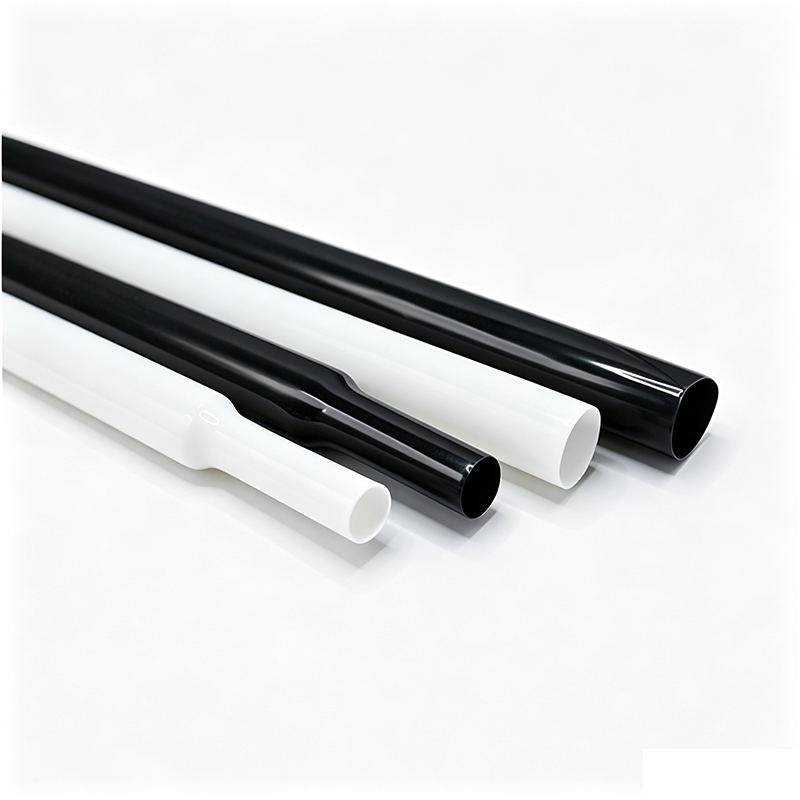
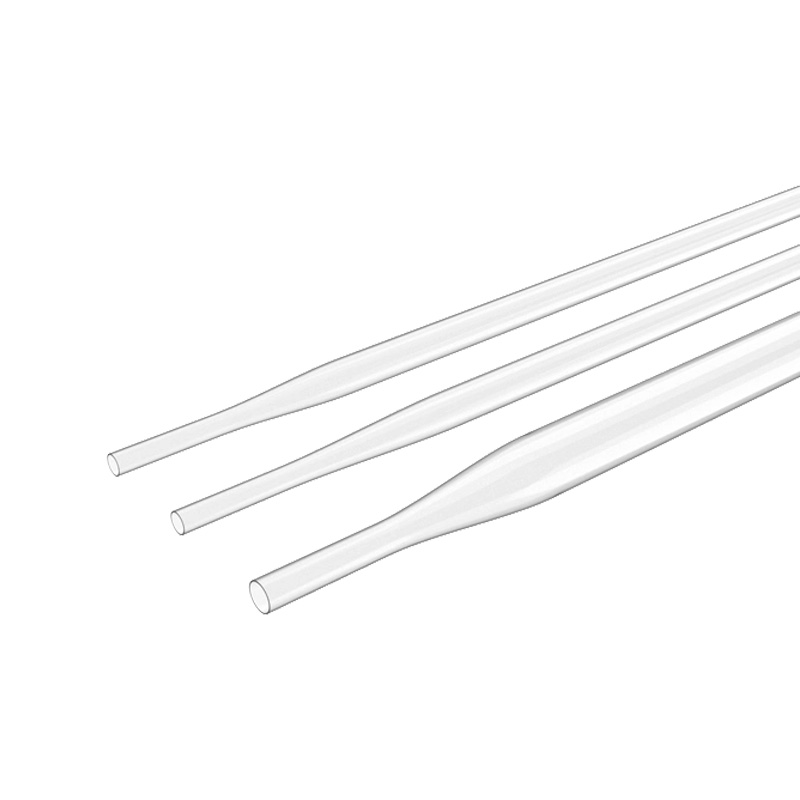
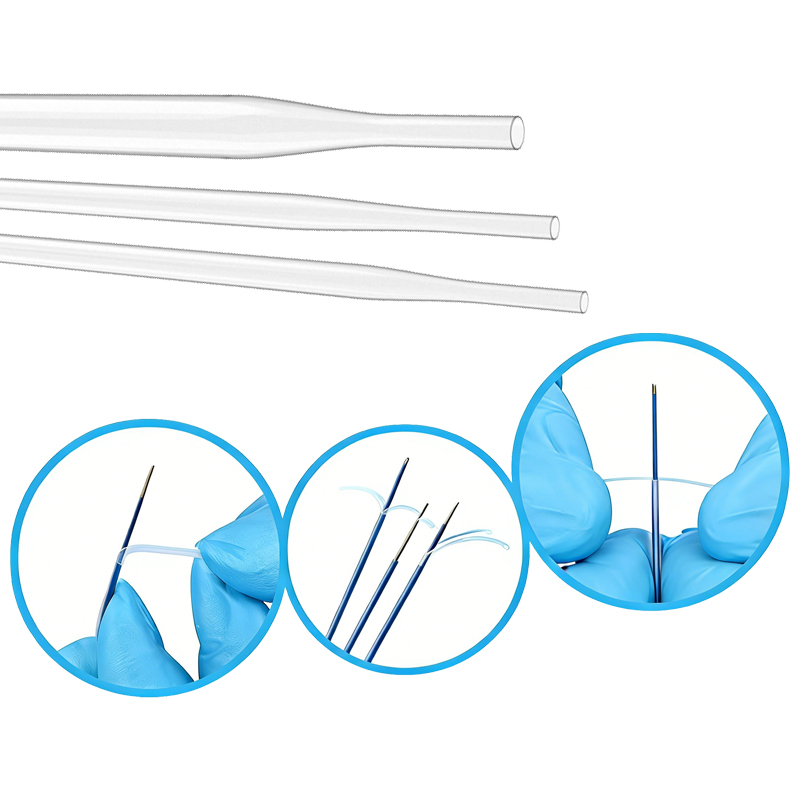
A1: BH-MT-SR200 is a heat-shrinkable tubing made from silicone rubber compounded with a radiation-modified polymer elastomer. During manufacture it is radiation cross-linked and expanded; when reheated it recovers to a smaller diameter, conforming tightly around the part it covers — providing electrical insulation, mechanical protection, and strain relief in one operation. It is designed for the insulation and protection of medical device components and assemblies.
Q2: What is the shrink ratio?
A2: Approximately 1.7:1. Plan the fit so the fully recovered ID is smaller than the smallest diameter of your substrate, and the as-supplied ID passes easily over the largest diameter of the assembly.
Q3: At what temperature does it shrink? Will that damage my component?
A3: Shrinkage begins at a minimum of 90 °C, and full recovery is achieved at approximately 170 °C. Whether 170 °C is safe depends entirely on your component’s thermal rating — verify compatibility by testing on real parts, and apply heat evenly (heat gun or oven) rather than overheating one spot. Contact our engineering team if your process window is tight.
Q4: What is the operating temperature range?
A4: −55 °C to +200 °C. The tubing retains flexibility and insulating properties across the whole range — including low-temperature flexibility that polyolefin typically cannot match. Per the datasheet, it also passes heat-aging tests of 200 °C / 4 h and 180 °C / 168 h.
Q5: Is the material biocompatible? What certifications does it have?
A5: The material is formulated to comply with ISO 10993-1 and USP Class VI (material level), and is RoHS compliant. We provide material-level compliance documents to support your technical file.
*Important: material-level compliance means the raw material passed the corresponding biological tests. It does not mean a finished device made with this tubing automatically passes regulatory review — the finished device still requires its own biological evaluation and verification under ISO 10993-1. Device manufacturers remain responsible for their own submissions (e.g., FDA 510(k)/PMA, EU MDR).*
Q6: Which sterilization methods is it compatible with? Can it be autoclaved repeatedly?
A6: Per the datasheet, it is compatible with steam / high-pressure (autoclave), ethylene oxide (EtO), and low-dose gamma sterilization. The material’s aging-test results support steam exposure, but how many cycles your assembly tolerates depends on the entire device — validate the sterilization cycle on the finished product.
Q7: What are the electrical insulation properties?
A7: Per the datasheet: volume resistivity 2 × 10¹⁴ Ω·cm; breakdown voltage (1 mm wall) 25 kV; dielectric constant (50 Hz) 3.2.
Q8: What are the mechanical properties — tensile strength, elongation, tear strength?
A8: Per the datasheet: tensile strength 6.9 MPa (≈ 70 kgf/cm²); elongation at break 400%; hardness JIS-A 70; tear / tensile-at-break resistance (as listed) 25 kgf/cm; density 1.2 g/cm³. The 400% elongation gives excellent conformity over irregular shapes and good flex life. It also meets UL-224 VW-1 flame retardancy.
Q9: What are typical medical applications?
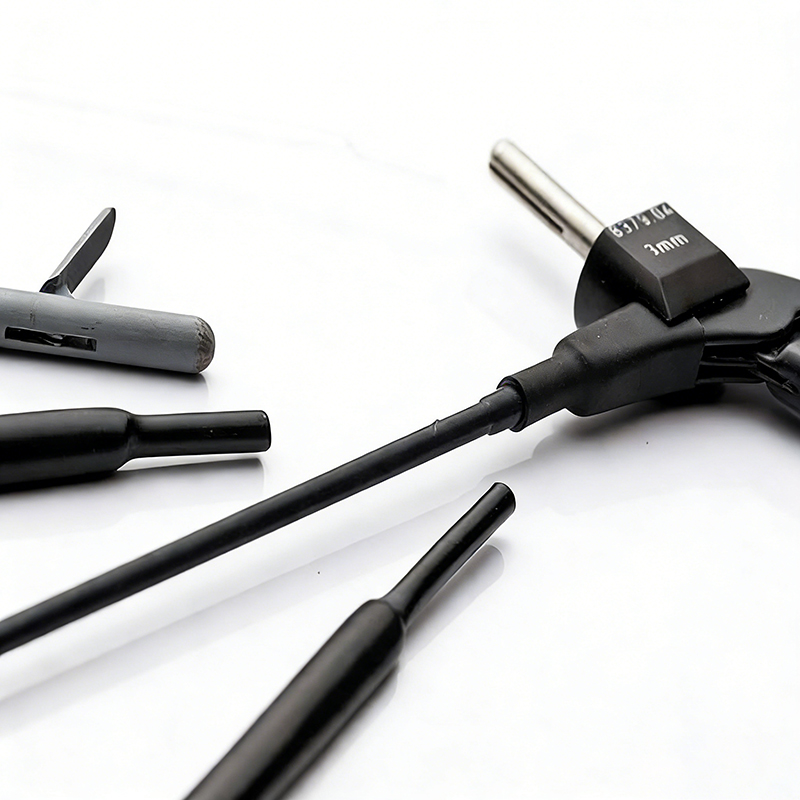
A9: Electrical insulation of wiring, leads, and connections; abrasion and mechanical protection of flexible joints and cable transitions; strain relief at connector and cable terminations; insulation of components in instruments that undergo sterilization; insulation for heating elements, sensors, and probe assemblies. Final suitability must be verified for your specific device, contact type, and contact duration.
Q10: How does silicone compare with polyolefin and FEP heat-shrink tubing?
A10: Silicone (this product): −55 °C to +200 °C, steam/autoclave capable, soft and highly flexible, ~1.7:1 ratio. Polyolefin: usually 2:1–4:1 ratios and lower cost, but lower operating temperature (~125–135 °C) and stiffens in the cold. FEP: best chemical resistance, high transparency, and low friction — often used as a processing aid — but much stiffer. Choose silicone when temperature, autoclaving, and elasticity are the priorities; choose FEP when chemical inertness and lubricity matter most.
Q11: What customization options are available, and what should I include in my RFQ?
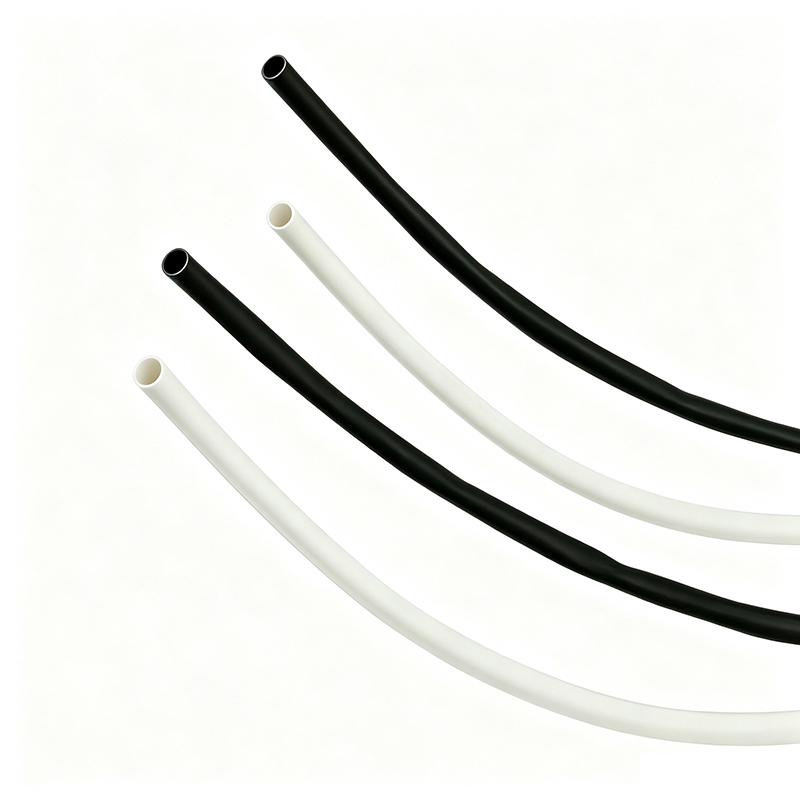
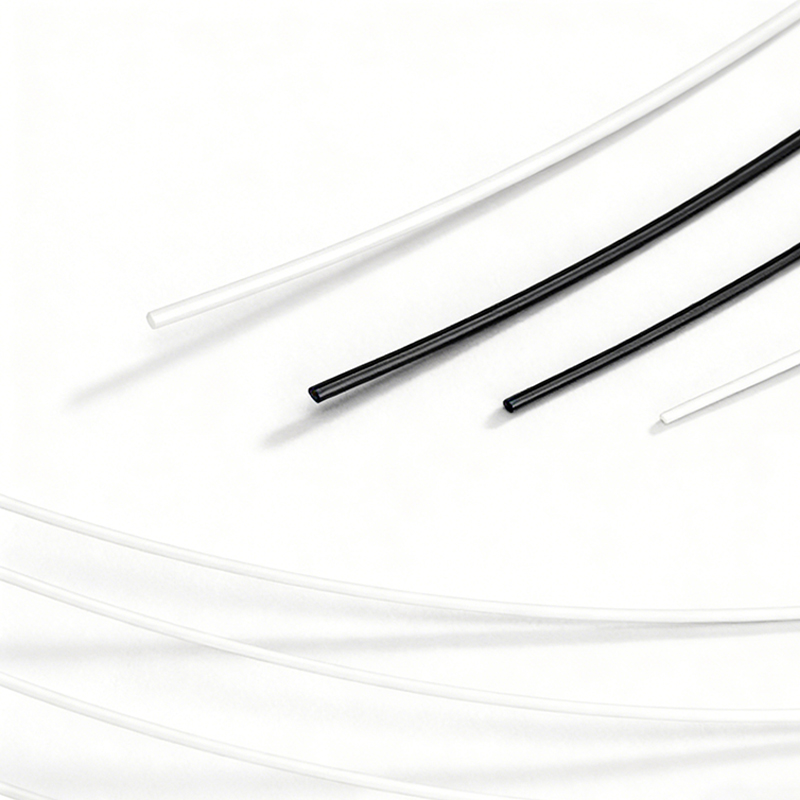
A11: Custom colors (standard: black and translucent milky white; others on request), non-standard sizes beyond φ1.0–φ12, thin-wall or thick-wall versions, and custom spool/cut lengths. For an accurate quotation, please provide: as-supplied ID and wall type; recovered/final dimensions of your assembly; color; quantity and cut-length needs; application description (device type, contact type/duration, sterilization method); required compliance documents (ISO 10993 / USP Class VI, RoHS); and delivery/packaging requirements.
Q12: How do I select the right size — and any final regulatory tips?
A12: Sizing: (1) as-supplied ID must pass over the largest part of the assembly; (2) fully recovered ID must be smaller than the smallest substrate diameter for a firm grip; (3) pick wall type per mechanical/insulation needs and available space. With ~1.7:1 ratio, very large diameter steps may need engineering review — contact us. Regulatory tips: use our material certificates as inputs to your own ISO 10993-1 evaluation (they don’t replace it); validate sterilization on the finished device; and place your tubing supplier under change control with formal change-notification commitments in your quality agreement.