|
Item
|
Specification/Description
|
|
OD Range
|
0.010” ~ 0.450” (0.25 ~ 11.40 mm)
|
|
Wall Thickness
|
0.003” ~ 0.024” (0.08 ~ 0.6 mm)
|
|
compliant
|
ISO 10993-1 and USP Class VI
|
|
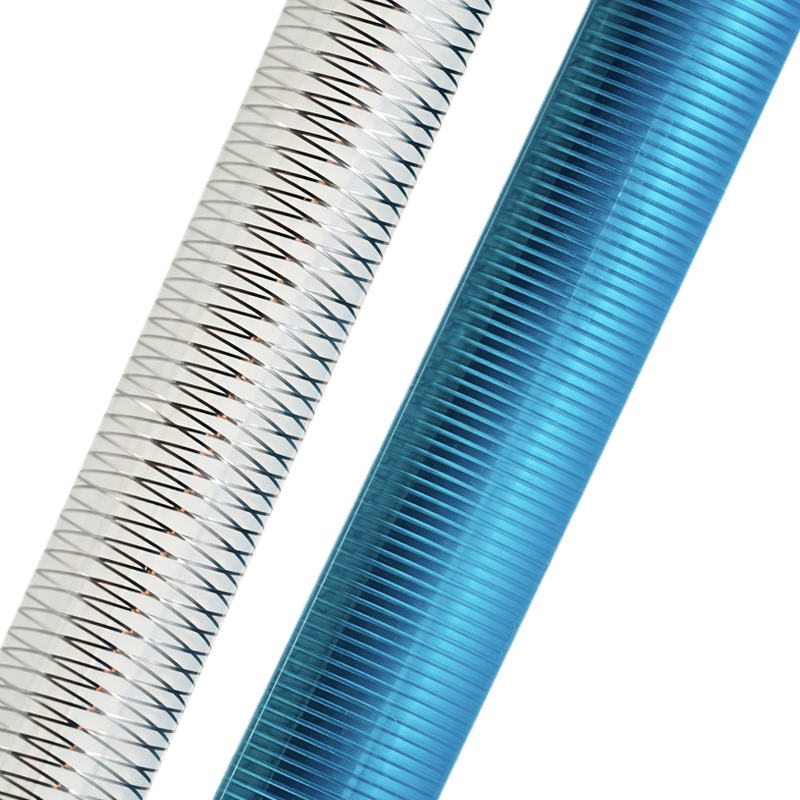
WPI (wraps per inch)
|
up to 5 wraps/inch (1.97 wraps/cm)
|
|
Coil Reinforcement Materials
|
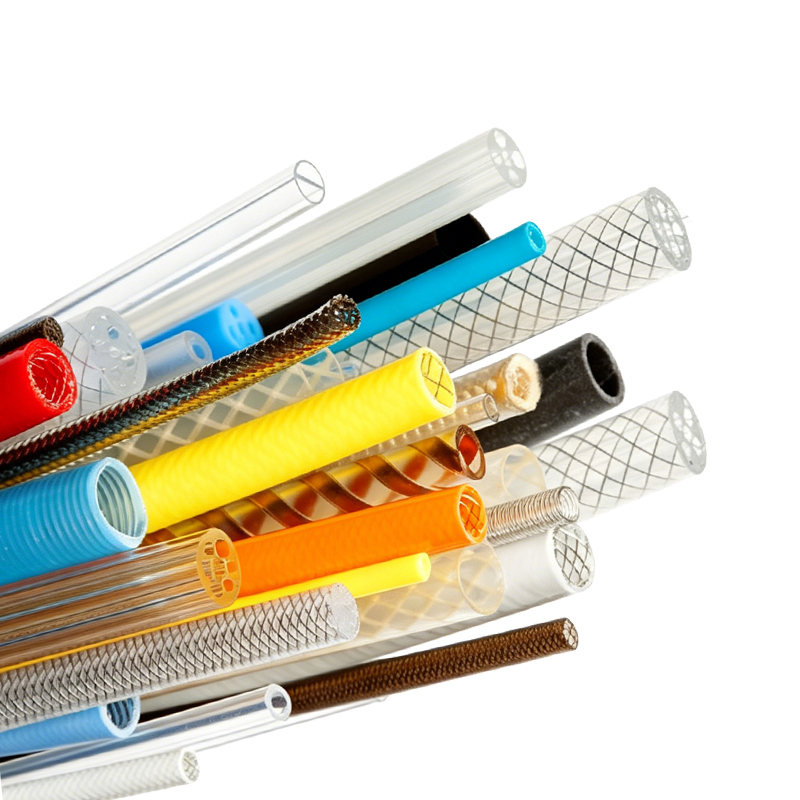
Monofilaments feature flat or round profiles and are produced
from stainless steel, nitinol (nickel titanium) and tungsten, etc.
Multi-filaments are likewise offered in metal, polymer and other
material grades.
|
|
Typical Flat Wire Size Range
|
0.0005″ x 0.0025″ ~ 0.001″ x 0.007″
(0.013 x 0.064mm ~ 0.025 x 0.178mm)
|
|
Typical Round Wire Size Range
|
0.001″ x 0.007″ (0.025 x 0.178mm)
|
|
Outer Jacket Materials
|
All medical grade polymers including Nylon, Pebax and Urethane,
Polyimide, Polyimide w/ particle composites, Polyamide-imide,
Polyester, PPSU
|
|
Advantages
|
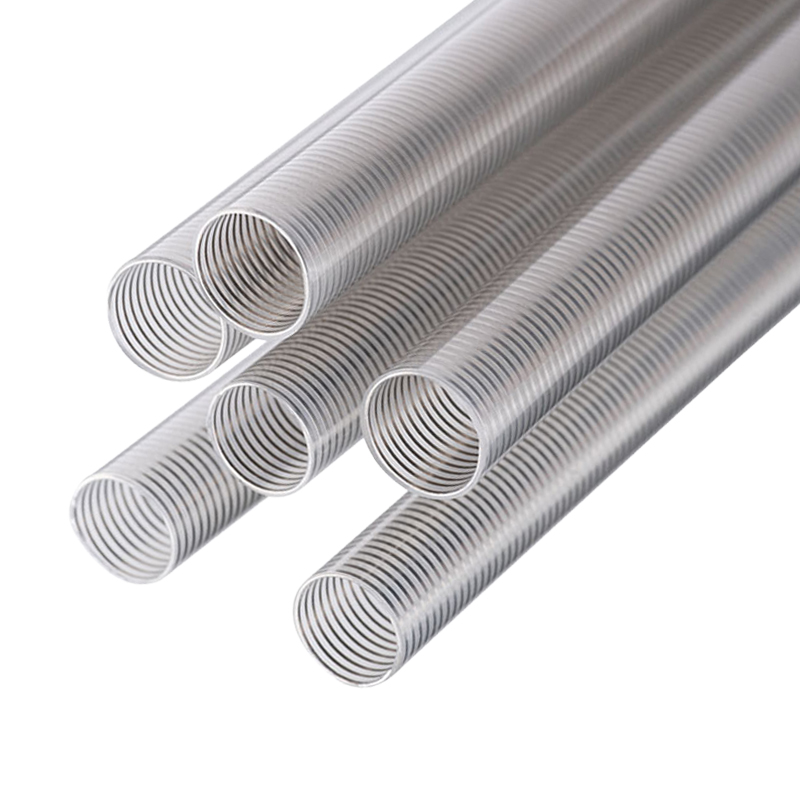
Better flexibility: Outperforms braided tubing in softness and bendability;
Better maneuverability: Allows simpler routing and positioning;
Better kink protection: Prevents bending deformation and collapse;
Better operational control: Enables more accurate device handling.
|
|
Applications
|
Deflectable catheters, Endoscopes, Graspers, Flexible
instruments,Deployment mechanisms
|
|
Other functions
|
Tapered coils, Hole punching are available on request.
|
1. Product Structure
Q1: What is the basic construction of coil reinforced tubing, and how does it differ from braided tubing?
A1: BH-MT-CRT uses a spiral (coil) reinforcement embedded within a medical-grade polymer wall, rather than a braided mesh. Compared with braided tubing, coil reinforced tubing is softer and more bendable, making it easier to route and position while still protecting the lumen against kinking. Coil and braid solve different design problems: braid is often chosen where maximum torsional rigidity is the priority, while coil is chosen where sharp-turn flexibility and collapse resistance dominate. Many catheter designs combine both — braid proximally, coil distally — and our bespoke production supports specification-level customization for that kind of zoned shaft architecture.
Q2: What reinforcement wire materials and profiles are available?
A2: BH-MT-CRT supports monofilament reinforcement in flat-wire or round-wire profiles, in stainless steel, nitinol, tungsten, and other materials, as well as multifilament reinforcement in metal, polymer, and other material grades. Typical flat-wire dimensions range from 0.0005″ × 0.0025″ to 0.001″ × 0.007″ (0.013 × 0.064 mm to 0.025 × 0.178 mm); typical round-wire dimensions are listed in the datasheet at 0.001″ × 0.007″ (0.025 × 0.178 mm). Wire material and profile are selected together with the jacket polymer to balance flexibility, kink resistance, and torque response.
Q3: Which outer jacket polymers can I choose?
A3: Outer jacket options include Nylon, Pebax, urethane, polyimide, particle-filled polyimide composites, polyamide-imide, polyester, and PPSU. Jacket selection should be driven by your shaft stiffness targets, bonding/reflow process, and downstream device requirements; our tubing is produced in strict accordance with your exact specifications.
2. Performance Parameters
Q4: What dimensional range does BH-MT-CRT cover?
A4: Outer diameter: 0.010″ – 0.450″ (0.25 – 11.40 mm). Wall thickness: 0.003″ – 0.024″ (0.08 – 0.6 mm). This envelope covers shafts from microcatheter-scale devices up to larger delivery and endoscopic instruments.
Q5: How does coil reinforcement affect torque transmission, flexibility, and kink resistance?
A5: Per the datasheet, BH-MT-CRT delivers torque capability while remaining flexible and maneuverable for navigating tortuous anatomical routes; it resists collapse and buckling and provides better kink resistance, burst strength, and pressure endurance. Note that the datasheet positions coil reinforcement as softer and more bendable than braided tubing — it does not claim that coil universally exceeds braid in torsional stiffness. If your design prioritizes 1:1 torque over flexibility, discuss the braid-vs-coil trade-off with our engineering team rather than assuming a universal winner.
Q6: What burst pressure or pressure-endurance rating can I expect?
A6: The datasheet states that BH-MT-CRT provides better burst strength and pressure endurance relative to unreinforced constructions, but it does not publish universal numerical ratings — actual performance is a function of OD, wall thickness, wire geometry, WPI, and jacket material in your specific configuration. Pressure and leak performance should be confirmed by testing the finished tubing assembly; automated leak/pressure-decay testers are the standard approach for lot-level verification.
3. Selection
Q7: My current material is being discontinued — how do I qualify a replacement tubing?
A7: Start from your design inputs, design history file, and risk management file to determine which verification tests actually matter, rather than repeating everything blindly. When migrating to BH-MT-CRT, treat it as an engineering change: map your critical shaft requirements (dimensions, kink resistance, burst/pressure, bondability) to the configurable parameters of the tubing, and assess whether biocompatibility or other device-level testing must be repeated under your regulatory strategy.
Q8: How do I specify a custom configuration?
A8: BH-MT-CRT is bespoke: produced on advanced equipment in strict accordance with your exact specifications. Provide your target OD and wall thickness, jacket polymer, wire material and profile, WPI (up to 5 wraps per inch / 1.97 wraps/cm), and any optional features. We will confirm feasibility within the datasheet envelope and produce to that specification.
4. Processing Technology
Q9: Can the coil be tapered along the shaft, or holes added for steerable segments?
A9: Yes — tapered coils and hole punching are both available on request. Tapered coils allow reinforcement geometry to vary along the shaft length, which is the standard way to build proximal-to-distal stiffness transitions. Hole punching supports steerable/deflectable catheter architectures; hole pattern, position, and size should be defined in your specification, keeping in mind that perforations interact with local kink and burst performance and should be verified in your design validation.
5. Clinical Application
Q10: What device types is BH-MT-CRT intended for, and is it suitable for tortuous anatomy?
A10: Typical applications include deflectable catheters, endoscopes, graspers, flexible instruments, and deployment mechanisms. Navigating tortuous anatomy is its core design intent: spiral reinforcement is used in intravascular catheters that must navigate sharp vascular turns without bending out of shape or collapsing, and the tubing resists collapse and buckling while providing kink protection for more accurate operational control. Suitability for a specific clinical pathway must be confirmed in your device-level bench and design validation testing, since final performance depends on the complete device, not the tubing alone.
6. Compliance
Q11: What biocompatibility standards does the material meet?
A11: The materials are listed as compliant with ISO 10993-1 and USP Class VI. Important clarification for your regulatory file: these are material-level qualifications. Biocompatibility of the finished device — after your coatings, bonding, sterilization, and packaging — remains a device-level evaluation responsibility under your ISO 10993-1 biological evaluation plan.
Q12: Is the tubing compatible with my sterilization method?
A12: The datasheet does not state sterilization compatibility. Do not assume compatibility with any specific modality (e.g., EtO, gamma, e-beam, steam). Sterilization compatibility and validation must be established by the device manufacturer for the specific tubing configuration, including any effects on mechanical properties and, where applicable, material degradation.