
Founded in 2010, FLYPOWER is a high-tech enterprise specializing in the research, development, production, and sales of polymer materials. Leveraging its core technological strengths and starting with heat-shrink materials, the company established its Medical Division in 2018, expanding its business and product portfolio into the fields of medical devices and catheters, with the mission of becoming a globally leading supplier of materials for interventional medical devices.
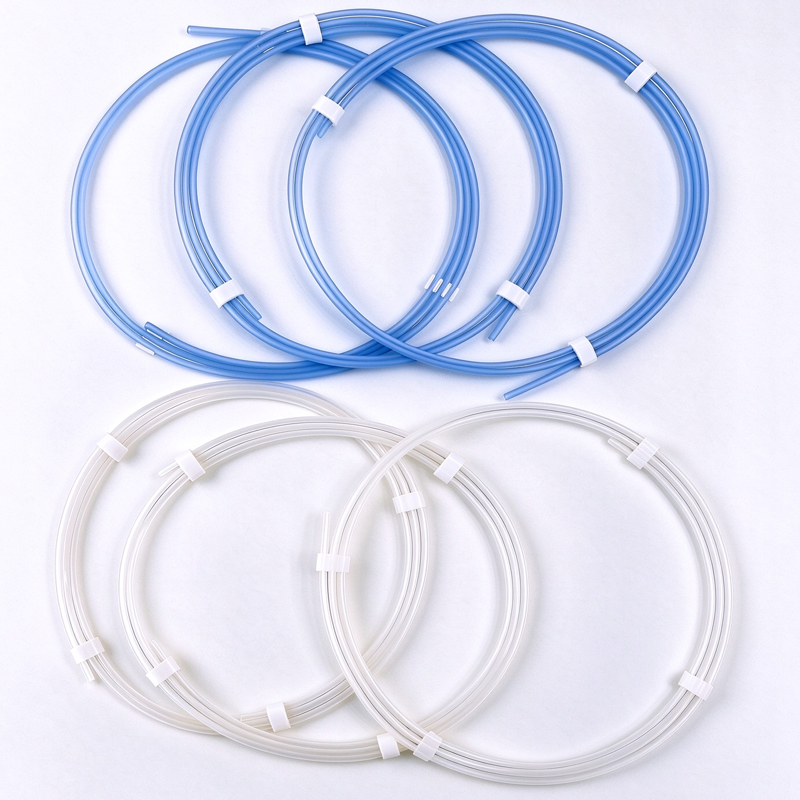
Contact Us No. 77, Bao Nan Road,Nan Lian Community,Long Gang Street,Long Gang District, Shenzhen, Guangdong,518116,China (+86)755 2917 9250 info@flypowermedical.comBH-MT-GDC medical dispenser coil is manufactured from medical-grade HDPE. It features excellent mechanical strength, rigidity and electrical insulation. Designed for sterile storage of guidewires and microcatheters, it protects the guidewire tip and hydrophilic coating against kinking and scratching during sterilization, transportation and clinical handling.
High rigidity & reliable mechanical strength, clip-fixed design to prevent unwinding
Good electrical insulation property
Compatible with EO, gamma and autoclave sterilization
Compliant with ISO 10993
|
Model # |
Supplied ID |
Supplied OD |
||
|
INCH |
MM |
INCH |
MM |
|
|
BH-MT-GDC-2/3 |
0.079±0.004 |
2.00±0.10 |
0.118±0.004 |
3.00±0.10 |
|
BH-MT-GDC-2.5/3 |
0.098±0.004 |
2.50±0.10 |
0.118±0.004 |
3.00±0.10 |
|
BH-MT-GDC-2.5/3.5 |
0.098±0.004 |
2.50±0.10 |
0.138±0.004 |
3.50±0.10 |
Other sizes could be customized on request.
This FAQ covers selection, application, compliance and commercial topics. All sizes, dimensions, and rated values are published in the official BH-MT-GDC datasheet and are intentionally not repeated here — please refer to the datasheet for specification data.
Q1: What does a guidewire/microcatheter dispenser coil actually do, and when should we specify one?
A1: A dispenser coil is the protective and presentation component of your sterile packaging system: it holds a coiled guidewire or microcatheter in a controlled diameter from the moment of packaging through sterilization, transport, storage and final aseptic presentation in the procedure room. Its engineering job is damage prevention — protecting the device tip and any hydrophilic coating against kinking, scratching, and compression set while the product is handled, shipped, and stacked. Specify a dedicated dispenser coil whenever your device has a formed tip, a hydrophilic or PTFE coating that must survive logistics intact, or a length that cannot ship straight. If your device ships robustly in a flat tray without coiling, a coil adds little; if tip integrity or coating condition at point of use matters clinically, the coil is where that is won or lost.
Q2: How do we select the right coil size for our guidewire or microcatheter?
A2: Selection is a clearance decision, and the datasheet lists the standard ID/OD combinations — start there. Practical rules from packaging engineers: the coil ID must pass your device’s maximum OD (including any formed tip or marker band) with enough margin for smooth loading and withdrawal, but excessive clearance lets the device move, rattle and take an unwanted set during transport. Retention is a balance: too tight and the coil kinks the device or abrades its coating; too loose and the tip migrates. HDPE’s naturally lubricious surface helps — devices glide rather than drag — but it does not substitute for correct sizing. We recommend requesting samples of the two closest sizes and running a load–ship–unload simulation with your actual device before locking the specification.
Q3: Which devices and materials is BH-MT-GDC compatible with?
A3: The coil is designed for guidewires (stainless steel and nitinol cores, PTFE-coated or hydrophilic-coated) and microcatheters, and HDPE is chemically inert against the common device materials, coatings, and saline used for hydration. Compatibility notes worth knowing:
(1) HDPE is translucent rather than optically clear — if your inspection step requires seeing fluid or the device through the wall, plan the inspection method accordingly;
(2) HDPE does not solvent-bond readily to other plastics — if your packaging concept involves bonding the coil to a backer card or tray, use thermal bonding, mechanical clips, or ask us about assembly options;
(3) for hydrophilic guidewires, confirm with your device IFU whether in-package hydration is required and how the coil interfaces with your wetting step.
Q4: How does the clip-fixed design prevent unwinding, and what should we know about clips in the sterile field?
A4: The BH-MT-GDC uses a clip-fixed construction to keep the coil wound through handling and transit, preventing the spring-back unwinding that turns a neat coil into a tangled device. Clip-based retention is a proven approach, but packaging engineers should manage its known failure modes in the overall packaging design: verify clips are fully seated at pack-out, choose clip geometry that cannot pop off under vibration, and consider whether a loose clip could puncture the sterile barrier pouch — a documented industry concern. We can advise on clip positioning and count for your coil diameter and device weight; final retention verification under your shipping test protocol (e.g., ASTM D4169 or ISTA distribution simulation) remains part of your packaging validation.
Q5: What loading and unloading practice does the coil assume at the point of use?
A5: The intended use pattern is controlled withdrawal: the clinician or scrub nurse opens the sterile pouch, grasps the device end, and draws the guidewire or catheter out of the coil with a steady, directed pull — not a snap. For your IFU and training materials: instruct users to support the coil during withdrawal, avoid bending the device against the coil edge and for hydrophilic-coated wires, follow the device manufacturer’s wetting instructions before or after removal as specified. A smooth withdrawal experience at point of use is a function of correct size selection (Q2), intact coating after storage (Q10), and validated packaging geometry — all of which should be exercised in your usability and transit testing before launch.
Q6: We sterilize with ethylene oxide. Any effect on the coil or the packaged device?
A6: EtO compatibility is listed in the BH-MT-GDC datasheet, and HDPE tolerates ethylene oxide processing well. The engineering attention points sit at the system level:
(1) residuals — your sterilization validation must demonstrate EtO/ECH residues within ISO 10993-7 limits for the complete packaged product; coil, device and any absorbed load in the packaging all contribute and aeration time must account for the whole;
(2) barrier compatibility — the sterile pouch around the coil assembly must be breathable and validated for EtO;
(3) device interaction — verify that the sterilization cycle does not affect your guidewire coating or bond joints; the coil protects mechanically, but cycle qualification for the combined product is your validation scope.
Q7: What about gamma and autoclave — and can the coil be re-sterilized?
A7: The datasheet lists EO, gamma, and autoclave compatibility for BH-MT-GDC. Two honest cautions:
(1) Gamma — polyethylene is generally radiation-tolerant, but oxidative effects (discoloration, surface embrittlement over time) are dose- and aging-dependent; validate at your maximum dose including aged samples, especially if shelf life claims are long.
(2) Autoclave — HDPE has finite heat resistance; cycle temperature, time and load support determine whether the coil holds its shape, so qualify the actual cycle rather than assuming “autoclave compatible” means any cycle. Re-sterilization and reuse are not supported: BH-MT-GDC is supplied as a single-use packaging component, and repeated cycles fall outside the validated envelope for both the coil and the sterile barrier around it.
Q8: Where is BH-MT-GDC a good fit — and where should we NOT use it?
A8: Good fits: sterile storage, transport protection, and aseptic presentation of guidewires and microcatheters; protection of formed tips and hydrophilic coatings through distribution; integration into card-and-pouch packaging systems for interventional kits. Do NOT select it for: use as the primary sterile barrier — the coil is a protective component inside the barrier, not the barrier itself (the validated pouch or tray+lid does that job); any implantable or in-body role; fluid delivery, pressure, or lumen-working-channel functions; structural or load-bearing device components; or reuse/re-sterilization schemes. If your concept needs the coil to do more than protect and present, talk to us before specifying — we will tell you plainly whether it fits.
Q9: The material is and ISO 10993 compliant — does that cover our finished sterile product?
A9: No, and we state this explicitly: material compliance to and ISO 10993 speaks only to the HDPE material as used in this component. It does not constitute, imply, or substitute for regulatory approval, packaging validation, or biocompatibility clearance of your finished device or sterile kit. FLYPOWER supplies a packaging component only. The finished-device manufacturer retains full responsibility for: biological evaluation of the finished product per the ISO 10993 series (including all patient-contacting materials and process residues), sterile barrier and packaging validation (e.g., ISO 11607 series, including transit simulation), sterilization validation (ISO 11135 for EtO, ISO 11137 for radiation, ISO 17665 for steam, as applicable), risk management per ISO 14971, and all regulatory submissions. We support your technical file with material compliance declarations and lot documentation — product-level approval remains yours.
Q10: How should the coils be stored, what governs shelf life and can storage affect later handling performance?
A10: Store in the original packaging in a cool, dry, clean environment, away from direct sunlight/UV, heat sources, ozone and corrosive vapors; keep relative humidity moderate and avoid heavy stacking loads on cartons. HDPE ages primarily through oxidation and UV exposure and for a coil the first casualty of aging or abuse is geometry: creep under sustained load or heat can set the coil out of round, and embrittled polymer or fatigued clips compromise retention — the device then arrives kinked or loose exactly where the coil was supposed to prevent it. Practical rules: apply first-in-first-out rotation; never store near windows or heaters; do not exceed carton stack limits; if packaging is compromised, do not use. Note that once you pack your device and terminally sterilize, the overall product shelf life is defined by your packaging validation — contact us for material data supporting your shelf-life rationale.
Q11: How do we move from samples to small batches to validated mass production?
A11: We structure the ramp around how packaging actually validates:
(1) Samples — request evaluation coils in the size(s) nearest your device OD; we recommend sampling the two closest ID options plus your target coil length, since load-and-withdraw feel is the first gate. Custom colors and sizes can be sampled on request.
(2) Packaging development — assemble your device into the coil, the coil into your card-and-pouch system, and run transit simulation plus distribution aging on sample-built units.
(3) Pilot lots — production-representative quantities with lot traceability and certificates of analysis, feeding your packaging and sterilization validation.
(4) Mass production — locked specification (size, color, clip configuration, packaging format), with agreed change-notification terms so your validated packaging is never silently altered. Share your validation timeline early so sample and pilot lead times align with your builds.
Q12: What information should our RFQ include for a fast, accurate quotation?
A12: The more completely you describe the packaging system, the fewer clarification rounds. Please include:
(1) the device to be coiled — type (guidewire/microcatheter), maximum OD including tip/features, and length;
(2) target coil size from the datasheet range, or ask us to recommend;
(3) required coil length/turns and any custom size or color;
(4) clip configuration preferences;
(5) how the coil integrates into your packaging — backer card, pouch type, kit tray;
(6) sterilization method and who sterilizes (bulk non-sterile vs. sterile supply);
(7) shipping profile — single-parcel, palletized, air freight — for transit test planning;
(8) trial quantity, annual volume estimate and target timeline;
(9) documentation needs — material compliance declarations, CoA, lot traceability, change-notification agreement, and data supporting ISO 11607 packaging validation. Device drawings or physical samples with the RFQ eliminate the most common quoting delay.
Trademark disclaimer: All third-party trademarks, product names, and standards designations referenced in this document are the property of their respective owners. Reference to third-party products, standards, or trademarks is for technical discussion only and implies no affiliation with, or endorsement by, their owners. BH-MT-GDC is supplied as a packaging component; nothing in this document constitutes a warranty of finished-device performance, packaging validation outcomes, or regulatory approval in any market.