1. Precision Size Forming & Processing
Custom length cutting, precision slicing, ID/OD fine grinding, necking, tip forming, chamfering, fixed bending. High precision, burr free ends for minimally invasive catheter assembly.
2. Structural & Functional Processing
Laser micro drilling, over molding, special slotting, tip sealing, over molding, thermal lamination, welding & assembly. Modify single/multi lumen tubes for drug delivery, drainage, pressure sensing and guidewire access.
3. Surface Modification
PTFE chemical etching, plasma treatment, hydrophilic coating, matte finishing, laser marking & scale printing. Enhance bonding strength, lubricity and product identification.
4. Reinforcement Customization
Braided embedding, coil spring reinforcement, radiopaque band & coating. Anti kink, high pressure resistant, anti collapse performance for interventional, ablation and sheath devices.
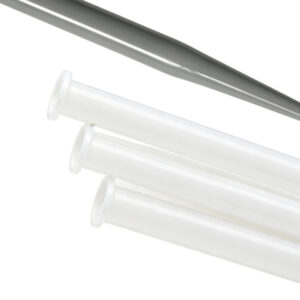
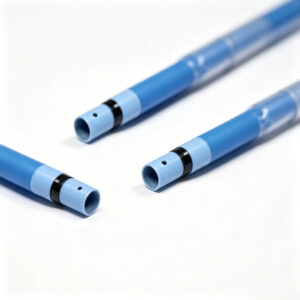
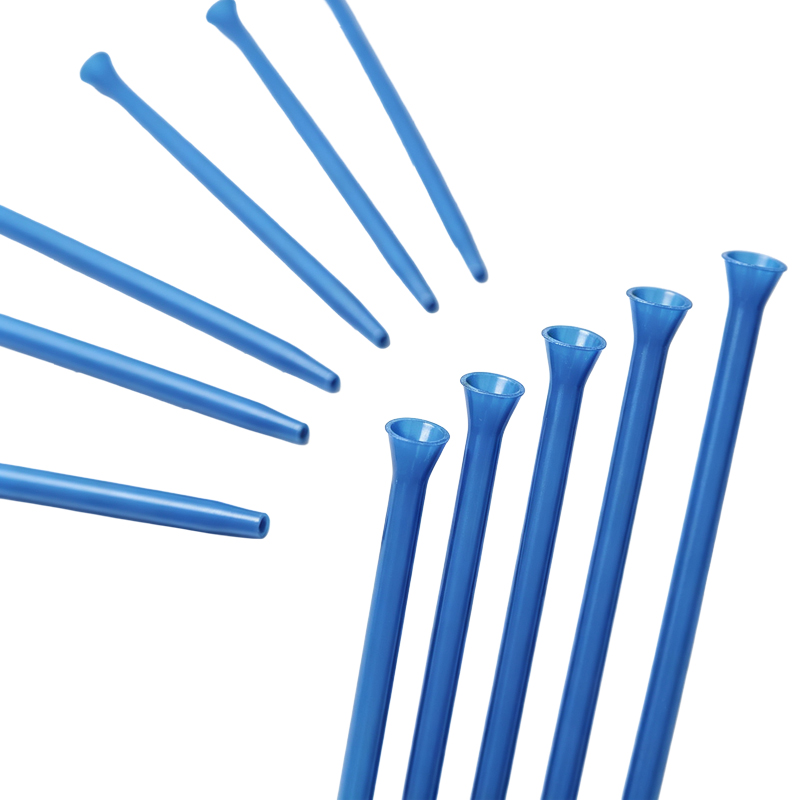
Tipping & Flared Taper & Flange Punching
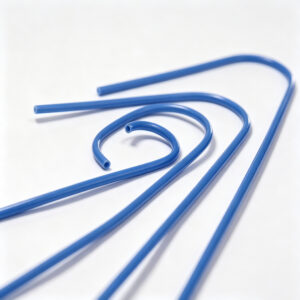
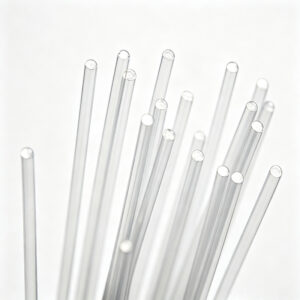
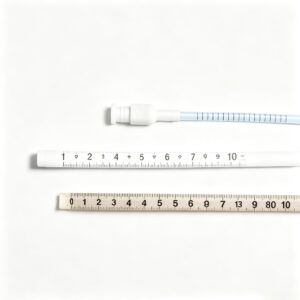
Curving Head Design Printing & Marking
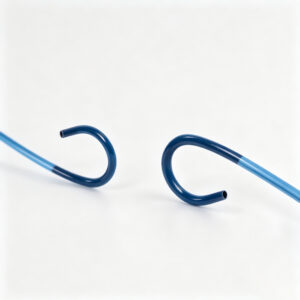
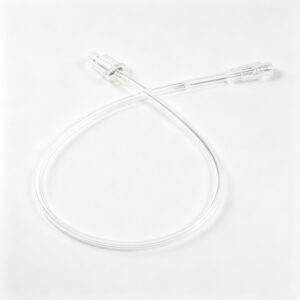
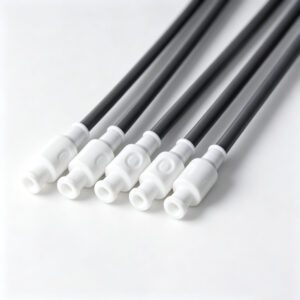
Hydrophilic Coating Adhesive Bonding Over Molding
Q1: What services are included in BH-MT-VA value-added secondary processing?
A1: We offer one-stop precision secondary processing for medical-grade precision tubing in four categories: (1) Precision size forming — custom length cutting, precision slicing, ID/OD fine grinding, necking, tip forming, chamfering, fixed bending; (2) Structural & functional processing — laser micro drilling, over molding, special slotting, tip sealing, thermal lamination, welding & assembly; (3) Surface modification — PTFE chemical etching, plasma treatment, hydrophilic coating, matte finishing, laser marking & scale printing; (4) Reinforcement customization — braided embedding, coil spring reinforcement, radiopaque band & coating. Clean-process production supports interventional device mass production, with direct delivery of semi-finished or finished products. See the BH-MT-VA service page for details.
Q2: Which tubing materials can you process?
A2: Our standard scope covers PTFE, FEP, Pebax, nylon, and composite-reinforced tubes, including single-lumen and multi-lumen configurations. For materials outside this list, contact us before sending an RFQ — we will confirm feasibility rather than assume it.
Q3: Are there size limits, and what tolerances can you hold?
A3: Processability depends on the combination of material, OD/ID, wall thickness, and the specific operation. We position our precision forming as high-precision with burr-free ends for minimally invasive catheter assembly, but we do not publish blanket size windows or tolerance figures. Submit your drawing with the RFQ; achievable limits and tolerances are confirmed per feature during our DFM review and then controlled through our quality system with inspection records.
Q4: What are typical lead times for samples, small batches, and mass production?
A4: Lead time depends on the process combination, material readiness, and whether coating or etching is involved. Samples for standard operations can typically be turned around quickly; small-batch and pilot runs follow process confirmation; mass production runs under validated parameters. We do not quote fixed lead times without reviewing the part — state your target date in the RFQ and we will confirm a realistic schedule.
Q5: What surface treatments do you offer — PTFE etching, plasma, hydrophilic coating?
A5: All three are listed services. PTFE chemical etching activates the surface to enhance bonding for jacketing, reflow, or adhesives — note that etched surfaces have a limited bonding shelf life and are sensitive to light, heat, and humidity, so plan etching and downstream bonding as a continuous process. Plasma treatment raises surface energy for bonding or coating and can complement etching depending on the design. Hydrophilic coating enhances lubricity for navigation through vessels or body pathways; coating adhesion and durability must be validated on your finished device and its sterilization process.
Q6: What laser processing capabilities do you have?
A6: Our laser services cover laser micro drilling — functional holes for drug delivery, drainage, pressure sensing, and guidewire access — and laser marking & scale printing for product identification and depth/position scales. Drilling feasibility depends on wall thickness and material; hole-quality requirements (size, burr, recast) should be defined in your drawing.
Q7: Can you form tips, flares, tapers, and fixed bends?
A7: Yes. Tip forming, tipping & flaring, taper & flange forming, chamfering, necking, head design, and fixed bending (shape-set curving) are core services, producing smooth, burr-free ends for minimally invasive assembly. Achievable geometry is design-specific — provide a dimensioned tip drawing or reference sample, and we will confirm formability during DFM review.
Q8: Do you offer over molding, welding, and assembly?
A8: Yes. Listed capabilities include over molding (hubs, strain relief, soft tips), thermal lamination, adhesive bonding, welding & assembly, and tip sealing for single- and multi-lumen tubes. We can deliver semi-finished or finished sub-assemblies directly, reducing your outsourced steps and handling-damage risk.
Q9: Can you add reinforcement or radiopaque markers?
A9: Yes. Reinforcement customization includes braided embedding and coil spring reinforcement for anti-kink, high-pressure-resistant, anti-collapse performance in interventional, ablation, and sheath devices, plus radiopaque bands & coatings for visualization under imaging. Specify marker positions and the target imaging modality in your drawing.
Q10: How do processing and sterilization affect biocompatibility?
A10: Processing steps such as etching, plasma, coating, or molding change surface chemistry and may introduce new substances, so biocompatibility of the processed component cannot be assumed from raw-material certificates. The base materials we process are widely used in devices sterilized by common methods, and our processes are selected for compatibility with typical downstream sterilization — but the effect of sterilization on a processed, assembled component (e.g., a hydrophilic coating after EtO or gamma) must be validated on the finished device. We process under controlled clean processes; the device manufacturer remains responsible for ISO 10993-1 evaluation of the final product.
Q11: Are your processes run under ISO 13485, and what risks should I plan for?
A11: Yes — our secondary processing services are provided under an ISO 13485 quality management system, with controlled processes, traceability, and inspection records (certificate available on request). Honest risk guidance: (1) PTFE etching — under-etching weakens bonds, over-etching degrades the surface, etched surfaces age in storage; (2) bonded/laminated structures — verify bond strength against delamination and interface voids; (3) thin-wall or reinforced tubes — improper handling/storage can cause kinks, ovality, or cold-flow; (4) coatings — adhesion and durability must be proven per design. We support your validation with documented parameters, records, and change control; final process validation and acceptance criteria remain the device manufacturer’s responsibility.
Q12: What should my RFQ include, and who owns regulatory responsibility?
A12: Please provide:
(1) tube material, OD/ID, wall, lumen configuration;
(2) dimensioned drawings of required features (tips, holes, markings, bend radii, radiopaque positions); (3) tolerances and acceptance criteria;
(4) volumes (sample/pilot/annual) and target lead time;
(5) device application, contact type/duration, sterilization method;
(6) required documentation;
(7) packaging/delivery requirements. Responsibility boundary: we provide component-level processing services only. Material-level ISO 10993-1 / USP Class VI compliance of starting materials does not make any finished device automatically compliant; design controls, biological evaluation, process and sterilization validation, and regulatory submissions (FDA 510(k)/PMA, EU MDR) remain solely with the device manufacturer — we support them with documentation and transparency. For supplier selection, review our ISO 13485 certificate scope, and agree on change-control obligations in a quality agreement