
Founded in 2010, FLYPOWER is a high-tech enterprise specializing in the research, development, production, and sales of polymer materials. Leveraging its core technological strengths and starting with heat-shrink materials, the company established its Medical Division in 2018, expanding its business and product portfolio into the fields of medical devices and catheters, with the mission of becoming a globally leading supplier of materials for interventional medical devices.
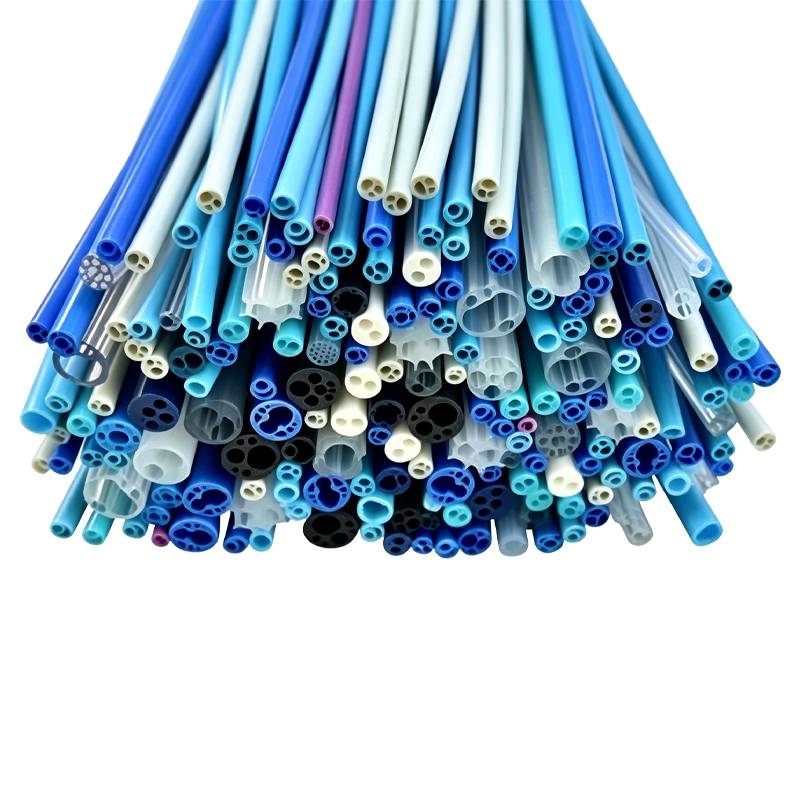
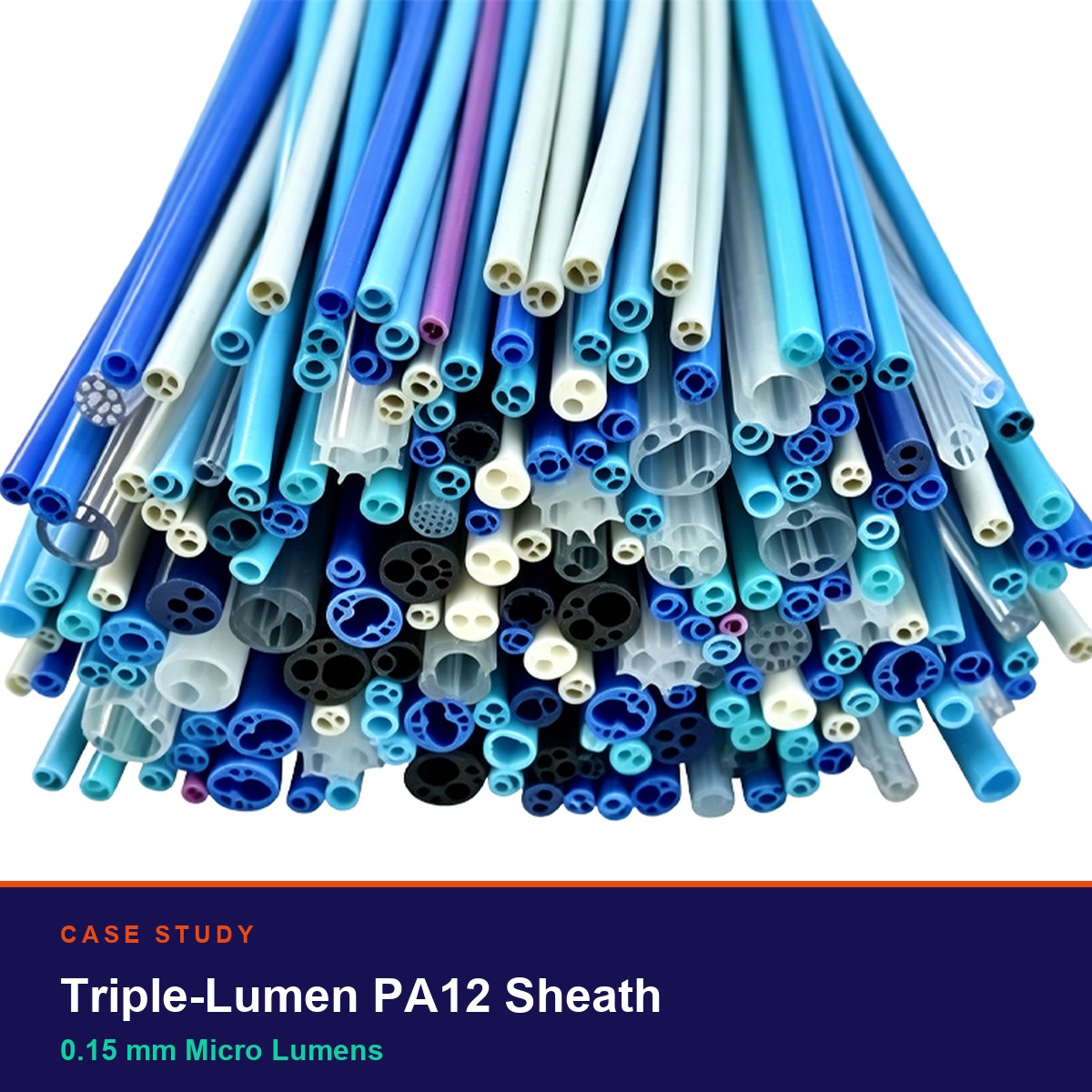
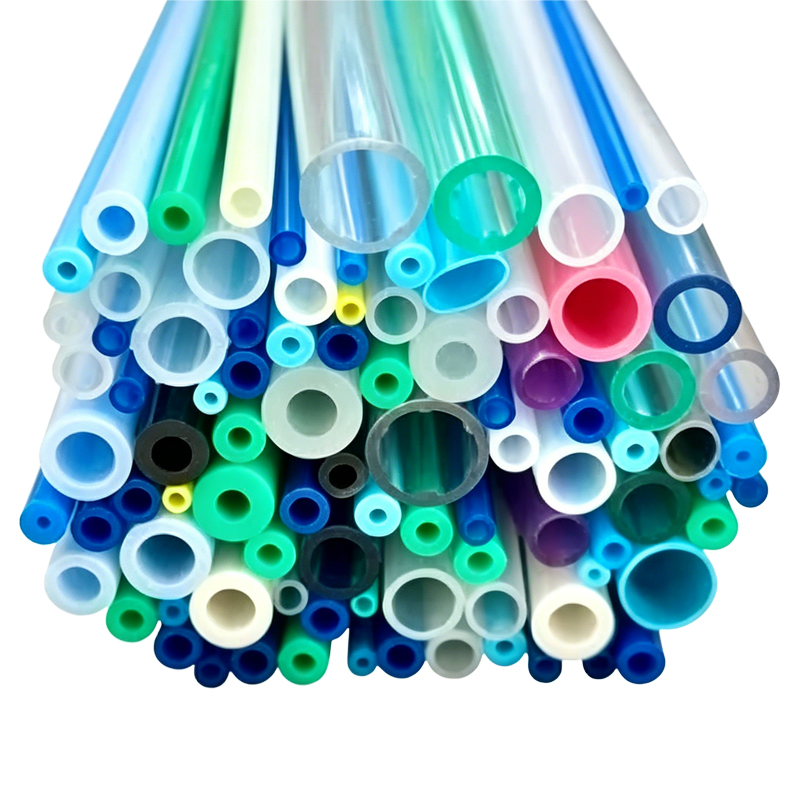
Contact Us No. 77, Bao Nan Road,Nan Lian Community,Long Gang Street,Long Gang District, Shenzhen, Guangdong,518116,China (+86)755 2917 9250 info@flypowermedical.comBH-MT-MLT multi-lumen extruded tubing provides multiple channels in a single-tube structure. This enables a larger capacity for varying devices in a smaller diameter tubing component. The multi-lumen tubing is standard for systems transporting air, liquids or electrical cables simultaneously.
Different materials have different sterilization requirements. Common sterilization methods include ethylene oxide (EO), gamma irradiation, high-pressure steam, steam, and dry heat sterilization.
Different materials have different operating temperatures
ISO 10993 and compliant
|
Item |
Specification/Description |
|
OD Range |
≥0.030” (≥0.80mm) |
|
OD Tolerance |
From ± 0.001″ (± 0.025 mm) |
|
Lumen Diameter |
≥0.006″ (≥0.152 mm) |
|
Length |
Customized as per request |
|
Compliant |
ISO 10993-1 |
|
Shapes |
Round or eccentric-shaped lumens (crescent, oblong, square, etc.) Unique profile outer diameters (star, hex, keyed profile, etc.) |
|
Typical Materials (More options are available upon request) |
Polyurethane (PU), Pebax, PET, Nylon, Polypropylene(PP), PEEK, Polycarbonate (PC), HDPE, TPE |
|
Secondary Processes |
• Over Molding • Tipping & Flared • Head Design • Punching • Hydrophilic Coating • Flange •Adhesive Bonding • Curving • Printing & Marking |
|
Applications |
Balloon component, intravenous (IV) tubing, infusion device, pump tubing, feeding tubing, cannula, catheter, catheter shafts and protective sheath |
|
More Options |
Coextrusion, Braided, Coiled, PTFE Lined, Multi-Durometer Thin Wall, Para tubing, Deflectable/Steerable, Balloon, and more. |

FAQ: BH-MT-MLT — Medical Grade Multi-Lumen Extruded Tubing
Q1: What is BH-MT-MLT, and when should I choose a multi-lumen design over several single-lumen tubes?
A1: BH-MT-MLT integrates multiple separate channels into one precision-extruded tube, so air, fluids, guidewires or electrical cables can share a single compact component. Choose it when your device must carry more than one function but your diameter budget is tight — bundling separate tubes wastes space and complicates assembly. If a single channel is enough, our single-lumen range will be simpler and more economical, and we will tell you so honestly.
Q2: What makes FLYPOWER different from large commodity tubing extruders?
A2: Three things: deep thin-wall precision extrusion experience, genuine fluoropolymer and engineering-polymer know-how built over years of medical projects, and a willingness to run small, fast-turn custom batches that high-volume extruders typically decline. Multi-lumen profiles are where this matters most — holding every lumen open, round and on-position in a small OD is exactly the capability that separates a specialist from a commodity supplier.
Q3: Which development stage do you typically support?
A3: All of them. We regularly cut short sample lengths for feasibility work, iterate the cross-section through design verification, and then scale into pilot and volume production on the same extrusion platform. Because multi-lumen tooling is an investment, starting iterations with a responsive supplier saves both time and tooling cost — and the process you validate with us is the process that runs your production.
Q4: How do I choose the right polymer for a multi-lumen design?
A4: Start from function, not from a material name: tell us what each channel must do — fluid flow rate, wire passage, inflation pressure, kink resistance, bonding or overmolding downstream — and we will shortlist candidate polymers and explain the trade-offs. Stiffness, lubricity and chemical exposure drive the choice and different durometers can be combined along the tube where the design calls for it. We can supply samples of candidate materials for bench comparison before you commit.
Q5: Can the lumen layout and outer profile be customized to my device?
A5: Yes — lumen count, size, arrangement and wall design are all custom-engineered, and non-round lumens or profiled outer surfaces are routine for us. Bring us the functional requirement (what passes through each channel, and what the outside must interface with) rather than a frozen cross-section if you can — our engineers can often suggest a layout that extrudes more robustly and assembles more easily.
Q6: We need a steerable / deflectable shaft or a reinforced construction. Can you support that?
A6: Yes — constructions with reinforcement, linings or combined hardness zones are part of our extended capability, and dedicated wire channels for deflectable designs are a common request. The critical detail in steerable shafts is keeping the wire channels open and the internal walls uniform along the full length, which is precisely a precision-extrusion competence. Share your steering mechanism and pull-wire diameter early so the channel design is right from the first iteration.
Q7: What are your minimum order quantities and lead times?
A7: We deliberately keep minimums low enough for development work, and we treat small-batch customization as a core service rather than an exception. Lead times depend on material, profile complexity and tooling status and are confirmed at quotation; simple profiles on existing tooling move fastest. If you are escaping a long lead time or high MOQ from an incumbent supplier, tell us your target schedule — quick turnaround is one of the main reasons customers switch to us.
Q8: What information should I include in an RFQ to get a fast, accurate quotation?
A8: Please provide: a cross-section sketch with the dimensions and tolerances that are functionally critical, the intended content of each lumen, preferred material or the functional requirements if you are open, annual volume and first-order quantity, supply form (spool or cut length), downstream processes (bonding, tipping, coating, sterilization), and your timeline. Even a hand sketch plus a paragraph on function gets you a meaningful first answer.
Q9: Any advice for downstream assembly — cutting, wire insertion, bonding or hub attachment?
A9: Cut with sharp, dedicated tooling and support the tube during cutting so thin internal walls are not crushed or deformed. For wire insertion, specify the wire diameter with its tolerance so the channel is sized with proper clearance; for bonding or hub attachment, tell us the adhesive or process you plan to use, since material choice and surface condition drive bond quality. If you prefer, we can deliver the tubing with secondary operations already completed in-house, so you receive an assembly-ready component.
Q10: We have seen lumen collapse or blocked channels with tubing from other suppliers. How do we avoid that?
A10: Collapsed or pinched lumens usually trace back to unstable extrusion control or to material handling before processing, and they show up downstream as wires that will not pass or flow channels that underperform. Our control approach keeps every channel open and on-dimension along the full length, with in-line monitoring rather than end-sampling. Share your failure history and cross-section with us and we will tell you frankly what caused it and how we prevent it.
Q11: How do you guarantee lot-to-lot consistency on a complex profile?
A11: Profile dimensions are monitored in-line during extrusion, raw material lots are controlled, dried and traceable and every shipment can be accompanied by a certificate of analysis. For critical dimensions — typically the outer size and the wire- or flow-critical lumens — we can provide process capability data on request, and we support your incoming-inspection plan with agreed AQLs and retained samples. On a multi-lumen profile, consistency across lots is exactly where a specialist extruder earns its place in your supply chain.
Q12: What regulatory documentation do you provide and does material compliance cover our device?
A12: We provide material-level documentation — biocompatibility and compliance statements per the datasheet, plus composition information — for your technical file and supplier-qualification records, and we can discuss master-file reference and change-notification agreements where your filing requires them. Please note that material-level compliance supports, but does not constitute, approval of your finished device: biological evaluation, sterilization validation and regulatory clearance of the final product remain the device manufacturer’s responsibility.