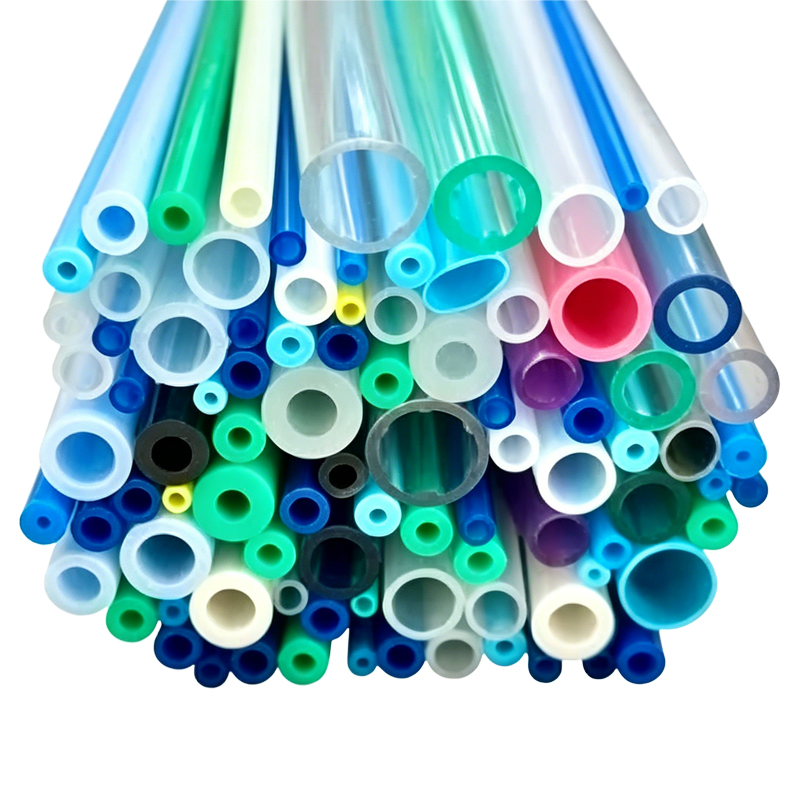

Founded in 2010, FLYPOWER is a high-tech enterprise specializing in the research, development, production, and sales of polymer materials. Leveraging its core technological strengths and starting with heat-shrink materials, the company established its Medical Division in 2018, expanding its business and product portfolio into the fields of medical devices and catheters, with the mission of becoming a globally leading supplier of materials for interventional medical devices.
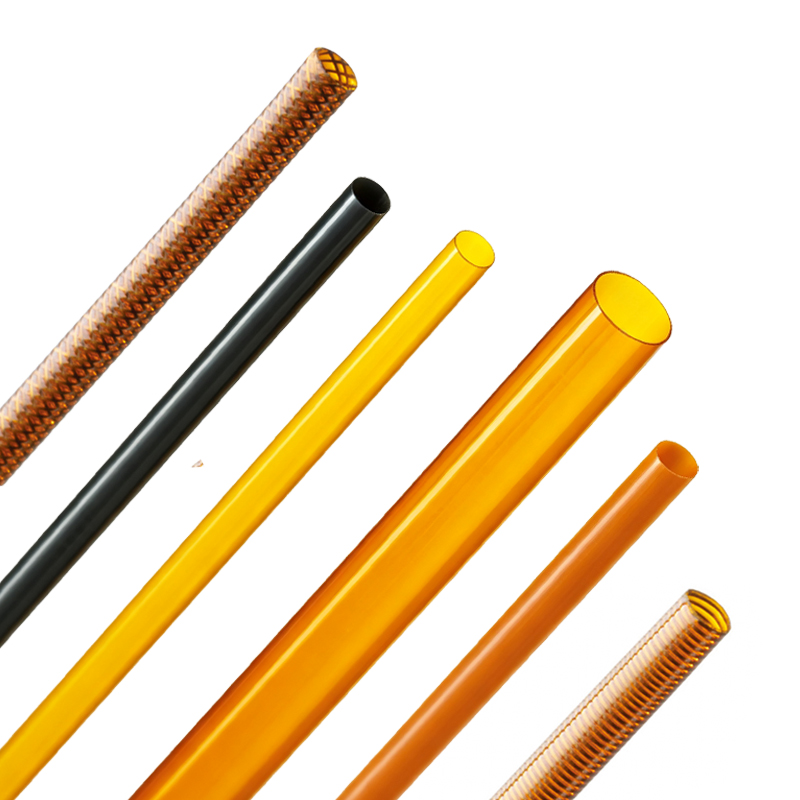
Contact Us No. 77, Bao Nan Road,Nan Lian Community,Long Gang Street,Long Gang District, Shenzhen, Guangdong,518116,China (+86)755 2917 9250 info@flypowermedical.comBH-MT-PI is a polymer thermoset plastic that has exceptional thermal stability, chemical resistance and tensile strength. It is widely used in medical devices, including cardiovascular catheters, urological retrieval devices, neurovascular applications, balloon angioplasty, stent delivery systems, fiber optics and intravascular drug delivery.
Exceptional thermal stability, chemical resistance and tensile strength
Compatibility with Gamma, EtO & E-beam sterilization
Operating temperature: -269°C to 280°C
Intermittent temperature resistance up to 400°C
ISO 10993 and compliant
|
ITEM |
Standard PI Tubing |
Braided Reinforced PI Tubing |
||
|
INCH |
MM |
INCH |
MM |
|
|
Nominal ID |
0.004~0.098 |
0.1~2.5 |
0.012~0.098 |
0.3~2.5 |
|
ID Tolerance |
± 0.0002″ Min |
± 0.005 Min |
±0.0004″ |
±0.01 |
|
Nominal W.T |
0.0005-0.01 |
0.0127~0.254 |
0.002-0.01 |
0.05~0.254 |
|
W.T Tolerance |
±25% |
±25% |
±25% |
±25% |
|
Cut Length |
Max. 98.4 |
Max. 2500 |
Max. 98.4 |
Max. 2500 |
|
Property |
Typical Value |
|
Thermal Rating @ 20,000 Hours |
220°C Minimum (428°F) |
|
Thermal Endurance |
400°C Minimum (752°F) |
|
Tensile Strength |
20,000 PSI Minimum |
|
Hoop Stress |
11,000 PSI Minimum |
|
Burst Strength |
(Hoop Stress x Wall Thickness)/OD Radius |
|
Chemical Resistance: |
Excellent, most solvents/solutions |
|
Radiation Resistance |
3.0 X 10⁹ Gamma Dose rd |
|
Coefficient of Friction |
Kinetic 0.48, Static 0.63 ASTM D-1894-90 |
|
Coefficient of Thermal Conductivity |
0.12 W/m*K ASTM F-433-77 |
|
Density @ Room Temp |
1.42 g/mL @ 23C ASTM D-1505-90 |
|
Dielectric Constant |
3.4 assume 0.001” (0.0254mm)wall |
|
Dielectric Strength |
4,000 Volts/0.001″(0.0254mm) Minimum |
|
Elongation @ Break |
50% Nominal |
|
Radiation Resistance |
Tensile stable, elongation retains 98% of pre-radiation (gamma) value for exposure of 10^6 J/Kg over 96 hours. assume 0.001” (0.0254mm)wall |
Q1: When should we consider replacing PTFE, FEP, or PEEK tubing with polyimide tubing in a catheter or delivery system design?
A1: Polyimide is typically considered when wall thickness must be minimized while still preserving pushability, torque transmission, and lumen integrity – for example in neurovascular or cardiovascular devices where every fraction of a millimeter of working lumen matters. Because PI is a thermoset with high tensile strength, it achieves mechanical performance at wall thicknesses where melt-processable polymers would fail. However, it is not a drop-in replacement: PI does not reflow, its surface is more difficult to bond, and its handling behavior differs from PTFE or PEEK. We recommend a side-by-side bench evaluation in your actual shaft construction before committing to a design change.
Q2: How do we decide between standard PI tubing and braided reinforced PI tubing?
A2: Standard PI tubing is generally used as liners, insulation layers, flush lumens, or thin-walled structural elements where minimal profile and flexibility dominate. Braided reinforced PI tubing is intended for catheter shafts that require higher torque response, column strength, kink resistance and burst performance. The choice should be driven by your device’s functional requirements – torqueability, trackability, pressure rating – and confirmed through device-level bench testing rather than material data alone.
Q3: Can BH-MT-PI be used in reflow or thermal lamination processes during catheter shaft construction?
A3: Yes, and this is one of its most common roles. Because polyimide is a thermoset, it does not melt or reflow; it retains its geometry at the processing temperatures used to laminate thermoplastic jackets such as Pebax or nylon. It therefore serves as a dimensionally stable inner layer or substrate during shaft lamination. Note that the bond between PI and the outer jacket relies on tie layers or adhesives rather than thermal fusion, so the lamination window and interlayer adhesion must be developed and validated within your own process.
Q4: How can we achieve reliable adhesive bonds to polyimide, given its chemical inertness?
A4: PI’s low surface energy makes untreated bonding unreliable. Common industrial practice is to combine surface activation (plasma or corona treatment) with an appropriate primer, followed by cyanoacrylate, epoxy, or UV-cure adhesive systems. Bond strength should be verified not only as-built but also after sterilization and accelerated aging, since both can affect interfacial adhesion. As the component supplier, we can advise on surface condition and pretreatment options; adhesive selection and bond validation remain part of your process development.
Q5: What are the typical failure modes of PI tubing in minimally invasive devices, and how can they be mitigated at the design stage?
A5: The most frequently reported issues are kinking or ovalization at tight bend radii, abrasion where the tube contacts metallic edges or other components, and stress concentration at bonded or transition joints. Mitigation strategies include specifying braided reinforcement where bending is severe, designing strain reliefs at joints, respecting minimum bend radius limits in the device geometry, and controlling handling during assembly. Systematic identification and mitigation of these risks within the finished device falls under the device manufacturer’s ISO 14971 risk management process.
Q6: Which materials is PI tubing commonly combined with, and what compatibility concerns should we verify?
A6: PI tubing is routinely paired with PTFE liners, stainless steel and Nitinol mandrels and guidewires, Pebax and nylon outer jackets, and platinum-iridium marker bands, and it shows excellent resistance to most solvents and solutions encountered in device manufacturing. That said, compatibility is configuration-specific: drug formulations, hydrophilic coatings, cleaning agents, and adhesive systems in your particular build should be verified through your own compatibility and extractables testing before design freeze.
Q7: BH-MT-PI is compatible with Gamma, EtO, and E-beam sterilization – how should we choose between them?
A7: All three methods are routinely used with polyimide components, and the material itself tolerates each well. The deciding factors are usually the other materials in your finished device, packaging configuration, and process logistics: EtO requires aeration and residual control, while radiation methods require dose mapping and assessment of cumulative effects on the full device, not just the PI tube. Sterilization method selection, cycle development, and validation to the applicable standards are the responsibility of the finished device manufacturer.
Q8: Does the tubing’s ISO 10993 and compliance mean our finished device is automatically approved or biocompatible?
A8: No. We supply component tubing only. ISO 10993 and data apply to the raw material and provide supporting evidence for your regulatory file, but they do not constitute approval of a finished medical device. Biological evaluation of the final device, sterilization validation, process validation, ISO 14971 risk analysis, and all regulatory submissions remain entirely the responsibility of the device manufacturer. We deliberately make no claims about finished-device performance and we recommend that no downstream marketing materials imply such approval based on component-level data.
Q9: How should PI tubing be stored, and what shelf-life considerations apply?
A9: Polyimide is a thermally and environmentally stable thermoset polymer, so storage requirements are straightforward: keep the tubing in its original sealed packaging, in a cool, dry environment, protected from direct UV exposure and mechanical deformation. There is no evidence of material degradation under normal warehouse conditions, but we recommend that customers define storage conditions and any retest intervals within their own quality management system, and perform incoming visual and dimensional inspection before use, particularly for long-held stock.
Q10: What secondary operations can be performed on BH-MT-PI, and what should we watch out for?
A10: Common secondary operations include precision cutting (blade or laser), laser marking, pad printing with suitable inks and surface pretreatment, tipping with bonded tip elements, and application of hydrophilic or other functional coatings – the latter typically requiring surface activation for adequate adhesion. Because PI does not melt, thermal tipping or welding techniques used on thermoplastics are not applicable. Any secondary process modifies the component as supplied, so its effect on dimensions, surface and cleanliness should be validated by the party performing the operation.
Q11: What documentation and incoming inspection should we plan for when qualifying BH-MT-PI as a production component?
A11: Each lot is supplied with a Certificate of Analysis and full lot traceability. For qualification, we recommend a documented incoming inspection plan covering identity and visual condition, critical dimensions verified with appropriate gauging (pin gauges, laser micrometry), and periodic destructive checks such as tensile or burst sampling per your sampling plan. A supplier quality agreement covering specification control, change notification, and nonconformance handling is strongly recommended for OEM/ODM programs.
Q12: What should we expect regarding MOQ, lead time, customization, and long-term supply continuity?
A12: MOQ and lead time depend on whether the size is a standard item or a custom build – custom IDs, wall thicknesses, cut lengths, and colors can be produced to drawing, with terms confirmed per quotation. For program security, we recommend blanket or scheduled orders, agreed safety stock, and early involvement of our engineering team during design freeze so that specifications are locked before validation. Supply continuity, specification changes, and end-of-life notification can all be governed under a formal quality agreement with your procurement team.