
Founded in 2010, FLYPOWER is a high-tech enterprise specializing in the research, development, production, and sales of polymer materials. Leveraging its core technological strengths and starting with heat-shrink materials, the company established its Medical Division in 2018, expanding its business and product portfolio into the fields of medical devices and catheters, with the mission of becoming a globally leading supplier of materials for interventional medical devices.
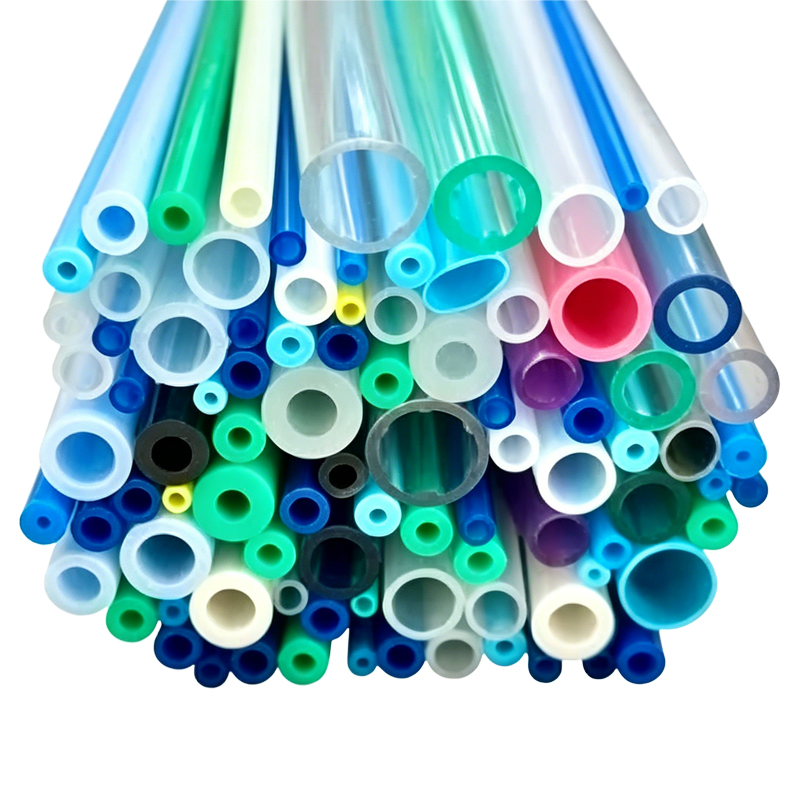
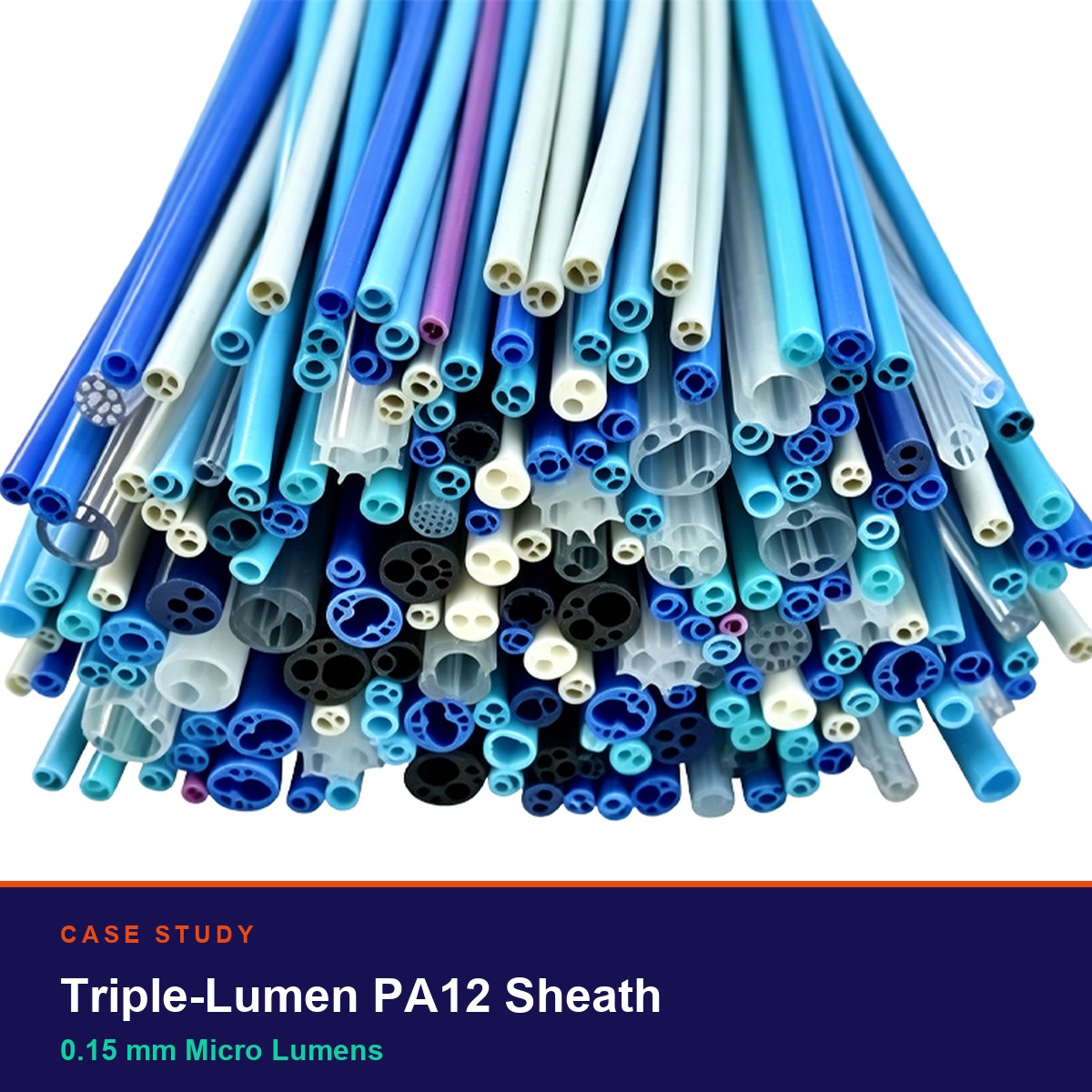
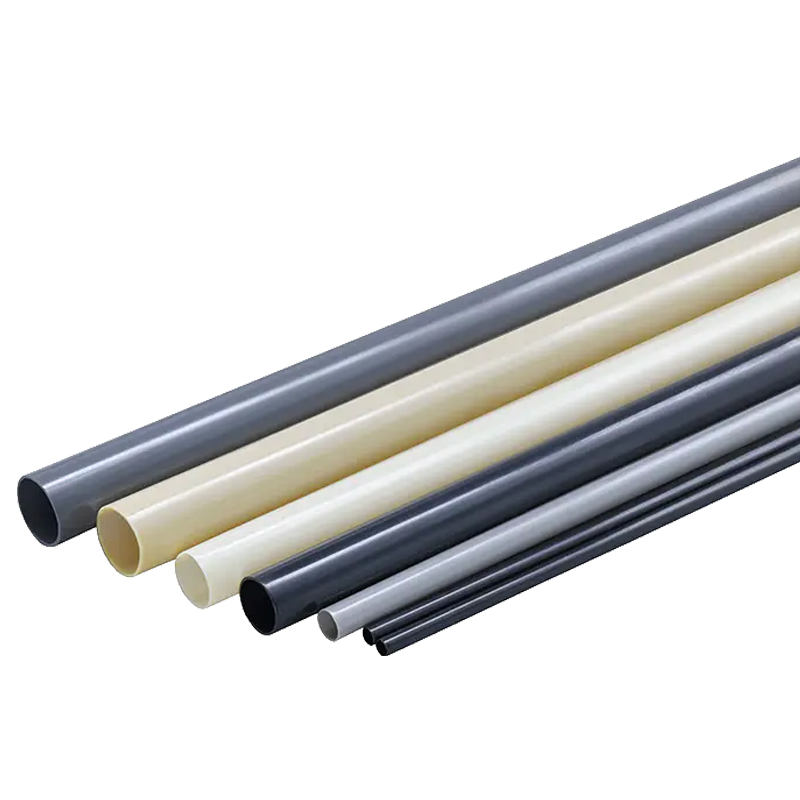
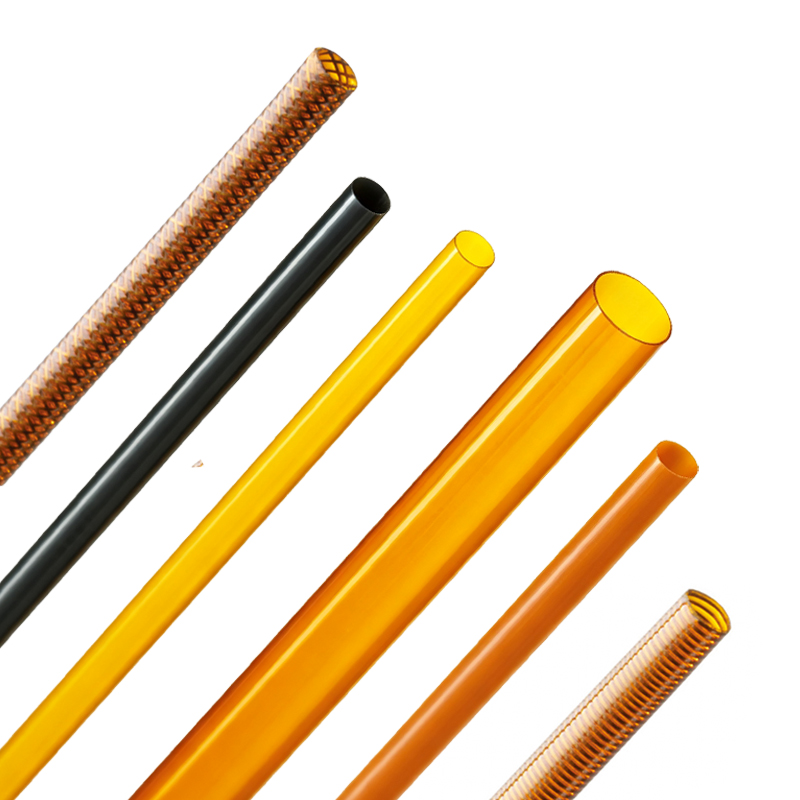
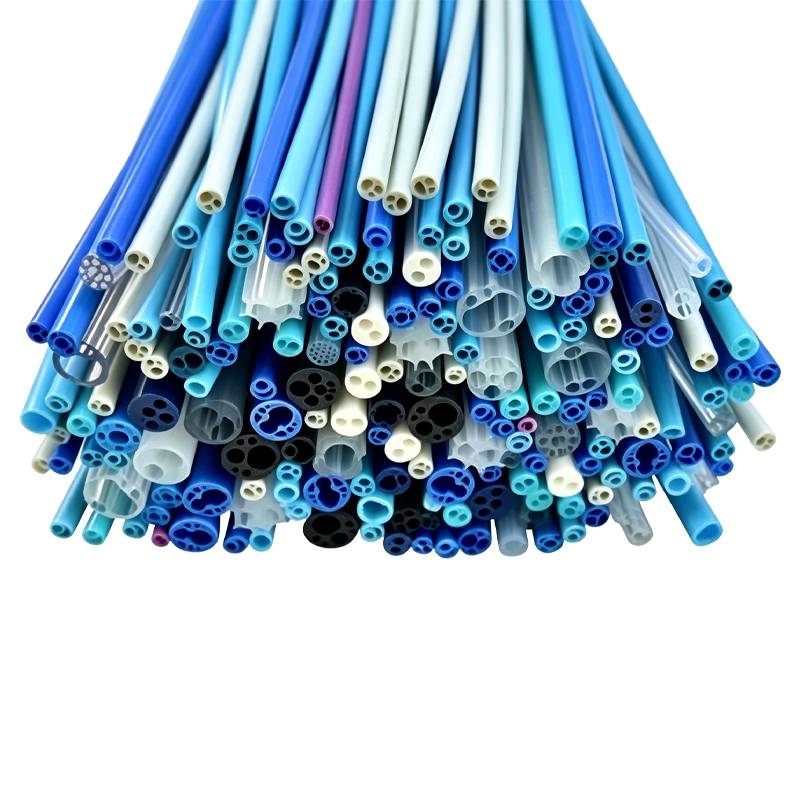
Contact Us No. 77, Bao Nan Road,Nan Lian Community,Long Gang Street,Long Gang District, Shenzhen, Guangdong,518116,China (+86)755 2917 9250 info@flypowermedical.comBH-MT-SLT single lumen extruded tubing features one internal continuous channel. It can be manufactured via extrusion from a wide range of polymer materials, with optional additives including colorants, surface modifiers that improve lubrication, and radiopaque agents for fluoroscopic or X-ray imaging applications. This type of tubing is widely applied in medical devices that require just a single internal passage for their structural components.
Different materials have different sterilization requirements. Common sterilization methods include ethylene oxide (EO), gamma irradiation, high-pressure steam, steam, and dry heat sterilization.
Different materials have different operating temperatures
ISO 10993 and compliant
|
Item |
Specification/Description |
|
ID Range |
≥0.008” (≥0.2mm) |
|
Wall Thickness |
≥0.001” (≥0.025mm) |
|
Wall Thickness Tolerance |
±0.0004” (±0.01mm) |
|
Length |
Customized as per request |
|
Compliant |
ISO 10993 |
|
Shapes |
Circular, oval, triangular, square, crescent |
|
Fluoropolymer Materials |
PTFE, FEP, ECTFE, EFEP, ETFE, PCTFE, PFA, PVDF |
|
Typical Thermoplastic Materials (More options are available upon request) |
PE, Nylon, Pebax, PEEK, TPU, TPE, PET, PC, PP, PSU, PPSU, PVC, Polyimide, EVA, POM |
|
Secondary Processes |
• Over Molding • Tipping & Flared • Head Design • Punching • Hydrophilic Coating • Flange •Adhesive Bonding • Curving • Printing & Marking |
|
Applications |
Balloon component, intravenous (IV) tubing, infusion device, pump tubing, feeding tubing, cannula, catheter, catheter shafts and protective sheath |
|
Other services |
Multi-layer extruded tubing, Co-extruded/stripe extruded tubing |

Q1: What is BH-MT-SLT, and when is a single lumen design the right choice?
A1: BH-MT-SLT is a precision-extruded medical tubing built around one continuous internal channel, available across a broad range of medical polymers. It is the right architecture whenever your device needs a single uninterrupted passage — for fluid delivery, a guidewire, or a structural member. If your design calls for multiple channels or layered walls, talk to us — we will honestly tell you whether a multi-lumen or multi-layer construction serves you better.
Q2: What makes FLYPOWER different from large commodity tubing extruders?
A2: Three things: deep experience in thin-wall precision extrusion, genuine fluoropolymer know-how built over years of medical projects, and a willingness to run small, fast-turn custom batches that high-volume extruders typically decline. The practical result is that we hold dimensions at the thin-wall end of the range where many suppliers struggle and we respond to iteration requests in days rather than quarters.
Q3: Which development stage do you typically support?
A3: All of them. We regularly support early feasibility work with small sample quantities, iterate through design verification, and then scale into pilot and volume production on the same extrusion platform. Starting with us at the prototype stage means the process you validate is the process that runs your production — no re-validation surprise when you scale.
Q4: How do I choose the right polymer for my application?
A4: Start from function, not from a material name: tell us what the tube must do — pushability, kink resistance, lubricity, chemical exposure, temperature, bonding or overmolding downstream — and we will shortlist candidate polymers and explain the trade-offs. Fluoropolymers, for example, win on lubricity and chemical inertness but need surface treatment for bonding. We can supply samples of two or three candidates so your team can compare on the bench before committing.
Q5: Can the tubing be made lubricious, colored, or visible under X-ray?
A5: Yes — functional additives such as lubricity modifiers, colorants and radiopaque fillers can be compounded directly into the extrusion. Tell us the clinical requirement (fluoroscopic visibility level, target color, friction target) rather than a specific additive chemistry, and we will propose a formulation approach and confirm it with trial samples.
Q6: My design needs a non-standard cross-section or an unusual size. Is that feasible?
A6: Very likely. Beyond the standard profile range shown in the datasheet, custom geometries and special sizes are a routine part of our custom work — this is where small-batch fast-turn capability matters most, because profile development takes iteration. Send us your cross-section drawing and the functional reason behind it, and we will give you a feasibility answer and tooling plan quickly.
Q7: What are your minimum order quantities and lead times?
A7: We deliberately keep minimums low enough for development work, and we treat small-batch customization as a core service rather than an exception. Lead times depend on material, size and tooling status and are confirmed at quotation; samples of existing configurations move fastest. If you are escaping a long lead time or a high MOQ from an incumbent supplier, tell us your target schedule — quick turnaround is one of the main reasons customers switch to us.
Q8: What information should I include in an RFQ to get a fast, accurate quotation?
A8: Please provide: target dimensions with the tolerance that is functionally critical, preferred material or the functional requirements if you are open, annual volume and first-order quantity, supply form (spool or cut length), the application and any downstream processes (bonding, tipping, coating, sterilization), and your timeline. Drawings or reference samples accelerate everything.
Q9: Any advice for downstream assembly — cutting, tipping, bonding or flaring?
A9: Cut with sharp, dedicated tooling — dull blades leave nicks that become weak points downstream. For bonding to fluoropolymer tubes, plan a surface-treatment step, since these materials will not bond reliably without it; tell us your assembly process early and we will factor it into the material and additive recommendation. If you prefer, we can deliver the tubing with secondary operations already completed in-house, so you receive an assembly-ready component.
Q10: We have seen kinking or fit problems with tubing from other suppliers. How do we avoid that?
A10: Kinking is usually a geometry mismatch — wall too thin for the bend radius, or stiffness wrong for the application — and fit problems with connectors usually trace back to dimensional drift between lots. The fix is to define the critical interface dimensions and the worst-case bend in your drawing, and to work with a supplier who controls dimensions in-line rather than by end-sampling. Share your failure history with us and we will propose a geometry or material adjustment.
Q11: How do you guarantee lot-to-lot consistency?
A11: Dimensions are monitored in-line during extrusion, raw material lots are controlled and traceable and every shipment can be accompanied by a certificate of analysis. For critical dimensions we can provide process capability data on request, and we support your incoming-inspection plan with agreed AQLs and retained samples. Consistency across lots is precisely where a specialist extruder earns its place in your supply chain.
Q12: What regulatory documentation do you provide and does material compliance cover our device?
A12: We provide material-level documentation — biocompatibility and compliance statements per the datasheet, plus composition information — for your technical file and supplier-qualification records, and we can discuss master-file reference and change-notification agreements where your filing requires them. Please note that material-level compliance supports, but does not constitute, approval of your finished device: biological evaluation, sterilization validation and regulatory clearance of the final product remain the device manufacturer’s responsibility.