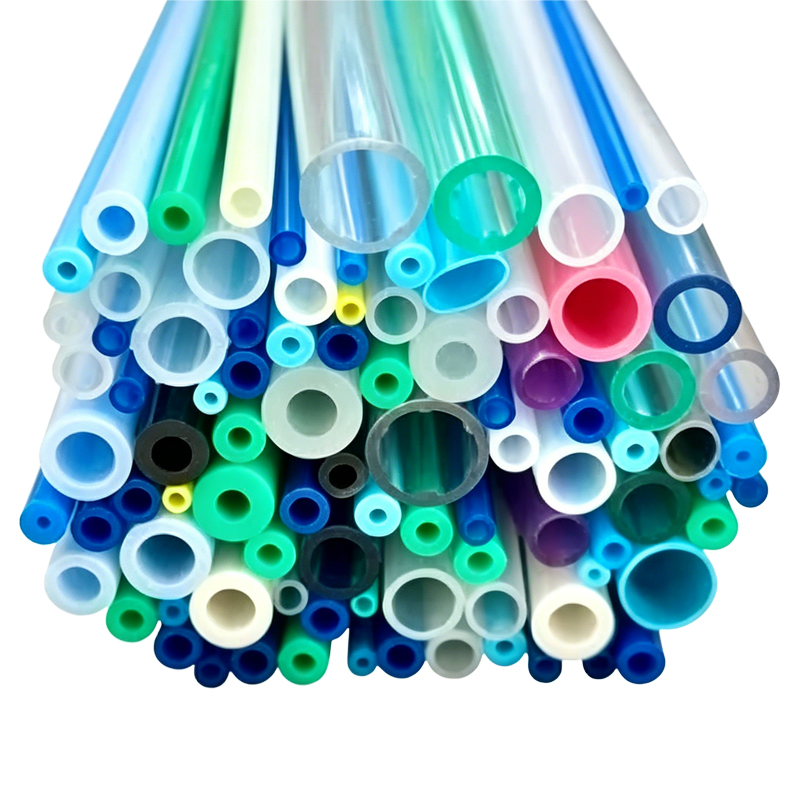

Founded in 2010, FLYPOWER is a high-tech enterprise specializing in the research, development, production, and sales of polymer materials. Leveraging its core technological strengths and starting with heat-shrink materials, the company established its Medical Division in 2018, expanding its business and product portfolio into the fields of medical devices and catheters, with the mission of becoming a globally leading supplier of materials for interventional medical devices.
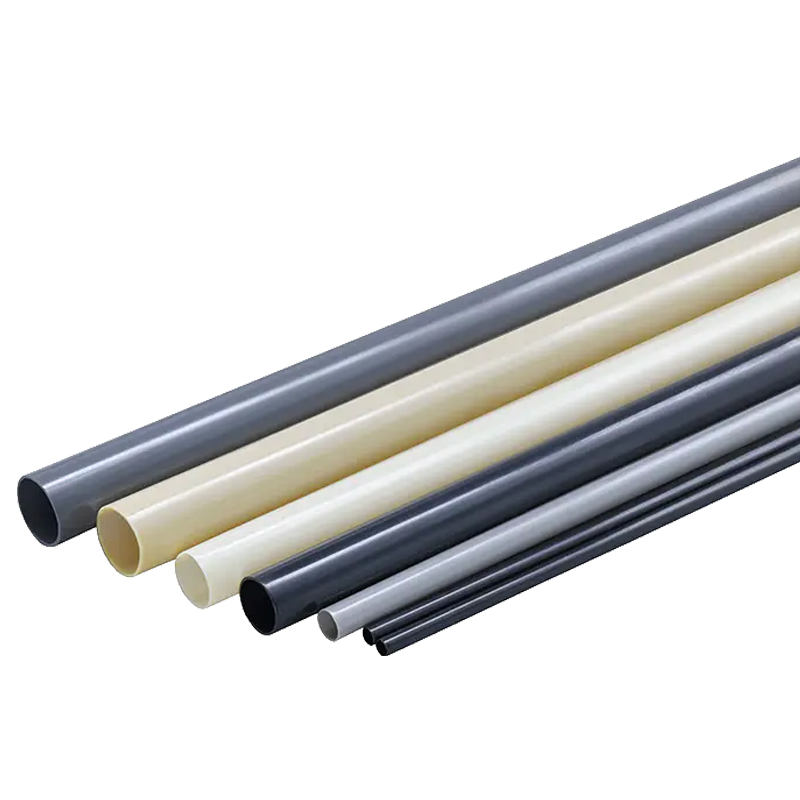
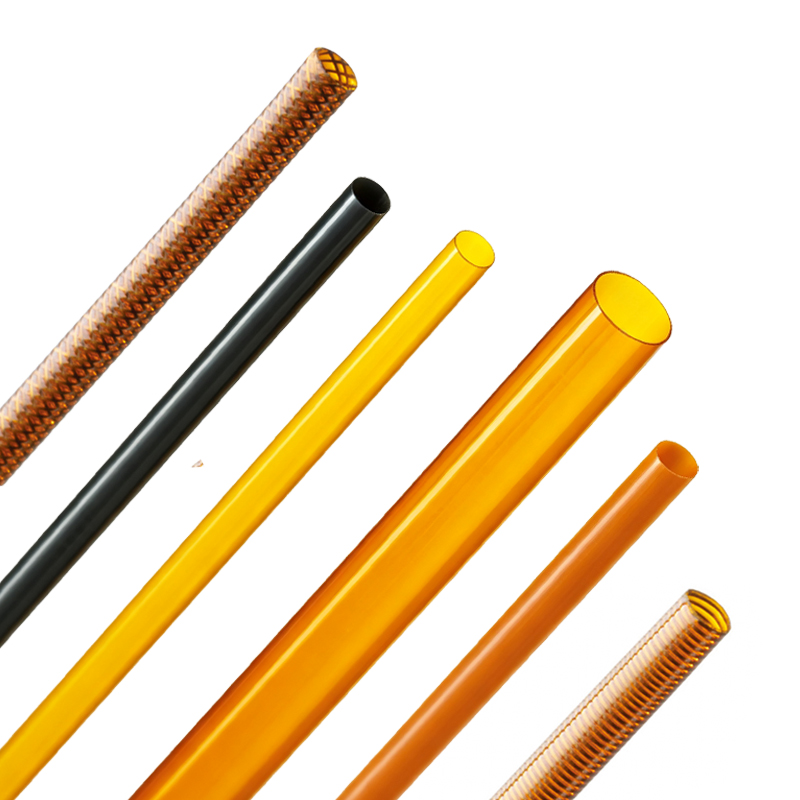
Contact Us No. 77, Bao Nan Road,Nan Lian Community,Long Gang Street,Long Gang District, Shenzhen, Guangdong,518116,China (+86)755 2917 9250 info@flypowermedical.comBH-MT-PEEK refers to a linear thermoplastic polymer whose macromolecular main chain is composed of aryl groups, ketone bonds and ether bonds. PEEK tubing has excellent properties such as high tensile strength, high heat resistance, high chemical resistance, high buckling resistance, good push ability and radiopacity. It can be used in series of flexible endoscopes for digestive tract, respiratory tract, biliary tract, urinary tract, etc.
Typical Application:
– Outer tube for EUS biopsy needles
– Outer tube for biopsy forceps
– Stent delivery system
– Electrocautery forceps
– Ultrasonic surgical instruments
– Laparoscopic instruments
– Outer tube for stone retrieval Occlusion catheter
High precision with exceptional dimensional accuracy
Combines hardness with toughness
High crystallinity and better thermal stability
Tensile Strength: Approx. 100 MPa
Compatibility with steam, gamma, EtO & E-beam sterilization
Continuous Use Temperature: 250℃+
ISO 10993 and compliant;
|
ITEM |
INCH |
MM |
|
Nominal ID |
0.002~0.275 |
0.5~7.0 |
|
ID Tolerance |
up to +0.0012 ~0.00315 |
up to +0.03 ~0.08 |
|
Nominal W.T |
0.0039 ~ 0.0315 |
0.1~0.8 |
|
W.T Tolerance |
up to +0.0006 ~ +0.00079 |
up to +0.015 ~ +0.02 |
|
Standard Cut Length |
1.97~98.5 |
50~2500 |
Q1: When should we select PEEK tubing over polyimide, PTFE, or Pebax in a minimally invasive device design?
A1: PEEK is typically chosen when high stiffness, dimensional stability, and compressive strength are required in a thin-walled tube – for example as push shafts, dilators, introducer components, endoscope working elements, or structural tubing in surgical instruments. Unlike polyimide (a thermoset), PEEK is melt-processable and can be thermally formed, flared, and tipped; unlike PTFE, it offers far higher rigidity and push transmission. The trade-offs are reduced flexibility, a tendency to kink rather than bend at tight radii, and challenging bonding. If your design priority is torque and pushability in a straight or gently curved path, PEEK is a strong candidate; if the device must navigate tortuous anatomy, a bench comparison against PI or reinforced thermoplastic shafts is advisable.
Q2: What is the difference between “medical grade” and “implant grade” PEEK, and does BH-MT-PEEK tubing cover implantable applications?
A2: This distinction matters significantly for regulatory strategy. Medical grade PEEK tubing is supplied with material-level biocompatibility data suitable for transient- or short-duration-contact devices such as catheters, endoscope components, and surgical instruments. Long-term implantable applications typically require implant-grade resin supply chains with enhanced controls, dedicated master files, and specific regulatory documentation, which is a different commercial and quality framework. If your device involves permanent or long-term implantation, please raise this with our team at the inquiry stage so the appropriate material pathway can be confirmed before you begin validation work.
Q3: Can PEEK tubing be heat-formed, tipped, or flared during device assembly?
A3: Yes – this is one of PEEK’s practical advantages over thermoset alternatives. As a thermoplastic, PEEK can be thermally formed into curves, tipped, necked, or flared using heated tooling. Two points require attention: the processing temperatures are high relative to common catheter polymers, so tooling and thermal control must be appropriate; and formed features should be evaluated for residual stress, since inadequate process control can lead to stress whitening, dimensional drift, or reduced kink resistance at the formed zone. Forming process development and validation remain the responsibility of the device manufacturer.
Q4: How do we achieve reliable adhesive bonds to PEEK tubing?
A4: Like most high-performance polymers, PEEK has a low-energy, chemically inert surface and untreated bonds are weak. Industrial practice combines surface activation – plasma or corona treatment – with primers and suitable adhesive systems such as epoxies, cyanoacrylates, or UV-cure formulations. We recommend verifying bond strength not only as-built but after sterilization and accelerated aging, since both can degrade interfacial adhesion. We can advise on the as-supplied surface condition; adhesive selection, surface preparation, and bond validation are part of your process development scope.
Q5: What failure modes are most commonly observed with PEEK tubing, and how can they be mitigated at the design stage?
A5: The most frequently discussed issues in the engineering community are kinking – PEEK tends to kink sharply rather than bend gradually once its minimum bend radius is exceeded – cracking under repeated cyclic flexure, creep under sustained load at elevated temperature and localized stress cracking at formed features or bonded joints. Mitigation strategies include respecting generous bend radii in the device geometry, adding strain relief at joints, avoiding PEEK in highly dynamic flexing zones unless validated, and controlling forming parameters. Systematic identification and mitigation of these risks in the finished device falls under the device manufacturer’s ISO 14971 risk management process.
Q6: Which materials is PEEK tubing commonly combined with, and what compatibility points should we verify?
A6: PEEK tubing is routinely paired with PTFE liners, stainless steel and Nitinol guidewires and stylets, thermoplastic jackets, and metallic hubs and fittings. Its broad chemical resistance covers most solvents, cleaning agents, and process fluids used in device manufacturing, with a small number of exceptions – concentrated strong acids being the classic example – that should be checked against your process chemistry. Compatibility with specific drug formulations, coatings, and adhesive systems in your actual build should be confirmed through your own compatibility and extractables testing before design freeze.
Q7: Which sterilization methods are suitable for PEEK tubing, and how should we choose?
A7: PEEK’s thermal and radiation stability makes it one of the most sterilization-tolerant engineering polymers in common use: it is routinely processed by steam (autoclave), EtO, and gamma or e-beam radiation, and it is one of the few tubing materials that tolerates repeated steam cycles – relevant if your device is intended for reprocessing. Selection is usually driven by the other materials in the finished device, packaging, and whether single-use or reusable validation applies. Sterilization method selection, cycle development, dose mapping, and validation to the applicable standards are the responsibility of the finished device manufacturer.
Q8: Does the tubing’s ISO 10993 and compliance mean our finished device is automatically approved or biocompatible?
A8: No. We supply component tubing only. ISO 10993 and data apply to the material and provide supporting evidence for your regulatory file, but they do not constitute approval of a finished medical device, nor do they transfer to your device by default. Biological evaluation of the final device, sterilization validation, process validation, ISO 14971 risk analysis, and all regulatory submissions remain entirely the responsibility of the device manufacturer. We make no claims about finished-device performance and we recommend that downstream marketing materials do not imply regulatory approval based on component-level data.
Q9: How should PEEK tubing be stored, and what shelf-life considerations apply?
A9: PEEK has very low moisture uptake and excellent environmental stability, so storage is straightforward: keep the tubing in its original sealed packaging, in a cool, dry environment, protected from direct UV exposure and mechanical deformation such as tight coiling below its natural bend radius. There is no evidence of material degradation under normal warehouse conditions; nevertheless, we recommend defining storage conditions and any retest intervals within your own quality management system, and performing incoming visual and dimensional inspection before use, particularly for long-held stock.
Q10: What secondary operations can be performed on BH-MT-PEEK tubing?
A10: Common secondary operations include precision cutting (blade or laser), machining of features, laser marking, pad printing with suitable inks and surface pretreatment, thermal forming, and annealing to relieve residual stress after machining or forming. Two cautions: machining can introduce burrs or subsurface stress that affect downstream performance and any operation that heats the material locally should be evaluated for dimensional change. Because any secondary process modifies the component as supplied, its effect on dimensions, surface condition, and cleanliness should be validated by the party performing the operation.
Q11: What documentation and incoming inspection should we plan for when qualifying BH-MT-PEEK as a production component?
A11: Each lot is supplied with a Certificate of Analysis and full lot traceability. For qualification, we recommend a documented incoming inspection plan covering identity and visual condition (including color and surface defects), critical dimensions verified with appropriate gauging, and periodic destructive mechanical checks per your sampling plan. For PEEK specifically, some customers also monitor resin lot consistency through their own incoming controls where the application is highly sensitive. A supplier quality agreement covering specification control, change notification, and nonconformance handling is strongly recommended for OEM/ODM programs.
Q12: What should we expect regarding MOQ, lead time, customization, and long-term supply continuity?
A12: MOQ and lead time depend on whether the size is a standard item or a custom extrusion – custom IDs, wall thicknesses, cut lengths, and colors can be produced to drawing, with terms confirmed per quotation. For program security, we recommend blanket or scheduled orders, agreed safety stock, and early involvement of our engineering team before design freeze so that specifications are locked prior to validation. Supply continuity, specification changes, and end-of-life notification can all be governed under a formal quality agreement with your procurement team.