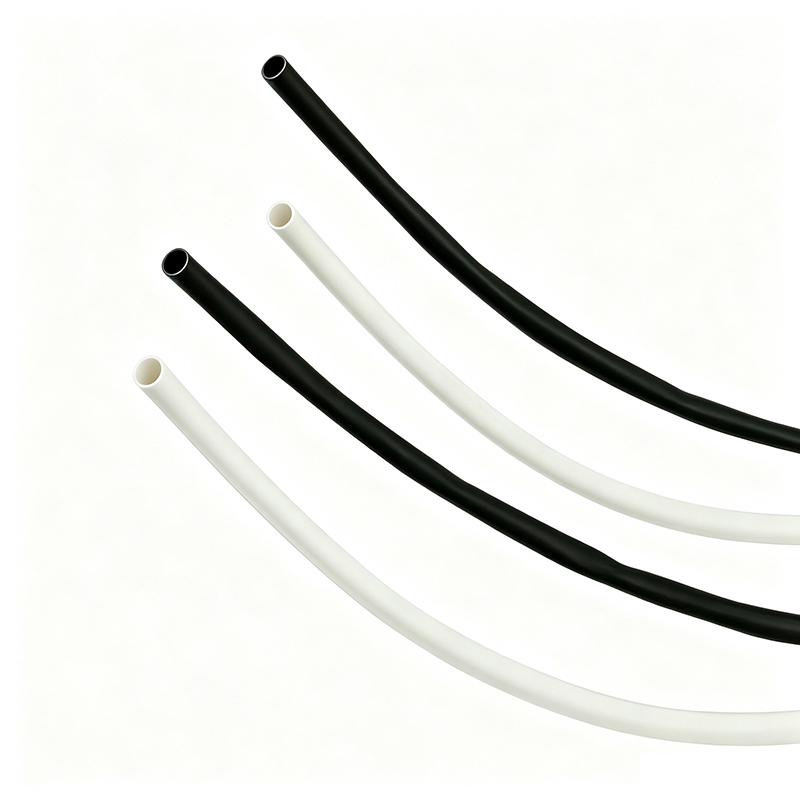

Founded in 2010, FLYPOWER is a high-tech enterprise specializing in the research, development, production, and sales of polymer materials. Leveraging its core technological strengths and starting with heat-shrink materials, the company established its Medical Division in 2018, expanding its business and product portfolio into the fields of medical devices and catheters, with the mission of becoming a globally leading supplier of materials for interventional medical devices.
联系我们 No. 77, Bao Nan Road,Nan Lian Community,Long Gang Street,Long Gang District, Shenzhen, Guangdong,518116,China (+86)755 2917 9250 [email protected]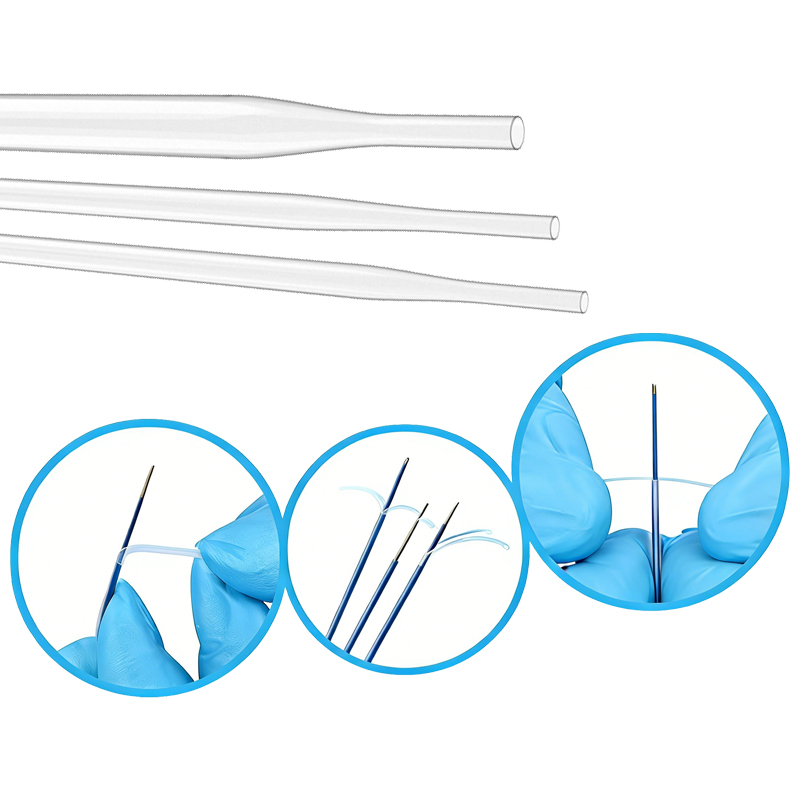
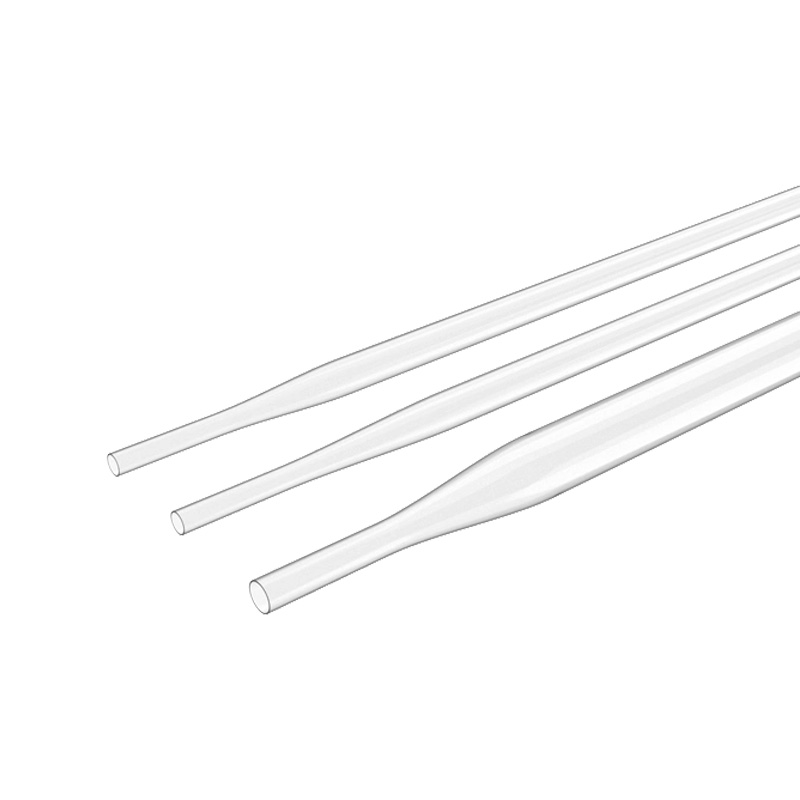
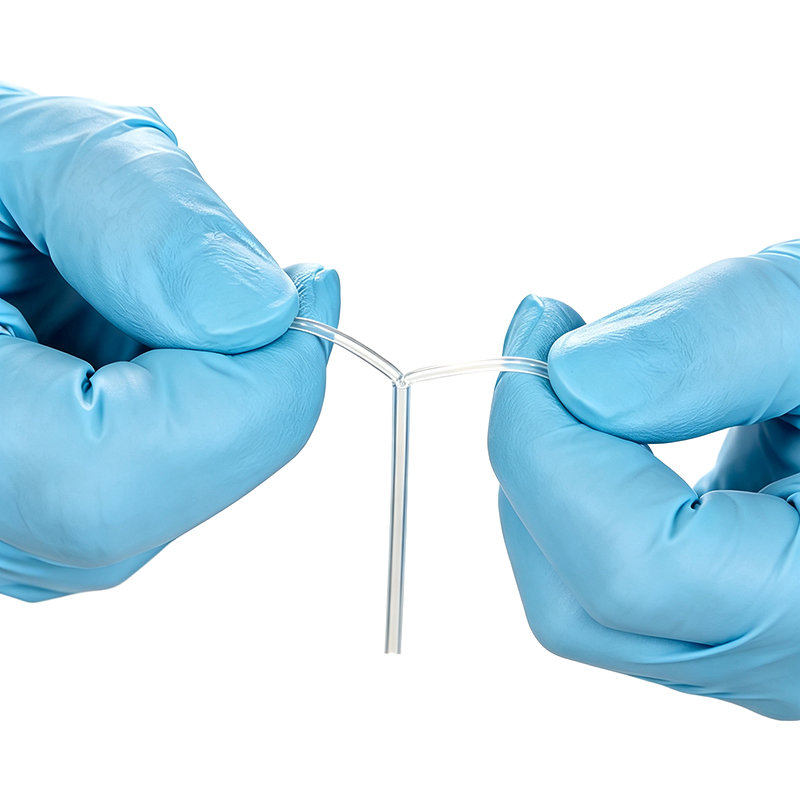
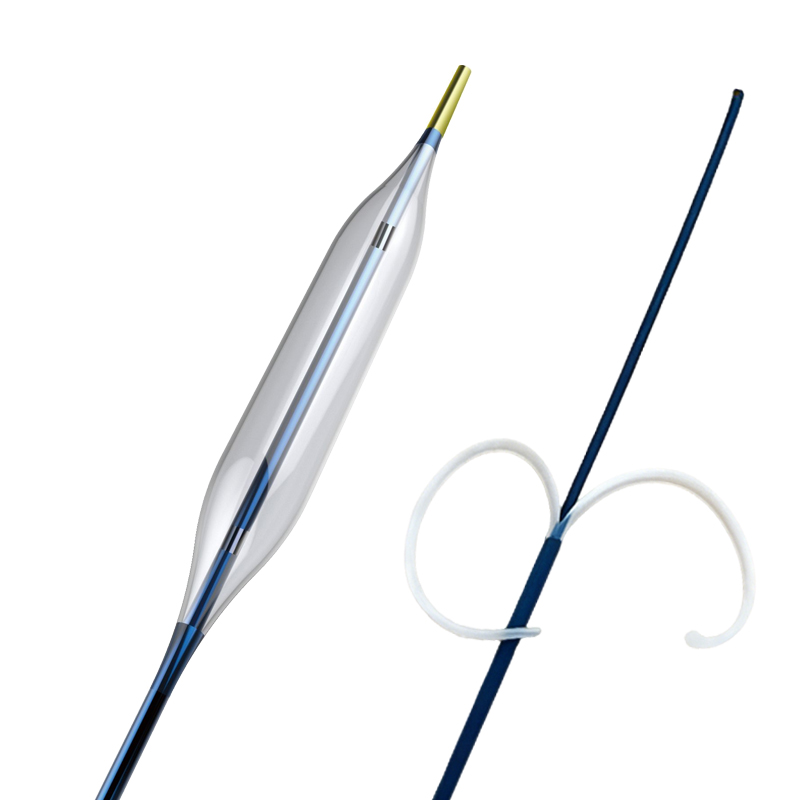
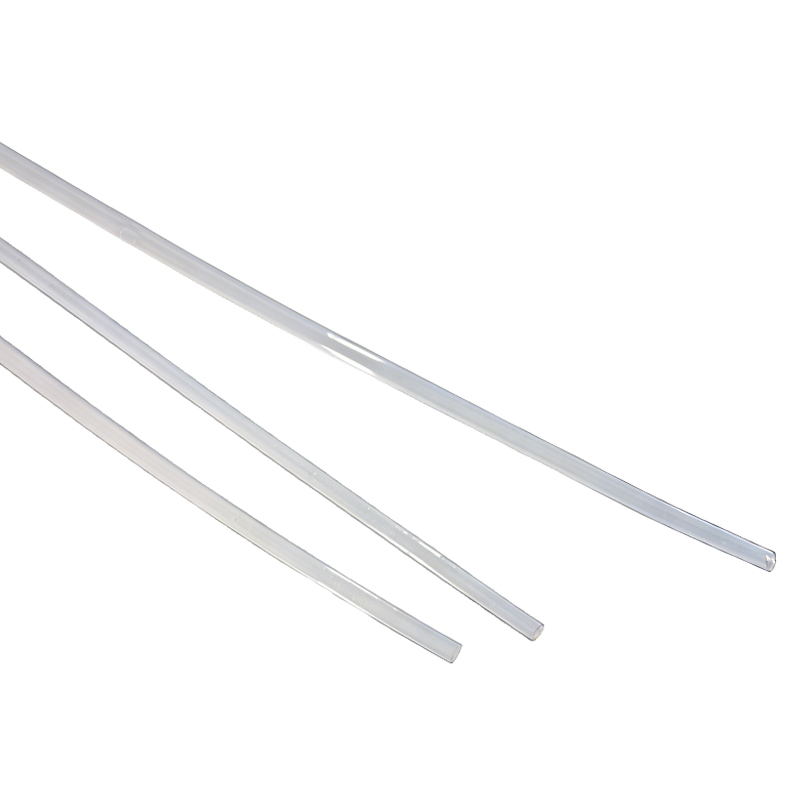
BH-MT-FEP-PL is made of medical-grade fluorinated polymer. After heat shrinking,it can be quickly and completely peeled off from the outer layer of the catheter without using cutting tools and without sticking. This greatly improves production efficiency and prevents product loss and waste due to improper cutting. It is suitable for the production of various medical multi-layer catheters and the welding rheological process of balloons and joints, etc.
Shrink Ratio: 1.3:1/1.6:1 or more higher
High transparency, easy to observe welding conditions
Excellent linear tensile strength
Excellent axial tear propagation
Compatibility with gamma rays and ETO sterilization
Packing by double bag packaging
Work Temperature:-55℃ ~200℃
Minimum shrink temperature: 190℃
Fully recovery temperature: 260℃
ISO 10993 compliant, USP Class VI, no heavy metals
|
Model |
Expanded ID (Min.) |
Fully recovered ID (Max.) |
Fully recovered wall thickness |
Standard Length |
||||||
|
1.3:1 |
1.6:1 |
|||||||||
|
Inch |
mm |
Inch |
mm |
Inch |
mm |
Inch |
mm |
Inch |
mm |
|
|
BH-MT-FEP-PL-0.64 |
0.0252 |
0.64 |
0.0194 |
0.49 |
0.0157 |
0.40 |
0.008±0.002 |
0.20±0.05 |
67.0 |
1700 |
|
BH-MT-FEP-PL-0.80 |
0.0315 |
0.80 |
0.0244 |
0.62 |
0.0197 |
0.50 |
0.008±0.002 |
0.20±0.05 |
67.0 |
1700 |
|
BH-MT-FEP-PL-0.96 |
0.0378 |
0.96 |
0.030 |
0.74 |
0.0236 |
0.60 |
0.008±0.002 |
0.20±0.05 |
67.0 |
1700 |
|
BH-MT-FEP-PL-1.12 |
0.0441 |
1.12 |
0.0339 |
0.86 |
0.0276 |
0.70 |
0.008±0.002 |
0.20±0.05 |
67.0 |
1700 |
|
BH-MT-FEP-PL-1.28 |
0.0504 |
1.28 |
0.0387 |
0.98 |
0.0315 |
0.80 |
0.008±0.002 |
0.20±0.05 |
67.0 |
1700 |
|
BH-MT-FEP-PL-1.44 |
0.0567 |
1.44 |
0.0436 |
1.10 |
0.0354 |
0.90 |
0.008±0.002 |
0.20±0.05 |
67.0 |
1700 |
|
BH-MT-FEP-PL-1.60 |
0.0630 |
1.60 |
0.0484 |
1.23 |
0.0394 |
1.00 |
0.010±0.002 |
0.25±0.05 |
67.0 |
1700 |
|
BH-MT-FEP-PL-2.00 |
0.0787 |
2.00 |
0.0606 |
1.54 |
0.0492 |
1.25 |
0.010±0.002 |
0.25±0.05 |
67.0 |
1700 |
|
BH-MT-FEP-PL-2.40 |
0.0945 |
2.40 |
0.0728 |
1.85 |
0.0590 |
1.50 |
0.010±0.002 |
0.25±0.05 |
67.0 |
1700 |
|
BH-MT-FEP-PL-3.20 |
0.1260 |
3.20 |
0.0969 |
2.46 |
0.0787 |
2.00 |
0.010±0.002 |
0.25±0.05 |
67.0 |
1700 |
|
BH-MT-FEP-PL-4.80 |
0.1890 |
4.80 |
0.1452 |
3.69 |
0.1181 |
3.00 |
0.010±0.002 |
0.25±0.05 |
67.0 |
1700 |
|
BH-MT-FEP-PL-6.40 |
0.2520 |
6.40 |
0.1937 |
4.92 |
0.1574 |
4.00 |
0.010±0.002 |
0.25±0.05 |
67.0 |
1700 |
Customized dimensions and heat shrink ratio for your special applications on request.
Cross Reference :
Junkosha FEP-PHST and Zeus FluoroPEELZ™
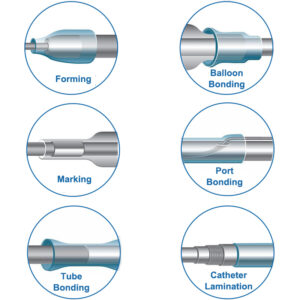
Applications:
|
Property |
Test Method |
Typical Data |
|
Longitudinal change |
ASTM D2671 |
±10% |
|
Tensile strength |
ASTM D2671 |
≥10.3MPa |
|
Elongation at break |
ASTM D2671 |
≥200% |
|
Heat resistance |
260˚C/4hrs |
No cracking and fading |
Q1: How do I prevent FEP heat shrink from leaving residue or sticking to Pebax jackets during reflow?
A1: Residue typically occurs when FEP degrades at excessive temperatures or dwell times. BH-MT-FEP-PL is designed for clean peelability after reflow. Key practices:
– Maintain reflow temperature at 200–220°C for Pebax jackets (35D–72D)
– Use directional heating (proximal to distal) to push air and moisture ahead of the melt front
– Allow sufficient cooling time before peel initiation
– If sticking occurs, verify your thermal profile isn’t exceeding 240°C, which can cause FEP surface degradation
Compliance Note: BH-MT-FEP-PL is supplied as a process aid only. Any certification documentation (e.g., material safety, handling) can be provided upon request for your internal evaluation. This product is not intended for implantation or permanent incorporation into medical devices.
Q2: What shrink ratio should I select for balloon forming and catheter lamination?
A2: Ratio selection depends on your assembly geometry and compression requirements:
| Application | Recommended Ratio | Rationale |
| Balloon neck bonding | 1.3:1 – 1.6:1 | Controlled pressure at delicate transition zones |
| Shaft lamination (braid/coil) | 1.6:1 – 2.0:1 | Higher compression to drive jacket flow into reinforcement |
| Tapered or stepped shafts | 2.0:1 | Accommodates diameter variation along length |
Critical: Higher ratios generate more radial force. Excessive compression can cause lumen distortion or braid deformation. Validate with your specific mandrel and liner tolerance stack-up.
Q3: How can I avoid scratching or damaging soft Pebax/TPU jackets when removing FEP heat shrink?
A3: Traditional skiving with blades risks surface damage. BH-MT-FEP-PL peelable FEP eliminates blade contact:
– Make a single axial slit at the proximal end
– Peel longitudinally along the catheter axis
– The controlled peel propagation reduces radial and transverse stress on thin-wall shafts, balloons, and multi-layer laminations
This is especially critical for low-durometer Pebax (25D–40D) and compliant TPU jackets where surface imperfections affect device performance.
Q4: My FEP heat shrink recovers unevenly, causing voids and inconsistent bonding. What process controls help?
A4: Uneven recovery stems from thermal gradients or trapped air:
– Pre-dry hygroscopic materials: Pebax and Nylon absorb moisture; bake at 60–80°C for 4–8 hours before reflow
– Directional heating: Move heat source proximal→distal to push air out ahead of recovery
– Mandrel fit: Ensure mandrel OD matches liner ID within 0.0005″ to prevent buckling
– Shrink ratio: Don’t oversize; excessive clearance traps air. Select expanded ID only 15–20% larger than maximum assembly OD
BH-MT-FEP-PL provides consistent wall thickness and concentricity to support uniform radial compression.
Q5: What cooling method and temperature should I use after reflow with FEP heat shrink?
A5: Cooling rate affects residual stress and dimensional stability:
– Initial cooling: Allow assembly to cool to below 100°C in still air before water quench
– Water bath: Use room temperature (20–25°C) deionized water; avoid ice water which can lock in stress and cause delamination in multi-layer constructions
– Controlled cooling: For critical builds, use gradual air cooling to room temperature over 2–5 minutes
Rapid quenching from >200°C can create thermal shock and interlayer stress, particularly with dissimilar materials (PTFE liner + Pebax jacket + metal braid).
Q6: How do I verify complete jacket consolidation and bond quality during reflow when I can’t see inside the FEP?
A6: BH-MT-FEP-PL offers high optical clarity for visual monitoring:
– Observe jacket flow, bubble formation, and marker band position in real time during heating
– Look for uniform surface appearance without wrinkles or “fish eyes”
– Post-reflow: Perform destructive peel testing on sample units to verify bond strength between liner, braid, and jacket
Q7: Why choose peelable FEP over standard non-peelable heat shrink tubing?
A7: Standard heat shrink requires manual skiving with mechanical blades, which risks nicking or scoring the underlying catheter shaft, causing high scrap rates. Peelable FEP features engineered linear molecular alignment, allowing operators to nick the end and tear it off cleanly in a single strip. This eliminates assembly damage, speeds up production throughput, and lowers manufacturing scrap costs.
Q8: Can this product be customized for micro-catheter dimensions?
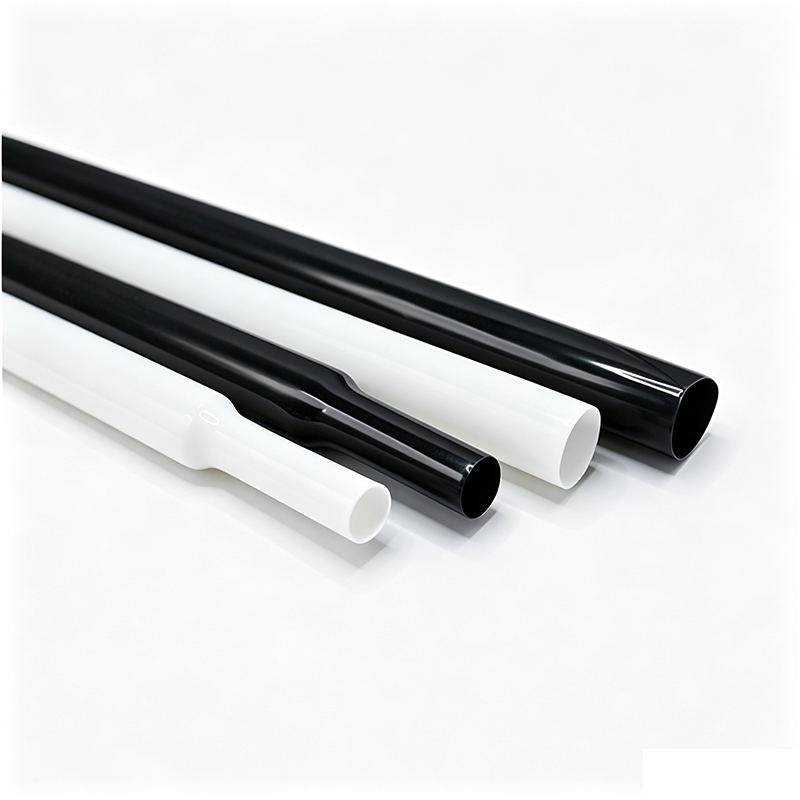
A8: Yes. We offer fully customizable expanded inner diameters (ID), recovered wall thicknesses, custom colors, and pre-cut lengths tailored to your exact catheter assembly tolerances and process requirements.
– Use ultrasonic or X-ray inspection for non-destructive internal evaluation if needed