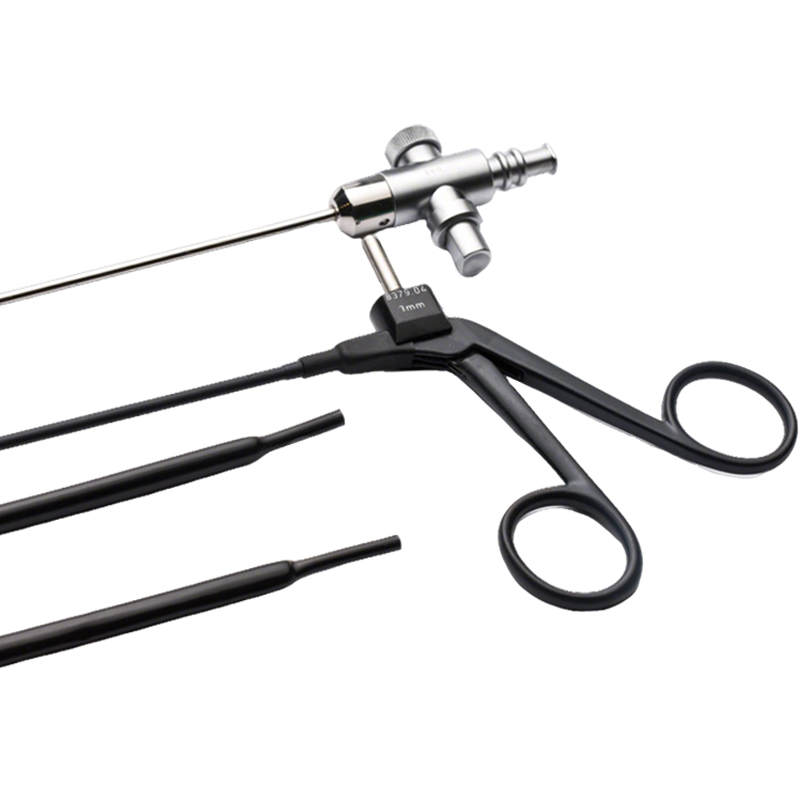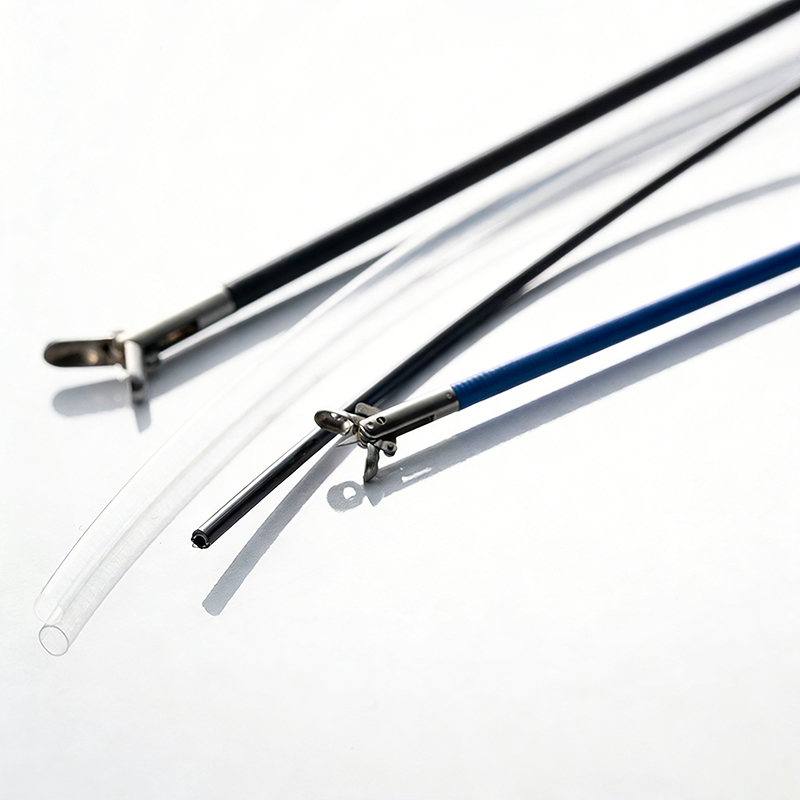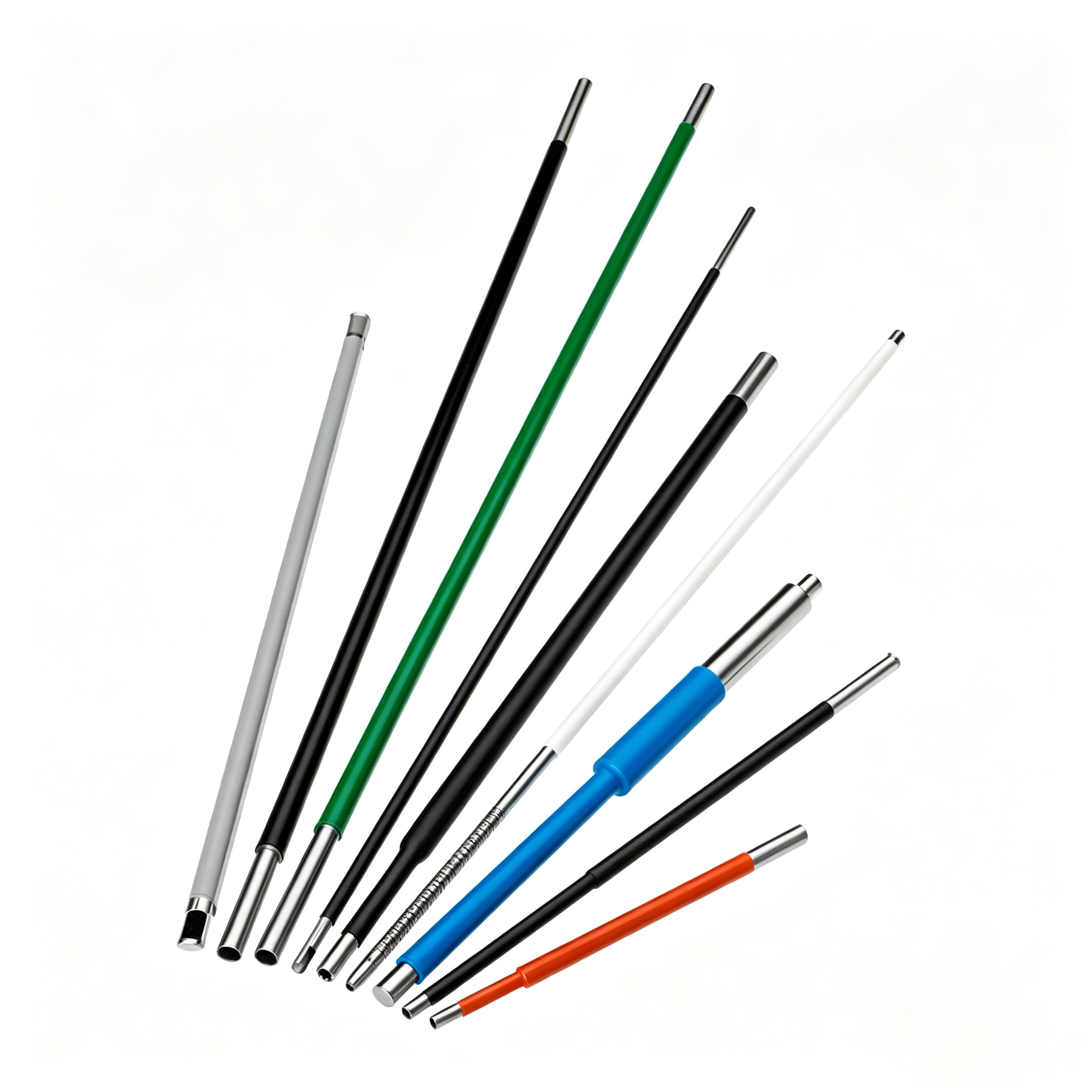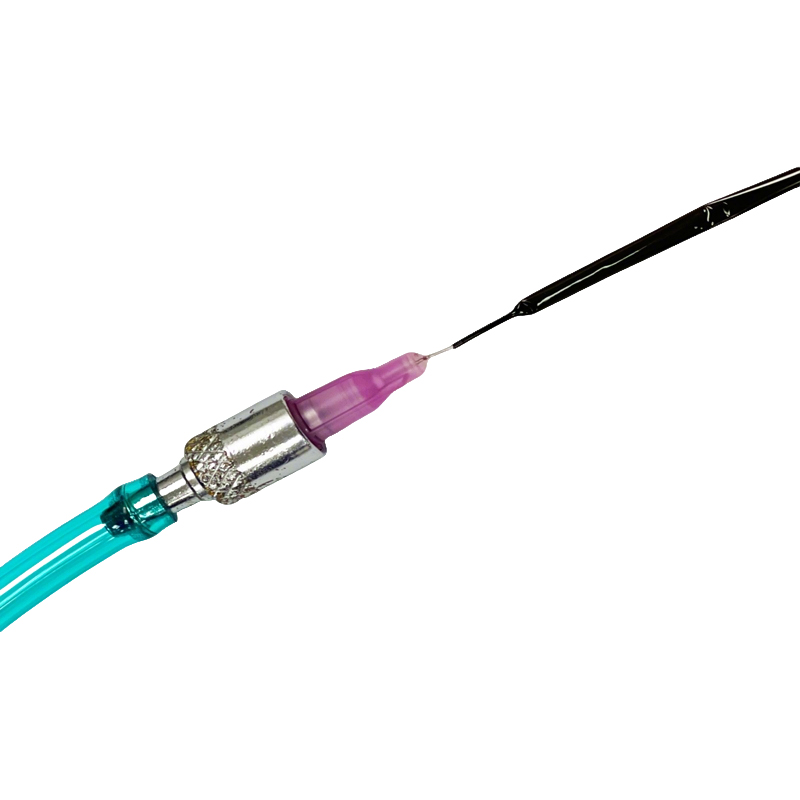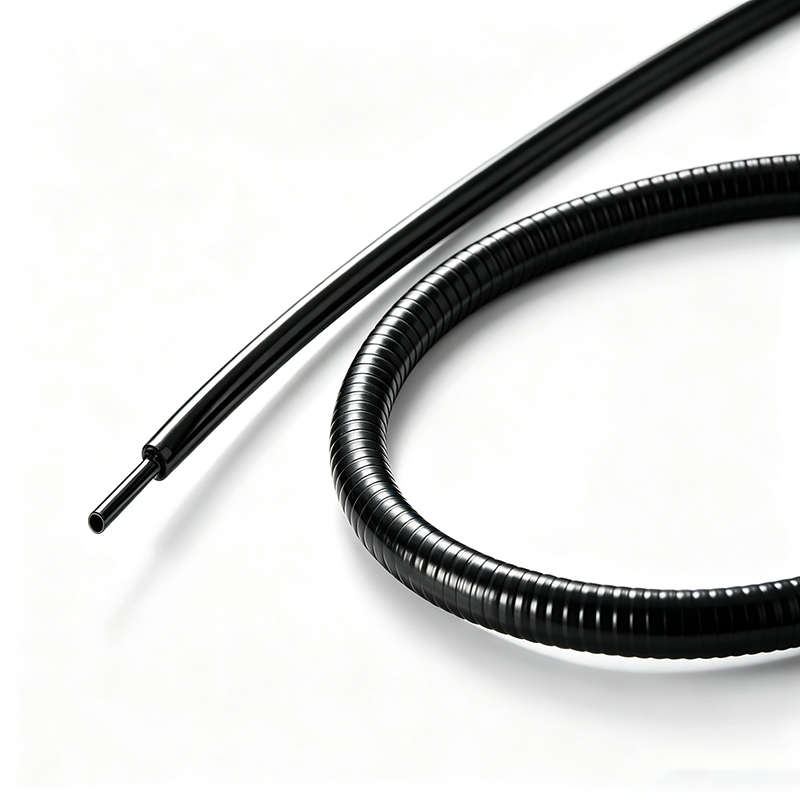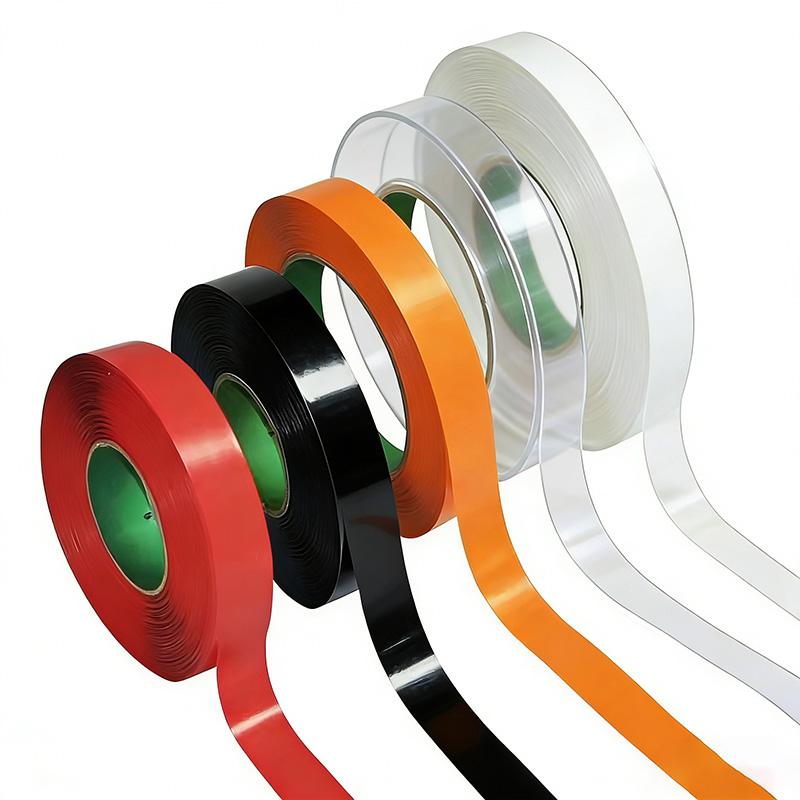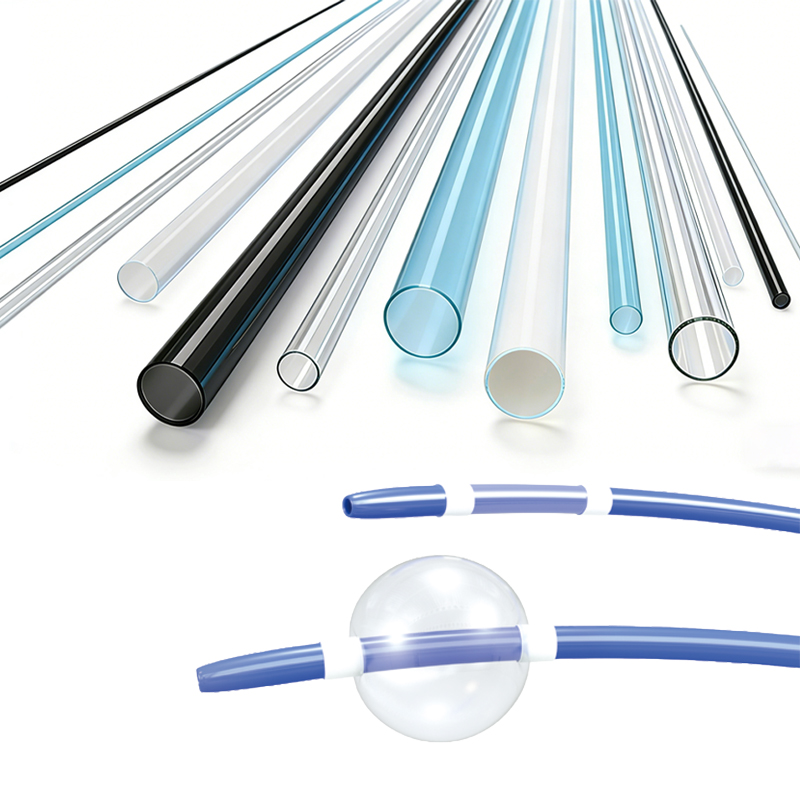

Founded in 2010, FLYPOWER is a high-tech enterprise specializing in the research, development, production, and sales of polymer materials. Leveraging its core technological strengths and starting with heat-shrink materials, the company established its Medical Division in 2018, expanding its business and product portfolio into the fields of medical devices and catheters, with the mission of becoming a globally leading supplier of materials for interventional medical devices.
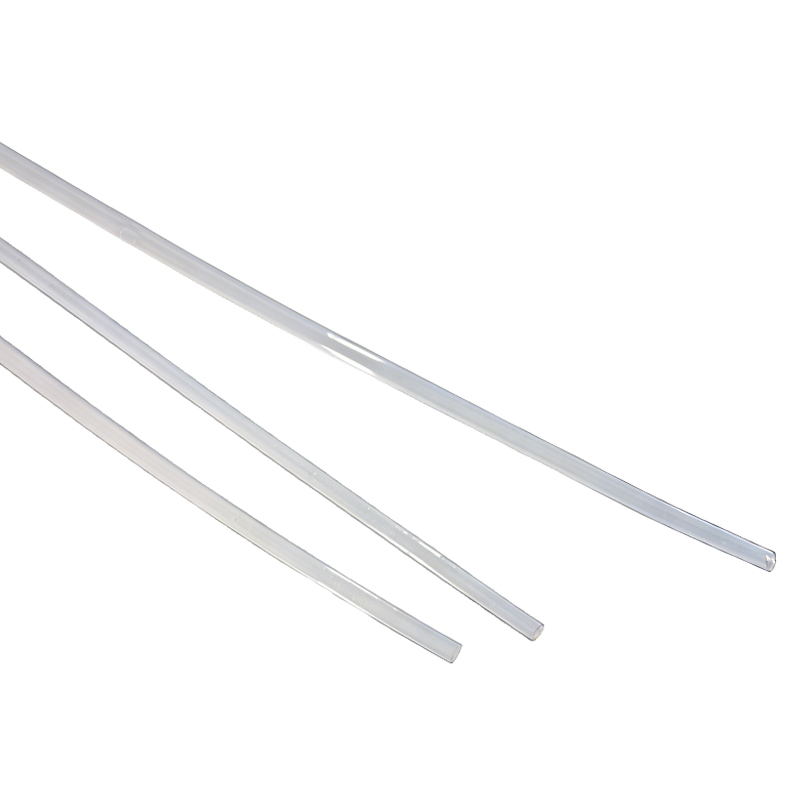
联系我们 No. 77, Bao Nan Road,Nan Lian Community,Long Gang Street,Long Gang District, Shenzhen, Guangdong,518116,China (+86)755 2917 9250 [email protected]BH-MT-2-UTW medical grade ultra thin heat shrinkable tubing which is made of medical grade polyolefin, It has excellent electrical insulation performance and flexibility and can achieve ultra-thin wall thickness with a minimum thickness of 0.05mm. Its flexibility and thin-walled structure can meet the needs of medical device production.
Shrink ratio: ≥2:1
Low shrink temperature
Ultra-thin wall thickness, as thin as 0.05 mm
High transparency and flexibility
Good physical, chemical, and electrical properties
Excellent electrical insulation properties
Suitable for gamma (γ) ray and ethylene oxide (ETO) sterilization
Operating temperature: -45℃~90℃
Minimum shrink temperature: 60 ℃
Fully recovery temperature: Above 100 ℃
ISO 10993, USP Class VI and RoHS compliant
|
Model |
Supplied (mm) |
Recovered(mm) |
Standard Packaging (Meter/Spool) |
||
|
ID(Min.) |
W.T |
ID(Max.) |
W.T |
||
|
BH-MT-2-UTW-1.0 |
1.0 |
0.075±0.025 |
≤0.50 |
0.125±0.025 |
200 |
|
BH-MT-2-UTW-2.0 |
2.0 |
0.075±0.025 |
≤1.00 |
0.125±0.025 |
200 |
|
BH-MT-2-UTW-3.0 |
3.0 |
0.075±0.025 |
≤1.50 |
0.125±0.025 |
200 |
|
BH-MT-2-UTW-4.0 |
4.0 |
0.075±0.025 |
≤2.00 |
0.125±0.025 |
200 |
|
BH-MT-2-UTW-4.4 |
4.4 |
0.075±0.025 |
≤2.20 |
0.125±0.025 |
200 |
|
BH-MT-2-UTW-4.8 |
4.8 |
0.075±0.025 |
≤2.40 |
0.125±0.025 |
100 |
|
BH-MT-2-UTW-5.5 |
5.5 |
0.075±0.025 |
≤2.75 |
0.125±0.025 |
100 |
|
BH-MT-2-UTW-6.4 |
6.4 |
0.115±0.03 |
≤3.20 |
0.175±0.025 |
100 |
|
BH-MT-2-UTW-10.0 |
10.0 |
0.115±0.03 |
≤5.00 |
0.175±0.025 |
100 |
|
BH-MT-2-UTW-12.7 |
12.7 |
0.115±0.03 |
≤6.35 |
0.175±0.025 |
100 |
Special sizes are available on request.
|
Property |
Test Method |
Typical Data |
|
Longitudinal change % |
ASTM D 2671 |
-10~+5 |
|
Tensile strength/MPa |
ASTM D 638 |
≥10.3 |
|
Elongation at break/% |
ASTM D 638 |
≥200 |
|
Dielectric Withstand Voltage |
ASTM D2671 |
3000V, 60 seconds without breakdown |
|
Dielectric strength/kV/mm |
ASTM D 2671 |
≥15.7 |
Written for medical device R&D and process engineers, OEM/ODM partners and sourcing teams working on fine-gauge catheters, invasive devices and electrosurgical micro-components. This FAQ focuses on selection and migration, ultra-thin-wall processing practice, failure modes, sterilization, compliance boundaries and sourcing. All physical properties, dimensions, shrink ratio and test values are published in the product datasheet and are intentionally not repeated here — refer to the BH-MT-2-UTW product page for the full specification.
Q1. What should we verify before selecting BH-MT-2-UTW — or migrating to it from another ultra-thin-wall source?
A1. Four checkpoints.
(1) Fit at both states, with the ultra-thin-wall sizing rule respected: the supplied ID must slide over your component freely, and the component should stop the sleeve short of its free-recovered ID — sizing so the sleeve reaches free recovery leaves no grip, while sizing so the component arrests recovery too early traps residual hoop stress in the thin wall and invites later splitting; cross-check our datasheet bands against your drawing.
(2) Profile budget: on an ultra-thin wall, the recovered-wall tolerance directly consumes your OD envelope, so confirm the band, not the nominal.
(3) Processing prerequisites: this grade recovers at low temperatures (see datasheet), gentle on heat-sensitive substrates — but the thin wall narrows the process window in other ways (see the processing question), so plan equipment accordingly.
(4) Migration: if this is a second source, run side-by-side trials against the incumbent on your real build, then complete your own IQ/OQ/PQ and design-change assessment before release; evaluation samples are available for exactly this work.
Q2. Which heating equipment suits ultra-thin-wall LDPE, and what failure modes should we watch for?
A2. The low recovery temperature (see datasheet) is forgiving in absolute terms, but an ultra-thin wall forgives nothing in uniformity: use validated convection ovens, automated hot-air rings or infrared stations with closed-loop control and fixed feed rates. Handheld heat guns are the leading cause of scrap here — a local hot spot over-shrinks and degrades instantly while the surrounding material is still cool, and the sleeve splits or perforates on the spot. When shrinking onto a heavy metal mandrel or hypotube, pre-heat the core so the wall heats from both sides instead of heat-sinking on the inside. Failure modes frequently reported with ultra-thin-wall polyolefin sleeves:
(1) axial splitting and tearing — the signature defect, driven by stress concentrations (sharp edges, burrs, laser-cut features, marker-band steps), thermal peaks, or residual hoop stress from over-arrested recovery; the polymer is highly oriented from expansion and propagates a nick into a full-length split;
(2) hot-spot perforation — local melting from one-sided or excessive heat;
(3) whitening or chalky marks — stress whitening from kinking, stretching or rough handling during installation, a rejectable defect at this wall class;
(4) bubbles or blisters — air sealed in at the ends or too-rapid heating; shrink progressively from center to end;
(5) longitudinal shift — the family changes length during recovery (see datasheet), so position with allowance and verify end positions on first articles.
Q3. What should we know about contact with catheter substrates, metals and medical adhesives?
A3. The low recovery temperature makes this tubing unusually friendly to thermoplastic builds — it can be recovered near or over many PEBAX, Nylon and PU constructions without destroying them, but verify on your exact stack since softening behavior varies widely by grade and durometer. Over metals — fine hypotubes, needles, leads, electrosurgical micro-components — it is the classic ultra-low-profile insulation fit, with one hard precondition: the surface must be smooth. Deburr, polish or tumble every edge and step the sleeve will cross; on an ultra-thin wall a micro-burr is a tear waiting for hoop stress. Keep contact surfaces clean — drawing oils, unflashed isopropanol and release-agent residues degrade recovery quality. On adhesion: LDPE is a low-surface-energy polyolefin — adhesives, primers and overmolding materials will not bond reliably without surface treatment (corona, plasma or primer); plan that step explicitly or contact us to discuss options.
Q4. Any precautions for chemicals and disinfectants, and what declarations are available?
A4. The tubing tolerates routine hospital cleaning and common disinfectants such as alcohols, but polyolefins are less chemically inert than fluoropolymers: avoid prolonged contact with strong oxidizing agents and aromatic or chlorinated solvents, and if your device sees repeated exposure to a specific agent, share the chemistry and exposure cycle and we will support a compatibility assessment. On documentation: the material complies with ISO 10993, USP Class VI and RoHS (see datasheet), and we support your material-declaration work with composition statements and material test reports. Raise any substance-level declaration needs in the RFQ so the correct documentation is prepared from the start.
Q5. Which sterilization methods are supported, and what changes should we expect with repeated cycles on an ultra-thin wall?
A5. The datasheet states support for gamma irradiation and ethylene oxide (EtO) sterilization environments. Two honest boundary notes.
(1) Steam autoclaving and dry-heat sterilization are not supported by this material family: LDPE’s service temperature is far below autoclave conditions, and a steam cycle will distort or re-shrink the recovered sleeve — if your device requires steam reprocessing, ask us about higher-temperature grades instead.
(2) Even with qualified methods, validate on the recovered sleeve on your actual device across the full intended cycle count. On an ultra-thin wall this is not a formality: repeated radiation or EtO cycles can shift polyolefin properties, and creep under residual hoop stress is proportionally more damaging when the wall has minimal material to redistribute it — verify dimensional stability (including length), surface condition, grip and, where used as insulation, dielectric integrity after exposure.
Q6. Where is ultra-thin-wall LDPE the right choice — and where is it NOT recommended?
A6. Well suited: ultra-low-profile insulation and protection on fine-gauge invasive components where every micron of added OD matters — micro-catheter sections, fine leads and wires, electrosurgical micro-components — processed with gentle, controlled heat, and where a smooth surface finish is required. Use with caution or not recommended: devices that will undergo steam autoclaving or dry-heat sterilization (see the sterilization question); continuous service at elevated temperatures; any application expecting the sleeve to carry structural or tensile load — at this wall class it is a coating, not a structure; assemblies with sharp edges, burrs or abrupt steps that cannot be smoothed; and severe abrasive sliding wear. If your application is dominated by mechanical abuse, high temperature or aggressive chemicals, tell us before design freeze and we will point you to the right material family or wall class in our range.
Q7. Does ISO 10993 / USP Class VI compliance — or the published dielectric rating — mean our finished device is approved?
A7. No — and this distinction matters in audits. We supply component tubing only. Material-level compliance with ISO 10993 / USP Class VI supports, but does not replace or constitute, regulatory approval of your finished medical device: biological evaluation of the finished device (ISO 10993-1), sterilization validation, process validation (IQ/OQ/PQ) and risk analysis (ISO 14971) remain the device manufacturer’s responsibility. The same logic applies electrically: the dielectric properties in our datasheet are material-level test values, not an electrical safety certification of your instrument — on an ultra-thin wall this point is critical, because a single pinhole, nick or split defeats the material rating. Dielectric withstand (hi-pot), leakage current, creepage and clearance verification on the finished device (for example under the IEC 60601 series where applicable) must be performed and documented by you on the final assembly, including after sterilization and aging. We do not claim performance beyond the published datasheet.
Q8. How should ultra-thin-wall tubing be stored, and does long-term storage affect performance?
A8. Two risk families apply. Aging: polyolefins are more storage-sensitive than fluoropolymers — keep the tubing in its original packaging, cool, dry, away from direct sunlight/UV and heat sources; elevated storage temperature can slowly relax the expanded state and reduce available recovery, and UV/ozone ages polyethylene surfaces. Mechanical: at this wall class, handling damage is the bigger practical risk — protect against crushing, kinking and edge nicks, and handle with clean, smooth tools and gloves, because a micro-nick created in storage becomes a split during recovery. Apply first-in-first-out rotation. The datasheet does not assign a fixed shelf life; for lots stored long-term, run a quick recovery check on a sample piece at your qualified settings before releasing the lot to production, and include storage conditions in your incoming-inspection plan.
Q9. Do you support cutting, custom dimensions, custom colors or special shrink ratios?
A9. Cut-to-length supply is supported — and on an ultra-thin wall, cut quality is a functional requirement, not a cosmetic one: dull blades and shears leave micro-nicks and jagged rims that act as crack-initiation sites under recovery hoop stress, so we cut with sharp, dedicated tooling and inspect edges; if you cut in-house, hold the same standard. Customized dimensions and heat shrink ratios are available on request for special applications (see datasheet), and colors beyond the standard offering can be discussed. Marking and similar secondary operations can be evaluated on request — tell us the requirement in the RFQ and we will confirm feasibility and achievable tolerances. Given the family’s longitudinal change during recovery (see datasheet), also agree whether cut length is specified in the supplied or recovered state.
Q10. How do samples and the ramp from trials to mass production work?
A10. Evaluation samples of standard sizes are available for recovery-window qualification on your real equipment and components — with ultra-thin-wall LDPE this step is essential, because the process window is narrow and your heating recipe should be finalized with sample material before design freeze. We then support pilot batches through to mass production, with lead times confirmed at quotation. If you are dual-sourcing against an incumbent supplier after experiencing long lead times or allocation risk on branded medical tubing, share the reference specification — dimensional class, recovered wall, color and performance requirements — and we will map the closest equivalent for side-by-side trials. Incoming inspection of first production lots against your qualified reference samples is good practice for any second-source introduction.
Q11. What engineering information should an RFQ include?
A11. For a fast and accurate quotation, please provide: required size (supplied ID and/or recovered ID) and the recovered wall-thickness requirement, including which tolerance is functionally critical; quantity and estimated annual volume; supply form (spool or cut length, with tolerance, edge-quality expectation, and whether length is defined in the supplied or recovered state); color; the application and what sits under the sleeve (component material, diameter range and tolerances, surface condition, and any size-critical lumen); the profile budget the recovered sleeve may add; your heating equipment type and process temperature; whether the sleeve must be bonded to or overmolded (i.e., whether surface treatment is planned); sterilization method and number of cycles; electrical requirements if used as insulation (operating voltage, hi-pot level of the finished device, and whether pinhole/continuity inspection is required); the incumbent specification if this is a second-source migration; secondary operations (cutting, marking); compliance documentation required (ISO 10993 / USP Class VI material reports, RoHS and composition declarations); and target price, delivery terms and destination.
12. Material Declaration, MAF & Change Control
Q12. What should we know about material declarations, MAF files and change control?
A12. Practical points.
(1) We provide material-level documentation — composition statements, RoHS statement and ISO 10993 / USP Class VI material test reports — for your technical file, EU MDR documentation or supplier-qualification records.
(2) Where a device master file (MAF) reference is the right mechanism, we can discuss authorization letters so your regulatory team can reference our material data in your submission; scope is agreed case by case.
(3) What we do not do: we make no claim or commitment on behalf of your finished device — our material documents imply no device-level FDA clearance, no CE conformity, and no device-level biological or electrical safety approval.
(4) Change control: if your regulatory filing requires notification agreements for material or process changes, raise this before design freeze so it is covered in the supply agreement — second-source migrations and material changes are both reportable events in many device filings, and aligning notification duties in the contract is far easier than retrofitting them later.