
Founded in 2010, FLYPOWER is a high-tech enterprise specializing in the research, development, production, and sales of polymer materials. Leveraging its core technological strengths and starting with heat-shrink materials, the company established its Medical Division in 2018, expanding its business and product portfolio into the fields of medical devices and catheters, with the mission of becoming a globally leading supplier of materials for interventional medical devices.
联系我们 No. 77, Bao Nan Road,Nan Lian Community,Long Gang Street,Long Gang District, Shenzhen, Guangdong,518116,China (+86)755 2917 9250 [email protected]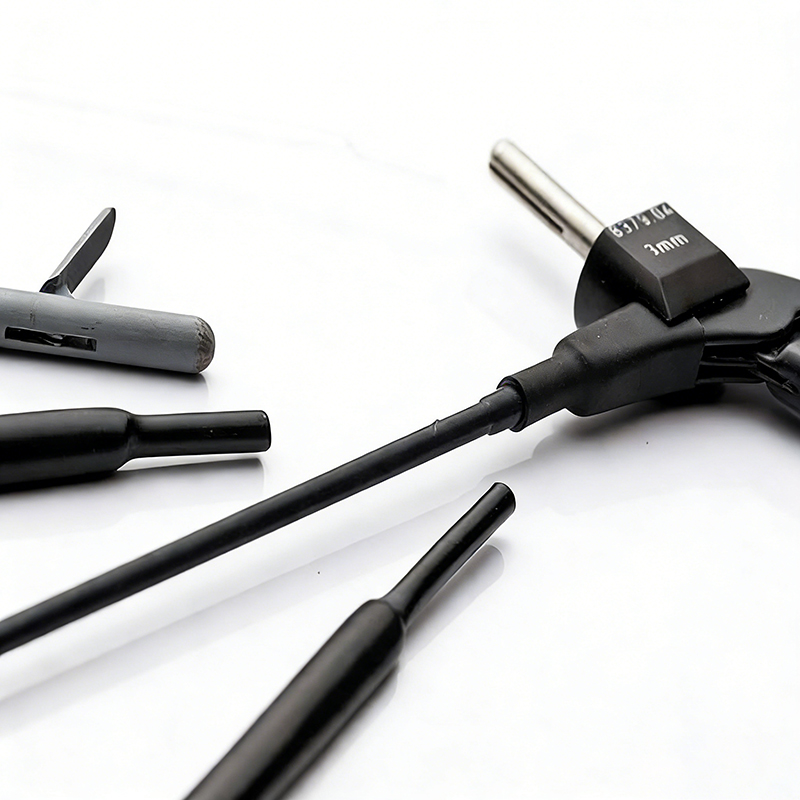
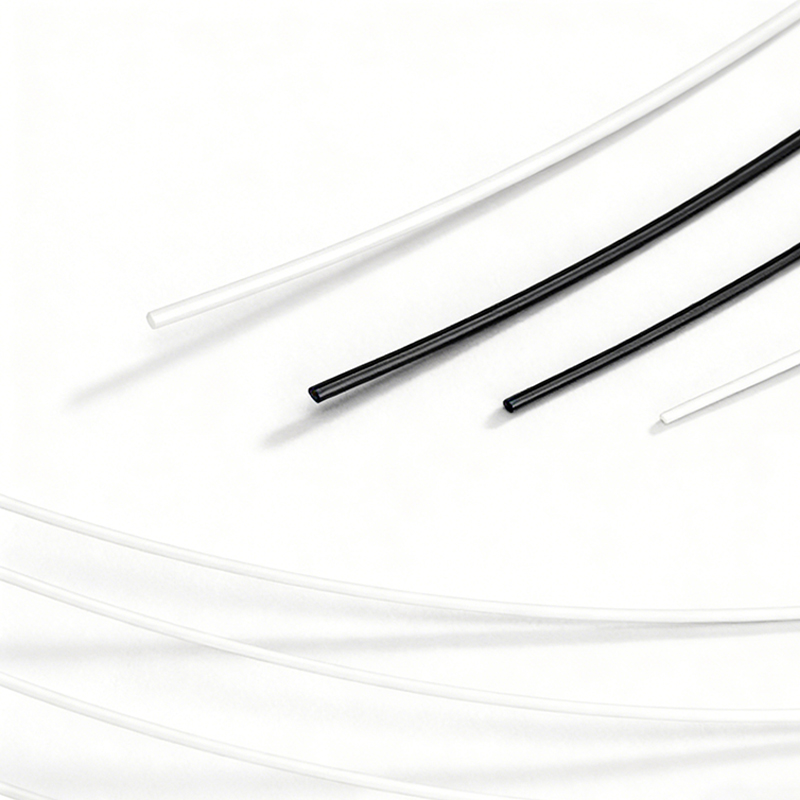
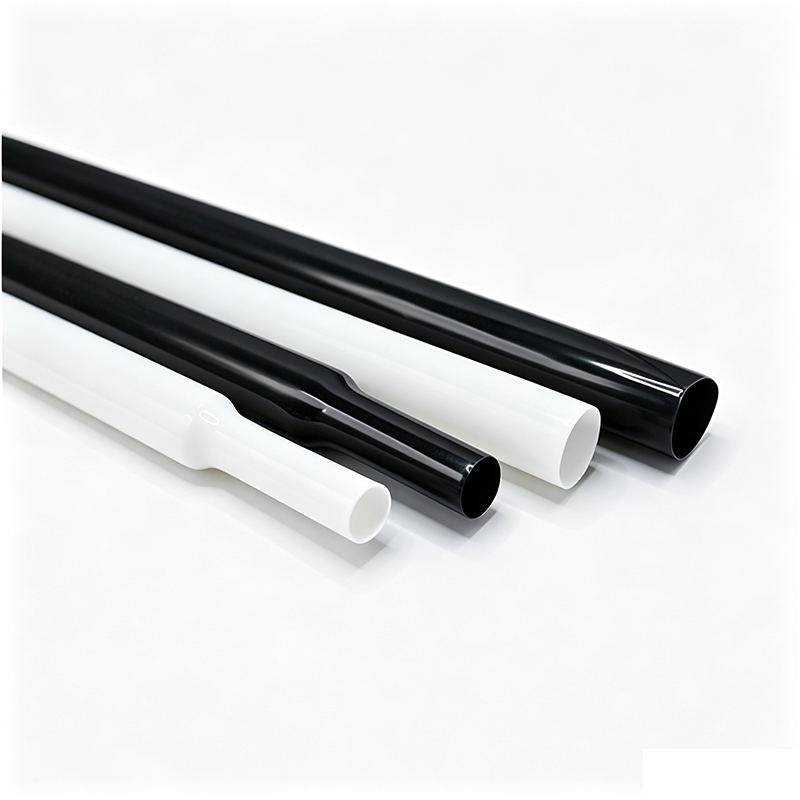
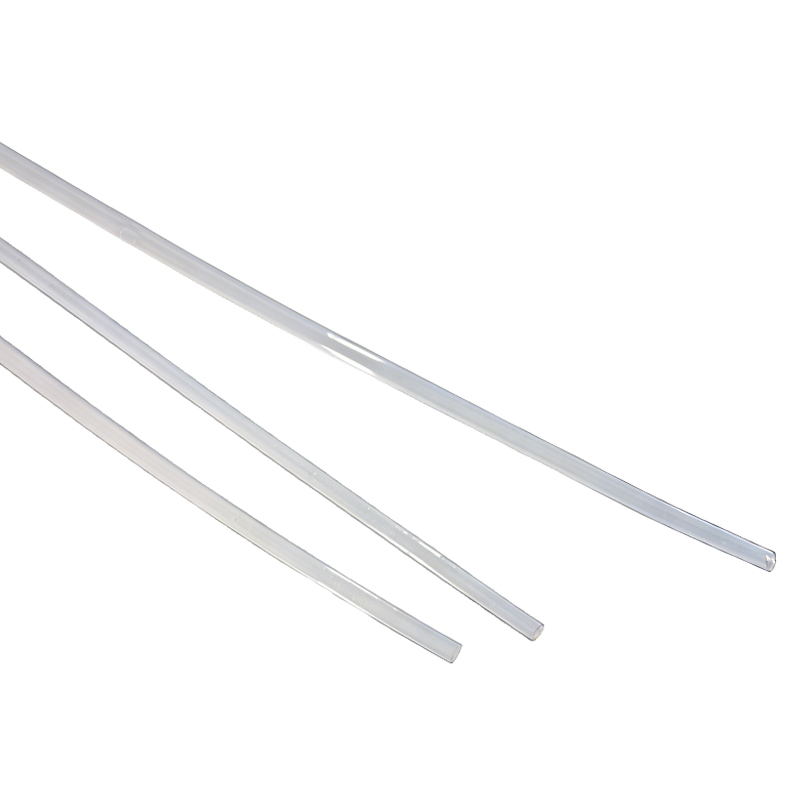
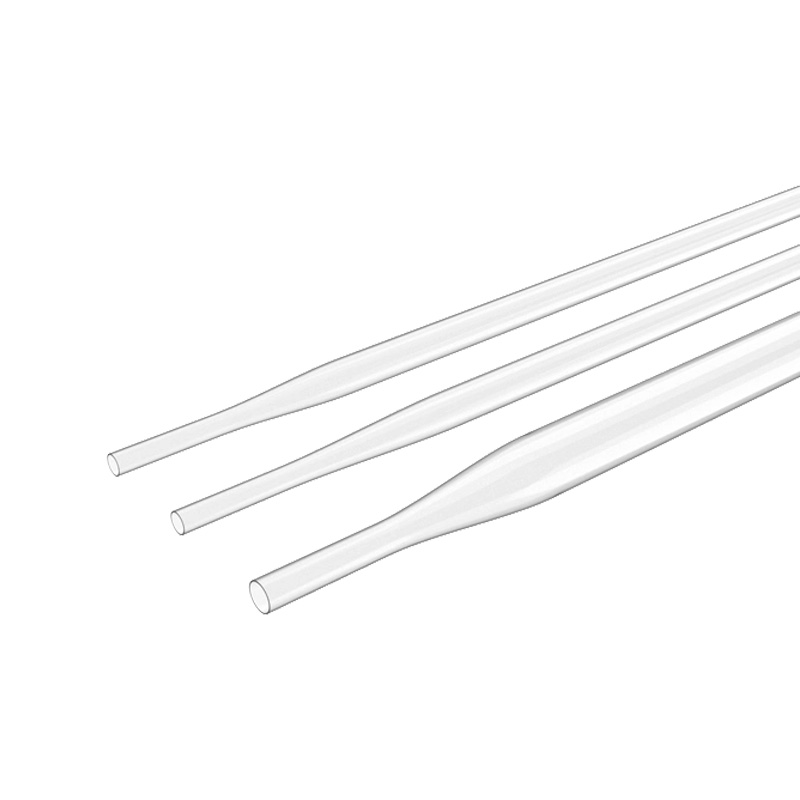
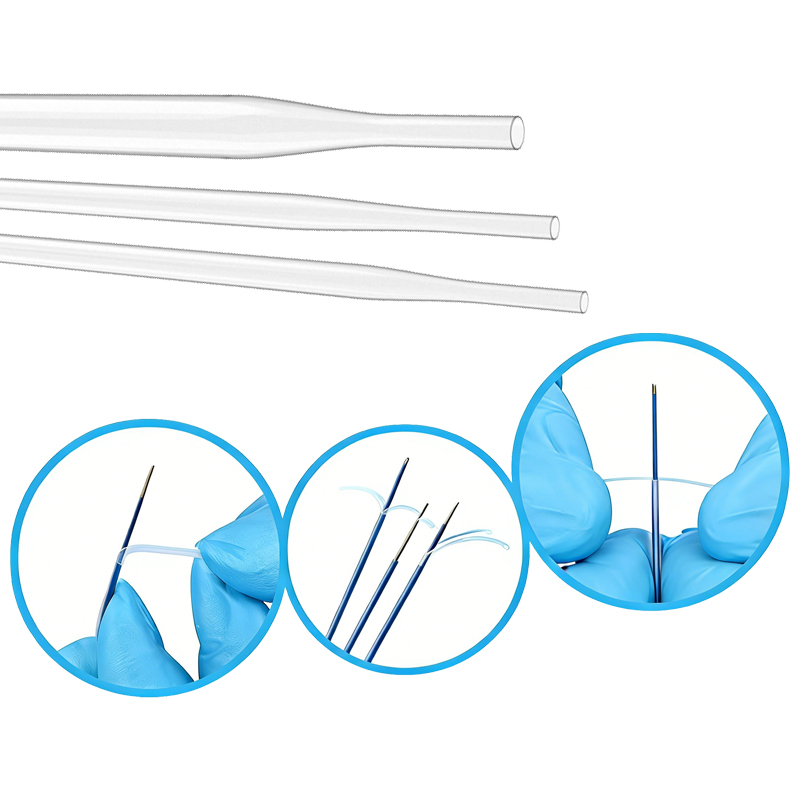
BH-MT-PVDF-175K made of the USP Class VI medical-grade polyvinylidene fluoride (PVDF) material. It is suitable for the operation in a high temperature environment, and has stable performance to chemical substance such as alcohol as well as excellent mechanical abrasion resistance. It can be designed for the insulation protection of medical devices which require smoothness and high insulation performance.
Shrink ratio: 2:1
Abrasion and high temperature resistance
High flame retardant and excellent resistance performance to chemical corrosion
Excellent physical, chemical and electrical performance
Excellent electrical insulation properties
Compatibility with gamma rays and ETO sterilization
Double plastic bags and plastic spool package
Continuous operating temperature: -55˚C~175˚C
Minimum shrink temperature: 155˚C
Full recovery temperature: Above 175˚C
ISO 10993, USP Class VI compliant
|
Size |
As supplied (mm) |
After recovered (mm) |
Standard length |
||
|
ID(Min.) |
ID(Max.) |
Wall thickness(mm) |
M/Roll |
M/Pc |
|
|
1.2 |
≥1.2 |
≤0.6 |
0.25±0.10 |
200 |
1.22 |
|
1.6 |
≥1.6 |
≤0.8 |
0.25±0.10 |
200 |
1.22 |
|
2.4 |
≥2.4 |
≤1.2 |
0.25±0.10 |
200 |
1.22 |
|
3.2 |
≥3.2 |
≤1.6 |
0.25±0.10 |
200 |
1.22 |
|
4.8 |
≥4.8 |
≤2.4 |
0.25±0.10 |
100 |
1.22 |
|
6.4 |
≥6.4 |
≤3.2 |
0.30±0.10 |
100 |
1.22 |
|
9.5 |
≥9.5 |
≤4.8 |
0.30±0.10 |
100 |
1.22 |
|
12.7 |
≥12.7 |
≤6.4 |
0.30±0.10 |
100 |
1.22 |
|
19.1 |
≥19 |
≤9.5 |
0.43±0.12 |
50 |
1.22 |
|
25.4 |
≥25 |
≤12.7 |
0.48±0.12 |
50 |
1.22 |
* Custom sizes are available upon customer request.
Cross Reference:
TE Connectivity / Raychem: MT‑1000
|
Property |
Test Method |
Typical Data |
|
Longitudinal change |
ASTM D2671 |
-10%~10% |
|
Tensile strength |
ASTM D2671 |
≥34.5Mpa |
|
Volume resistivity |
ASTM D2671 |
≥1013Ω.cm |
|
Dielectric voltage withstand |
ASTM D2671 |
AC2500V/60S |
|
No breakdown |
||
|
Elongation at break |
ASTM D2671 |
≥200% |
|
Heat shock |
ASTM D2671 |
No cracking |
|
(275˚C/4 hrs) |
||
|
Low temperature flexibility |
ASTM D2671 |
No cracking |
|
(-55˚C/4 hrs) |
||
|
Elongation at break after aging |
ASTM D2671 |
≥100% |
|
(225˚C/168 hrs) |
||
|
Flammability |
ASTM D2671 |
VW-1 |
1. Replacing Tyco-Raychem MT-1000
Q1. What should we verify before qualifying BH-MT-PVDF-175K as a drop-in replacement for MT-1000?
A: Four checkpoints.
(1) Application fit: like MT-1000, BH-MT-PVDF-175K is a semi-rigid medical PVDF sleeve — confirm your joint is a rigid or static geometry, not a dynamic flexing segment.
(2) Dimensional match: the as-supplied ID must slide freely over your component, and the recovered ID and recovered wall must meet your drawing — cross-check against our datasheet instead of assuming identical tolerance bands.
(3) Thermal process capability: this grade recovers at a higher temperature than flexible medical PVDF grades (see the datasheet for the minimum shrink and full recovery temperatures); confirm your oven or heat-gun profile reaches full recovery without overheating adjacent components.
(4) Run a first-article fit and shrink-process trial on real parts, then complete your own device-level verification and validation. Evaluation samples are available. Please note: MT-1000 is a trademark of TE Connectivity; we are an independent manufacturer and are not affiliated with, or endorsed by, TE Connectivity.
Q2. What practical differences should we expect versus MT-1000?
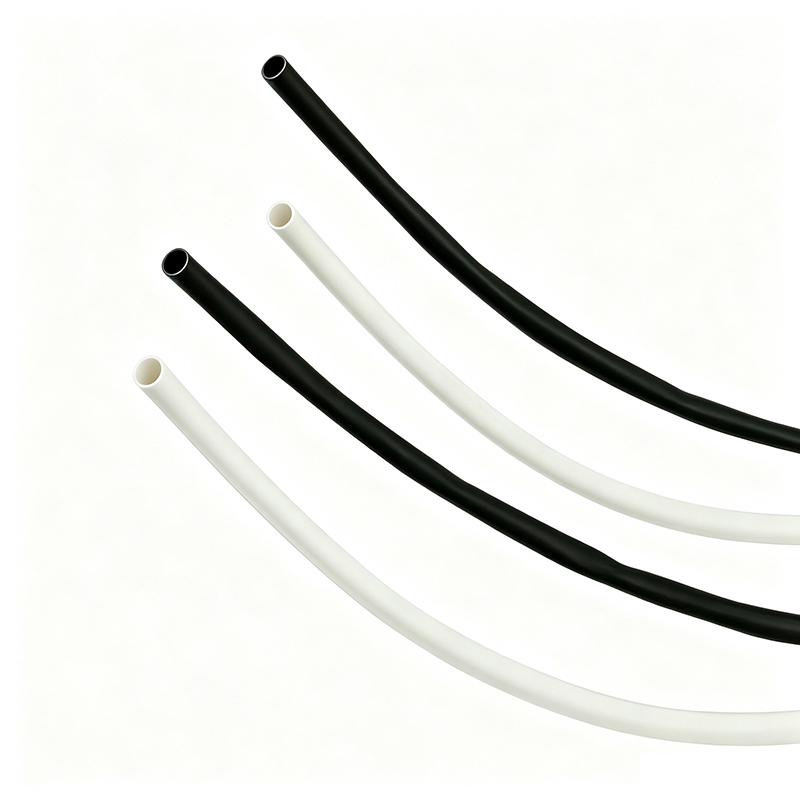
A: BH-MT-PVDF-175K is engineered as a form-fit-function alternative within the same material class: medical grade semi-rigid PVDF, USP Class VI and ISO 10993 compliant, compatible with gamma and EtO sterilization. Practical differences to plan for: wall-thickness tolerance bands follow our own datasheet (verify against your drawing); standard colors are clear and black; and supply forms, put-ups and MOQ structures follow our own standard program. Qualifying a second source of this type typically addresses the long distribution lead times, fluctuating stock and single-source risk frequently reported for branded medical PVDF tubing.
2. Material Compatibility & Storage
Q3. Which chemicals and medical fluids can come into contact with the tubing?
A: The datasheet notes stable performance against chemicals such as alcohol. Medical use, however, involves a wide range of exposure media — saline, contrast agents, disinfectants, solvents, cleaning agents and lipids — at different concentrations, temperatures and durations. Provide your actual exposure list (media, concentration, temperature, duration, single or repeated contact) and we will run a compatibility assessment before your design freeze. Long-term or immersion contact should always be validated on the finished device.
Q4. How should the tubing be stored, and what about shelf life?
A: Store in the original packaging in a cool, dry place, away from direct sunlight, UV sources and heat. Do not kink, fold or crush the tubing — semi-rigid PVDF retains creases, and a crease becomes a stress riser in service. Use first-in-first-out stock rotation. The datasheet does not assign a fixed shelf life; for lots stored over an extended period, perform a visual inspection and a shrink-behavior check before use, and include storage conditions in your incoming-inspection plan.
3. Sterilization Practice
Q5. Which sterilization modes are covered, and what should we watch in practice?
A: The datasheet states compatibility with gamma irradiation and ethylene oxide (EtO) sterilization. Practical notes: validate your specific dose range and cycle on the finished device; for EtO, residuals and aeration must be addressed at device level (see ISO 10993-7 expectations); and if your device is reprocessed, qualify the maximum sterilization cycle count as part of device validation rather than assuming unlimited cycles.
Q6. Can the tubing be steam autoclaved or dry-heat sterilized?
A: Steam autoclave and dry heat are not part of the standard datasheet qualification, so we do not claim them. The material offers substantial thermal margin (see the heat-shock data in the datasheet), but suitability for repeated steam or dry-heat cycles must be validated on your finished device under your actual cycle parameters. We can supply samples to support your sterilization validation.
4. Heat-Shrink Processing
Q7. What are the practical keys to a stable heat-shrink process for this semi-rigid grade?
A: Use even, controlled heating — a calibrated oven is preferred for volume production; if a heat gun is used, keep the nozzle moving at a fixed distance and never dwell on one spot, because localized overheating can degrade and embrittle the polymer and leave invisible microcracks. Heat until the sleeve is fully recovered and the surface is smooth and uniform. Plan cut length and axial positioning before heating, since the tubing also changes in length during recovery. Let parts cool undisturbed before handling, and do not try to reposition a semi-rigid sleeve after full recovery. Finally, lock the process into a qualified parameter window and train operators — manual heat-gun work is a common source of part-to-part inconsistency.
5. Application Boundaries
Q8. Where is BH-MT-PVDF-175K a good fit?
A: Rigid or stable geometries that need a smooth, high-insulation, abrasion-resistant sleeve for high-temperature service — for example, insulation and wear protection of electrosurgical and laparoscopic instrument shafts and other surgical device components.
Q9. Where is it NOT recommended?
A: Do not use a semi-rigid sleeve on dynamic flexing segments, tight bend radii, or joints that must bend repeatedly in service — a stiff sleeve concentrates stress at its ends when the assembly flexes. For those locations, choose a flexible medical grade such as our BH-MT-PVDF-150K. This product is also not intended as a sacrificial reflow process liner for catheter lamination (a different product family, typically FEP), and it is not a substitute for adhesive-lined tubing where a moisture seal is required.
6. Regulatory Responsibility
Q10. Does USP Class VI / ISO 10993 material compliance mean our finished device is approved?
A: No. We supply component tubing only. Material-level compliance with ISO 10993 / USP Class VI supports — but does not replace or constitute — regulatory approval or clearance of the finished medical device. Biological evaluation of the finished device (ISO 10993-1), sterilization validation, process validation and risk analysis (ISO 14971) are the responsibility of the device manufacturer. We do not claim performance beyond the published datasheet, and nothing in this FAQ should be read as a claim of finished-device approval.
7. Assembly Failure Risks
Q11. What assembly-related failure modes should we design and process against?
A: The most common ones reported in medical device assembly practice: (1) sharp edges, burrs or 90° transitions under the sleeve acting as stress risers — deburr and add a radius or chamfer before sleeving; (2) scratching or gouging the semi-rigid surface with assembly tools — use proper fixtures and sleeves during insertion; (3) stretching the tubing over oversized features instead of sizing correctly; (4) kinking the tubing during handling or installation; (5) localized wall thinning where recovery pulls the sleeve over a shoulder; and (6) pinholes or damage introduced after shrinking. Verify insulation integrity — visual plus electrical/pinhole checks — in production and across the reprocessing life of the device.
8. RFQ & Supply
Q12. What information should an RFQ include, and how do samples and lead times work?
A: Please provide: required size (as-supplied ID and/or recovered ID, plus any recovered wall requirement); quantity and estimated annual volume; color (clear or black); supply form (roll, straight piece, or cut length with tolerance); application and device type; sterilization method and expected cycle count; any value-added requirements such as precision cut-to-length or marking (evaluated on request); compliance documentation required (e.g., USP Class VI / ISO 10993 material test reports); and target price, delivery terms and destination. Evaluation samples of standard sizes are available on request, and we support the full ramp from pilot batches to mass production — lead times are confirmed at quotation.