
Founded in 2010, FLYPOWER is a high-tech enterprise specializing in the research, development, production, and sales of polymer materials. Leveraging its core technological strengths and starting with heat-shrink materials, the company established its Medical Division in 2018, expanding its business and product portfolio into the fields of medical devices and catheters, with the mission of becoming a globally leading supplier of materials for interventional medical devices.
联系我们 No. 77, Bao Nan Road,Nan Lian Community,Long Gang Street,Long Gang District, Shenzhen, Guangdong,518116,China (+86)755 2917 9250 [email protected]
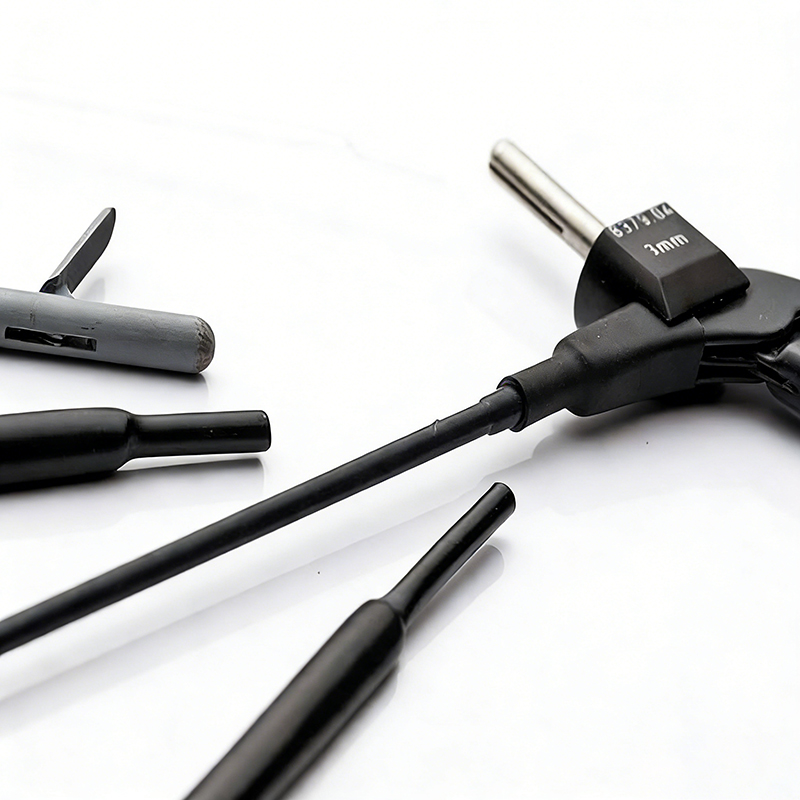
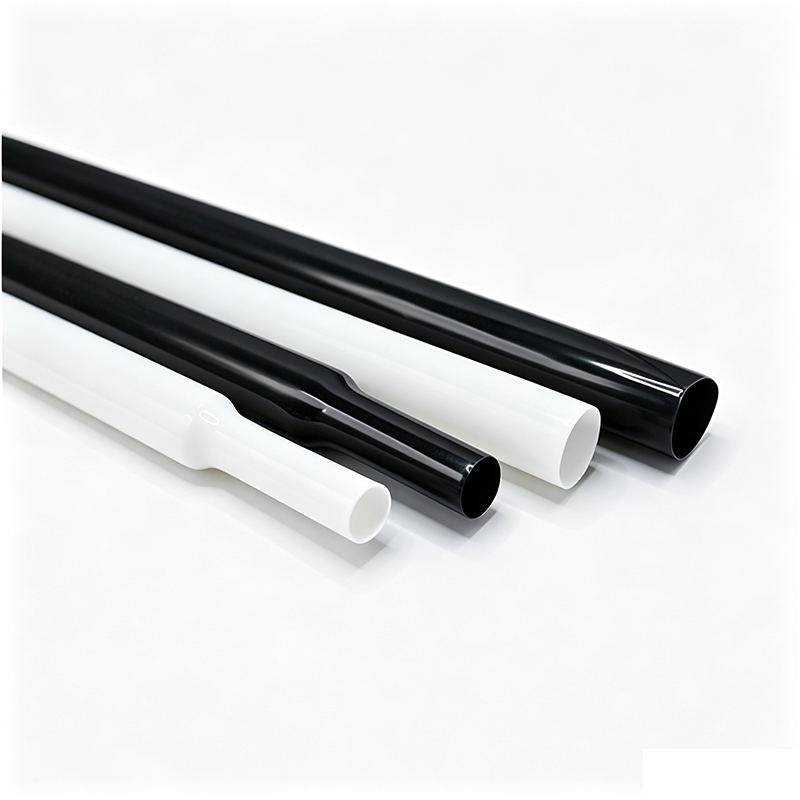
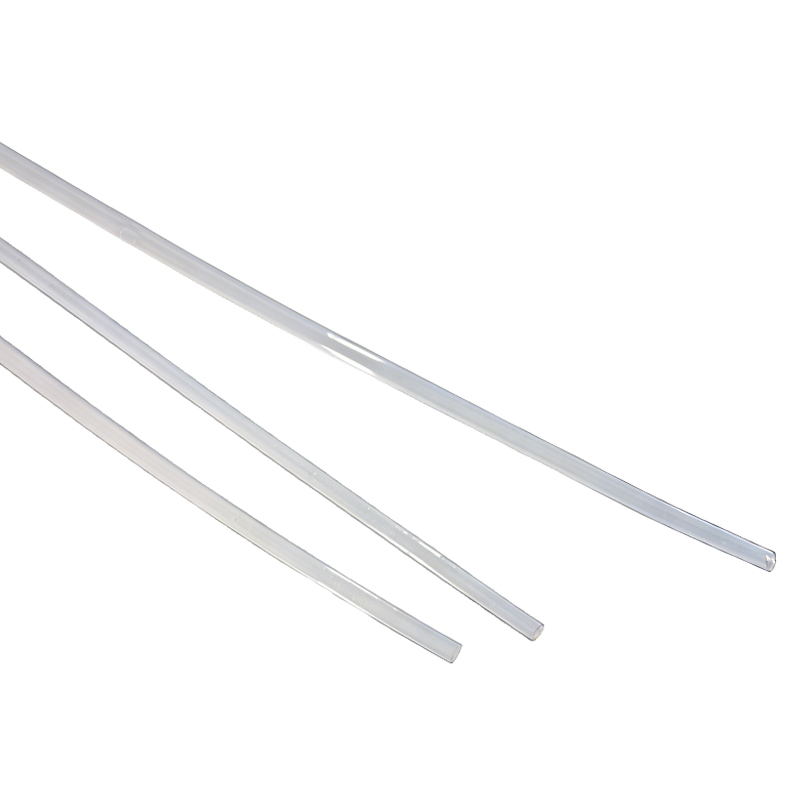
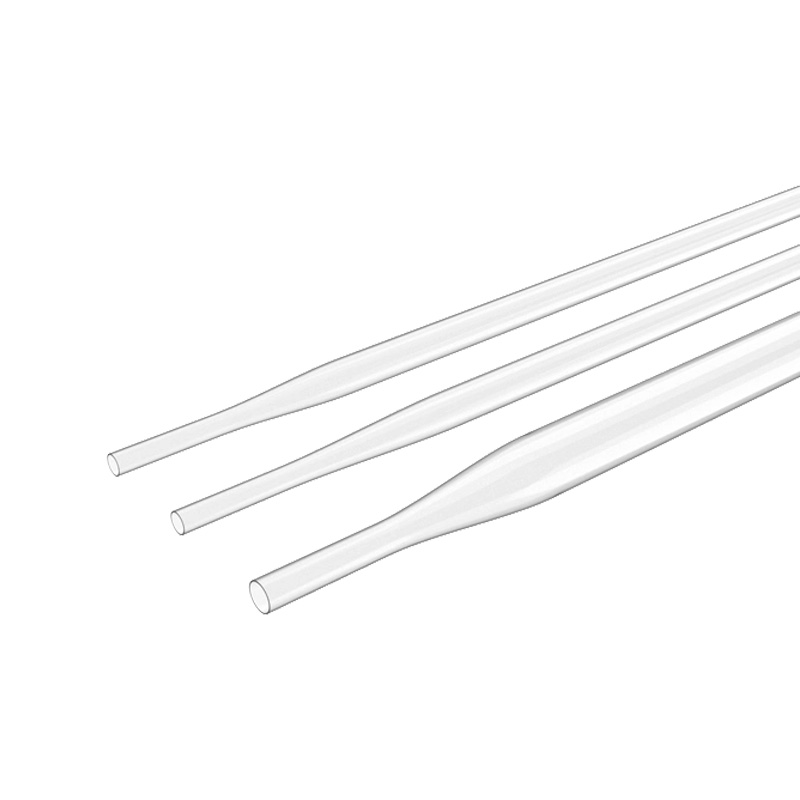
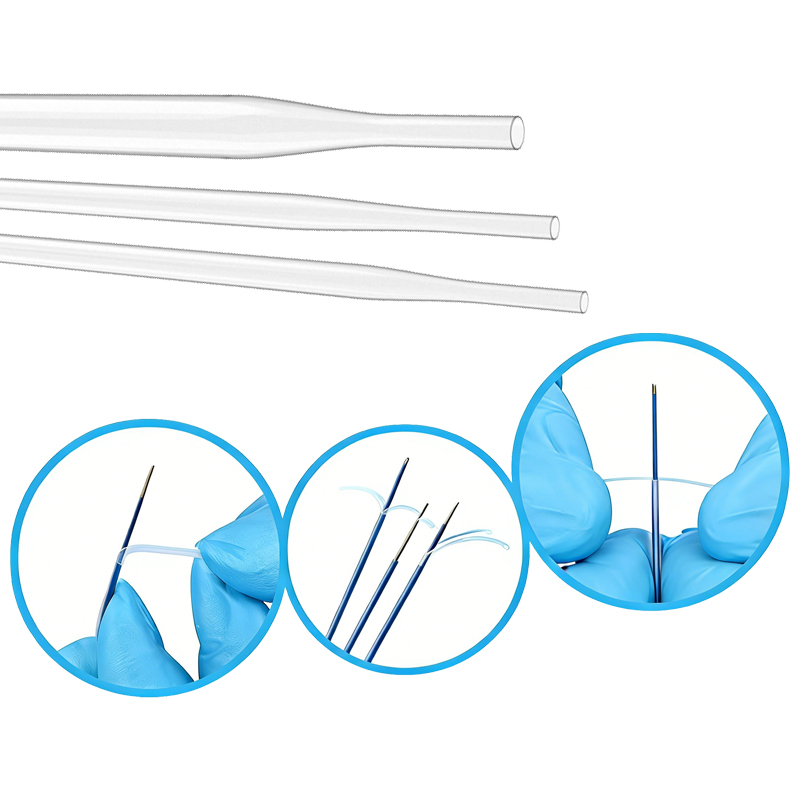
BH-MT-PVDF-150K has the characteristics of softness, smoothness and translucency, and it’s suitably designed for the application in medical devices which required high temperature and abrasion resistance. The polyvinylidene fluoride (PVDF) material complies with USP Class VI medical grade. It has stable performance to chemical substances such as alcohol, and is very suitable for the insulation protection of various types of medical devices.
Shrink Ratio: Approx. 2:1
Double plastic bags packaging
Compatibility with gamma rays and ETO sterilization
Operating temperature: -65℃~175℃
Minimum shrink temperature: 125˚C
Minimum fully recovery temperature: 150℃
ISO 10993, USP Class VI compliant
|
Size |
As supplied (mm) |
After recovered (mm) |
Standard length |
||
|
ID(Min.) |
ID(Max.) |
Wall thickness(mm) |
M/Roll |
M/Pc |
|
|
1.2 |
≥1.2 |
≤0.6 |
0.25±0.10 |
200 |
1.22 |
|
1.6 |
≥1.6 |
≤0.8 |
0.25±0.10 |
200 |
1.22 |
|
2.4 |
≥2.4 |
≤1.2 |
0.25±0.10 |
200 |
1.22 |
|
3.2 |
≥3.2 |
≤1.6 |
0.25±0.10 |
200 |
1.22 |
|
4.8 |
≥4.8 |
≤2.4 |
0.25±0.10 |
100 |
1.22 |
|
6.4 |
≥6.4 |
≤3.2 |
0.30±0.10 |
100 |
1.22 |
|
9.5 |
≥9.5 |
≤4.8 |
0.30±0.10 |
100 |
1.22 |
|
12.7 |
≥12.7 |
≤6.4 |
0.30±0.10 |
100 |
1.22 |
|
19.1 |
≥19 |
≤9.5 |
0.43±0.12 |
50 |
1.22 |
|
25.4 |
≥25 |
≤12.7 |
0.48±0.12 |
50 |
1.22 |
Cross Reference:
TE Connectivity / Raychem: MT‑3000
|
Property |
Test Method |
Typical Data |
|
Longitudinal change |
ASTM D2671 |
-10%~10% |
|
Tensile strength |
ASTM D2671 |
≥24.1Mpa |
|
Volume resistivity |
ASTM D2671 |
≥1011Ω.cm |
|
Dielectric voltage withstand |
ASTM D2671 |
AC2500V/60S |
|
No breakdown |
||
|
Elongation at break |
ASTM D2671 |
≥200% |
|
Heat shock |
ASTM D2671 |
No cracking |
|
(275˚C/4 hrs) |
||
|
Low temperature flexibility |
ASTM D2671 |
No cracking |
|
(-55˚C/4 hrs) |
||
|
Elongation at break after aging |
ASTM D2671 |
≥100% |
|
(225˚C/168 hrs) |
||
|
Flammability |
ASTM D2671 |
VW-1 |
1. Product Basics
Q1. What is BH-MT-PVDF-150K?
A: BH-MT-PVDF-150K is a medical grade heat shrink tubing manufactured from flexible polyvinylidene fluoride (PVDF). It is soft, smooth and translucent, and is designed for medical device applications that require high-temperature resistance and abrasion resistance. The PVDF material complies with USP Class VI and ISO 10993 requirements, and shows stable performance against chemicals such as alcohol, making it well suited for the insulation protection of a wide range of medical devices.
Q2. What are the shrink ratio and temperature ratings?
A: Shrink ratio 2:1; minimum shrink temperature 125°C; minimum full recovery temperature 150°C; continuous operating temperature range −65°C to +175°C. “150°C” refers to the minimum full recovery temperature — the point at which the tubing completes its shrink; once fully recovered, it is rated for continuous service up to +175°C.
2. Replacement for Tyco-Raychem MT-3000
Q3. Is BH-MT-PVDF-150K a direct replacement for Tyco-Raychem MT-3000?
A: Yes. It is engineered as a form-fit-function alternative to MT-3000: the same base material family (flexible, medical grade PVDF), the same 2:1 shrink ratio, the same 150°C-class full recovery temperature, USP Class VI and ISO 10993 material compliance, and compatibility with gamma and EtO sterilization. Its continuous operating range of −65°C to +175°C meets or exceeds the temperature class of MT-3000-type medical PVDF tubing.
Q4. What must be verified before a drop-in replacement?
A: Five checkpoints: (1) as-supplied ID — the tubing must slide freely over your component; (2) recovered ID — must be equal to or smaller than the component OD to guarantee a tight fit; (3) recovered wall thickness — verify against your design (ours is 0.25–0.48 mm depending on size); (4) process settings — your oven or heat-gun profile must reach full recovery (≥150°C); (5) first-article inspection plus your own device-level verification and validation before production release. Evaluation samples are available for fit checks. Please note: MT-3000 is a trademark of TE Connectivity; we are an independent manufacturer and are not affiliated with, or endorsed by, TE Connectivity.
3. Biocompatibility
Q5. Is the tubing compliant with ISO 10993-1 and USP Class VI?
A: The PVDF material complies with USP Class VI and ISO 10993 requirements, as stated in the datasheet. Material-level test documentation is available upon request to support your supplier qualification and biological evaluation files.
Q6. Does material-level compliance mean my finished device is automatically approved?
A: No — and any supplier claiming otherwise should be treated with caution. USP Class VI is a material-level classification. ISO 10993-1 biological evaluation applies to the finished device in its final, processed and sterilized state, considering the nature and duration of body contact. Downstream factors — expansion and heat processing, colorants, cleaning residues and sterilization residuals — can all affect the final biological profile. Device-level biological evaluation, sterilization validation and risk analysis remain the responsibility of the device manufacturer.
4. Sterilization Compatibility
Q7. Which sterilization methods are qualified in the datasheet?
A: Compatibility with gamma irradiation and ethylene oxide (EtO) sterilization is stated in the BH-MT-PVDF-150K datasheet.
Q8. Can the tubing withstand steam autoclave or dry heat sterilization?
A: Steam autoclave and dry heat sterilization are not part of the standard datasheet qualification, so we do not claim them. The base PVDF offers substantial thermal margin (continuous service up to +175°C; no cracking after a 275°C/4 h heat shock test), which indicates the material can tolerate short thermal exposure. However, suitability for repeated steam or dry heat cycles must be validated on your finished device under your actual cycle parameters. We can provide samples to support your sterilization validation.
5. Performance
Q9. What is the electrical insulation performance?
A: Volume resistivity ≥10¹¹ Ω·cm; dielectric voltage withstand AC 2500 V / 60 s with no breakdown (ASTM D2671). The tubing is suitable for insulation protection of electrosurgical instruments and other powered surgical devices. Engineering note: instrument insulation should be verified for pinholes and mechanical damage in production and throughout the reprocessing life of the device — insulation defects are a well-documented failure mode in electrosurgical instruments. Longitudinal change after recovery is controlled within −10% to +10% (ASTM D2671), supporting accurate cut-length planning and repeatable positioning over joints, electrodes and connectors.
6. Typical Applications
Q10. Where is BH-MT-PVDF-150K typically used?
A: Typical uses include insulation and abrasion protection of electrosurgical instrument shafts; covering of laparoscopic and other surgical instruments; insulation and wear protection of surgical device components; strain relief at cable-to-connector and joint transitions; and general insulation protection of medical devices requiring high-temperature and chemical resistance. Please note: this product is a permanent protective and insulation sleeve — it is not intended as a sacrificial reflow process liner for catheter lamination (a different product family, typically FEP).
7. RFQ Checklist
Q11. What information should an RFQ include?
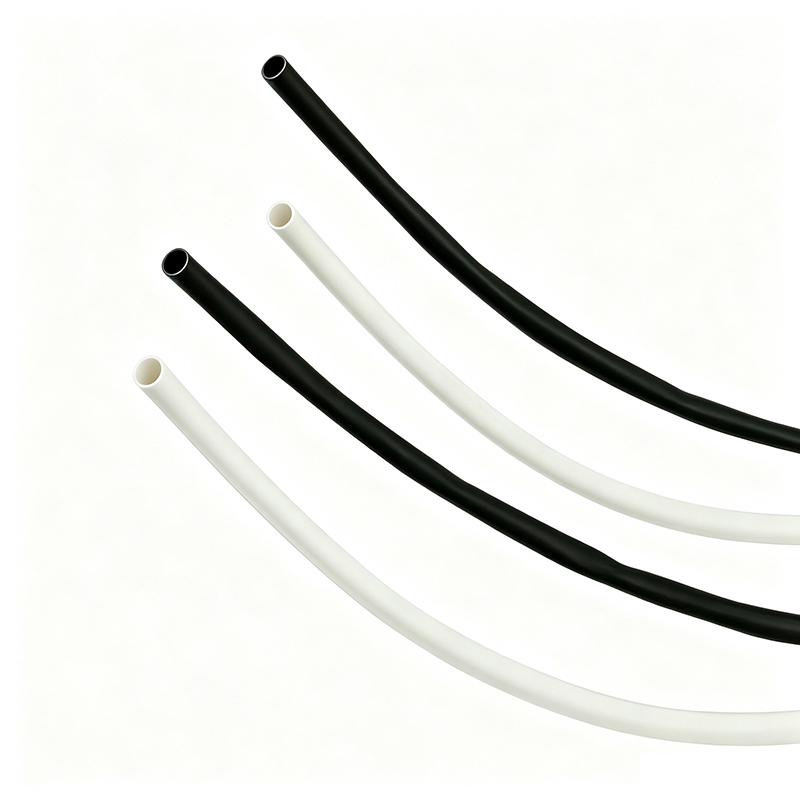
A: To receive a fast and accurate quotation, please provide: required size (as-supplied ID and/or recovered ID, plus any recovered wall requirement); quantity (trial order and estimated annual volume); color (clear or black); supply form (roll, 1.22 m straight piece, or cut length with tolerance); application and device type (e.g., electrosurgical instrument shaft insulation, strain relief); sterilization method and expected cycle count; compliance documentation required (e.g., USP Class VI / ISO 10993 material test reports); and target price, delivery terms and destination.
8. Regulatory & Risk Statement
Q12. Important compliance note — who is responsible for finished-device approval?
A: We supply component tubing material. Material-level compliance with ISO 10993 / USP Class VI supports, but does not replace or constitute, regulatory approval or clearance of the finished medical device. Biological evaluation of the finished device (ISO 10993-1), sterilization validation, process validation and risk analysis (e.g., ISO 14971) are the responsibility of the device manufacturer. Nothing in this FAQ should be read as a claim of finished-device approval.